A labour of love ~ restoring Howsham Mill back to its Gothic Georgian glory!

Howsham  Mill is a Grade II listed building, built in 1755 and attributed to the architect, John Carr of York.  It was both a folly and a working grist mill on the Howsham Hall estate.  The mill was powered by a breastshot waterwheel connected by a gear wheel to millstones, that ground the grain into flour. Grinding ceased in 1947 and by the 1960s the mill had fallen into serious decay.

Over grown and lost to the world the derelict mill lay hidden in the trees on a small island in the River Derwent, in North Yorkshire until one day in 2003 it was discovered by Mo McLeod and Dave Mann who fell in love with the ruin and bought it in 2004. They had plans to renovate it and turn it into their home but they soon discovered that sadly this was not to be as they were turned down no matter what road they took.
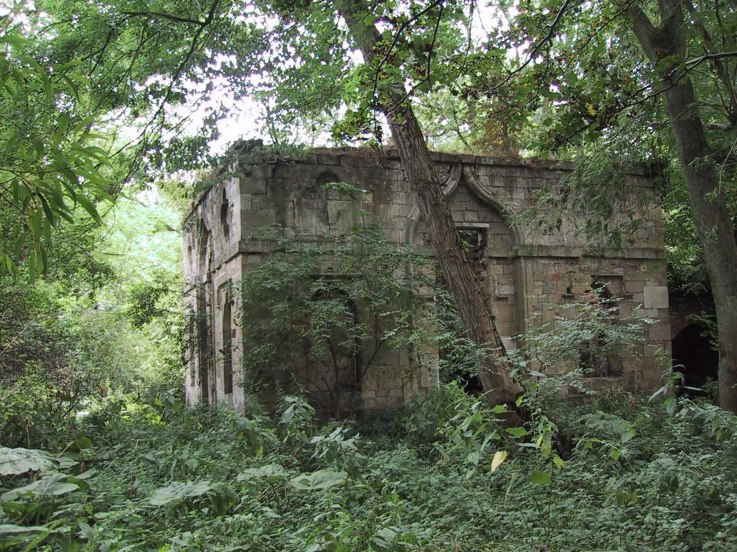
Howsham Mill in 2003
Howsham Mill in 2003 ~ Photo Credit – Renewable Heritage Trust

Undeterred by all the set backs they decided to change tactic and formed the Renewable Heritage Trust with the help of the local residents with the aim of restoring the mill as an environmental study centre promoting renewable energy and local history and wildlife. It will also be available for use as a community venue for local people.
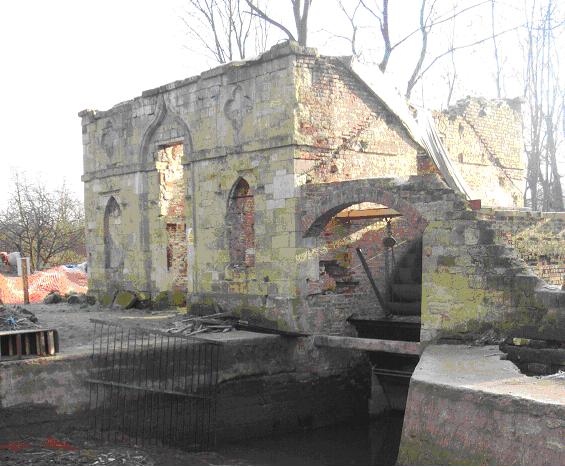
Photo Credit - Renewable Heritage Trust
Photo Credit – Renewable Heritage Trust

The first phase of the restoration was completed in 2007 and involved installing the new waterwheel and  an Archimedean screw as well as rebuilding the walls and roof of the granary to the north of the main building, allowing the installation of a kitchen and toilets as well as housing the control equipment for the hydro generation. Fund raising and grant funding enabled the installation of a new waterwheel and  the Archimedean screw to generate electricity and help fund the project in the long term. Much of the hard work of restoring the mill was done by enthusiastic volunteers, with families joining in for work days, and regular groups of trainee soldiers and school parties  helping out at the mill.
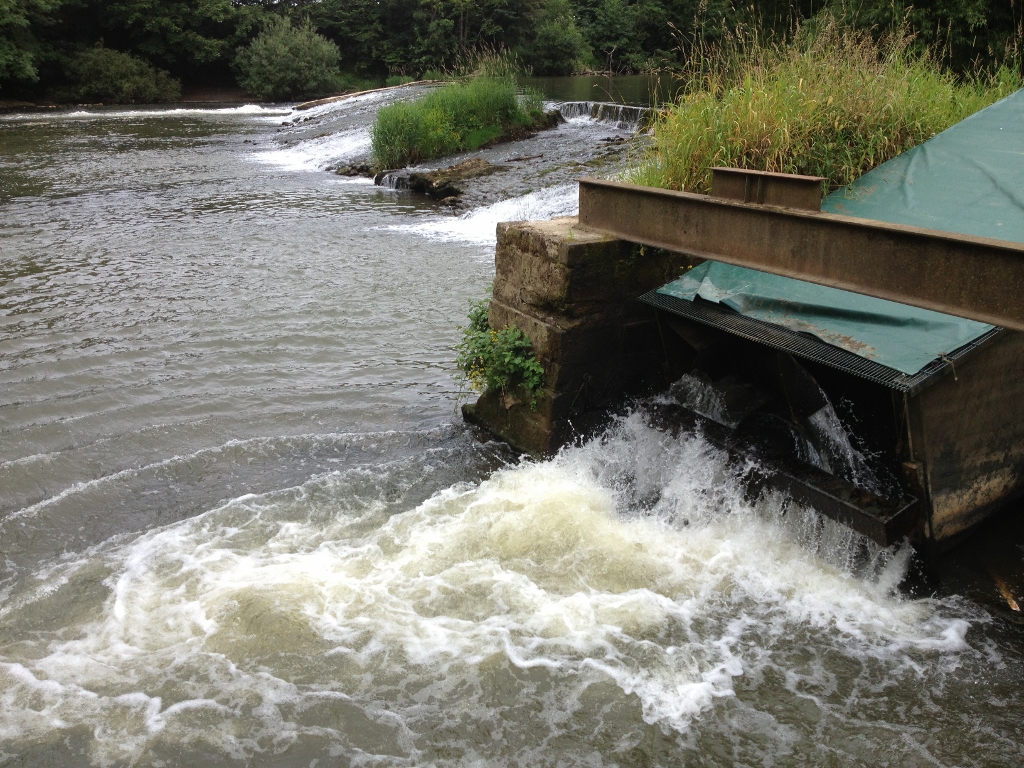
Archimedean Screw hydropower at Howsham Mill

Both the waterwheel and the Archimedean Screw generate electricity from the fall of water over the weir. The reinstatement of the waterwheel will again harness the power of the river, but rather than driving millstones, this time will generate electricity. Both the water wheel and the Archimedean Screw are grid connected and excess electricity generated is sold to the National grid.

2nd Archimedean Screw Installed

A second larger Archimedes Screw was installed in 2017 started a second larger screw was added during 2017 and has been generating electricity since May 2018. To date, about 2,750,000 kWh has been exported.
Two Archimedean Screws installed side by side

Since January 2022, the mill has been supplying Howsham Hall directly with green electricity. An underground cable was laid across the field to the Hall. The electricity is sold at a price between the grid wholesale rate and the standard import rate, thus benefiting both parties.
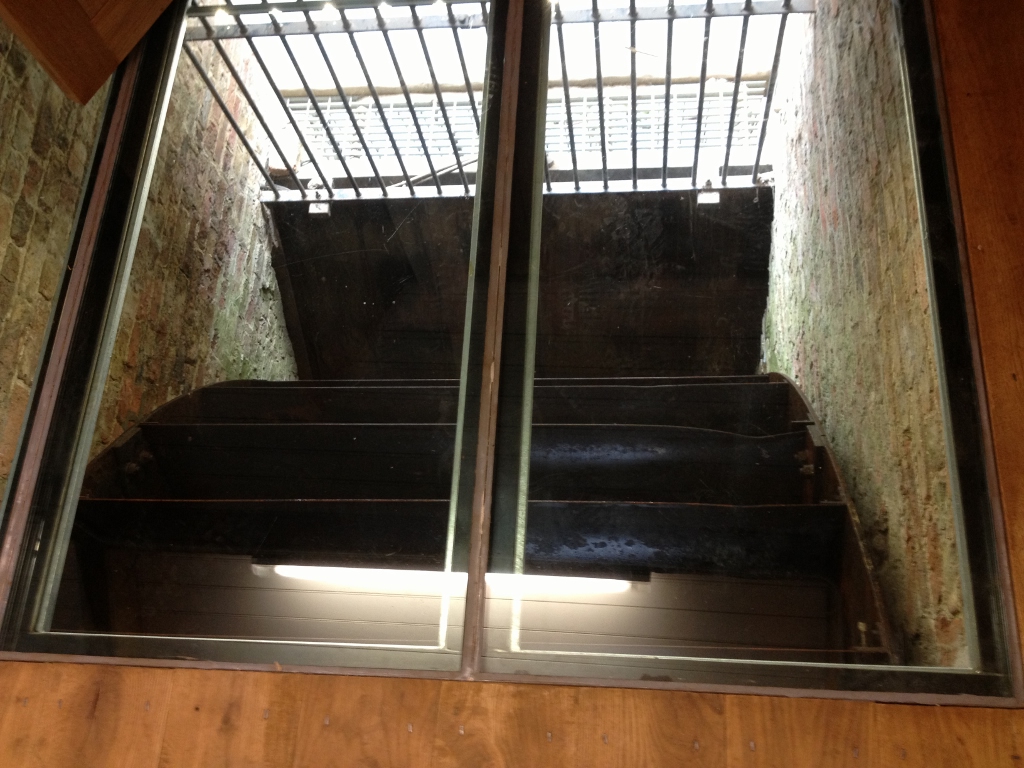
A view of the water wheel taken from inside Howsham Mill

In June 2012 work began on restoring the main part of the building. Today, a decade on, Howsham Mill has been returned to its former glory as it was when it was abandoned in 1947.
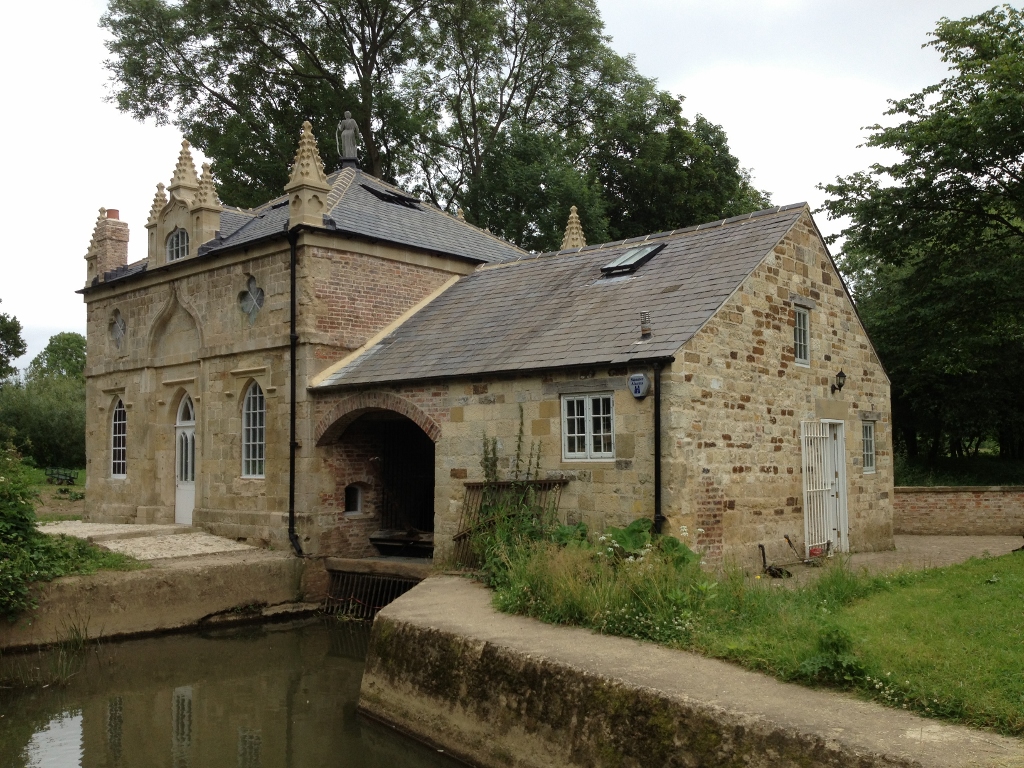
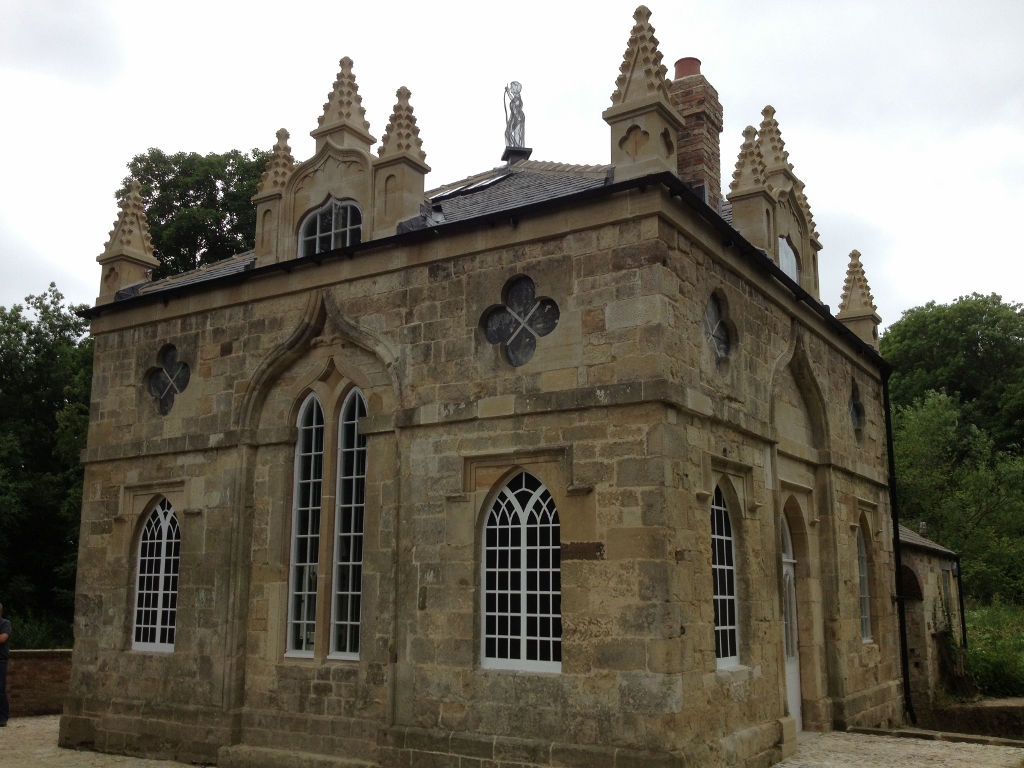
Howsham Mill restored to its former glory
Howsham Mill
Howsham Mill
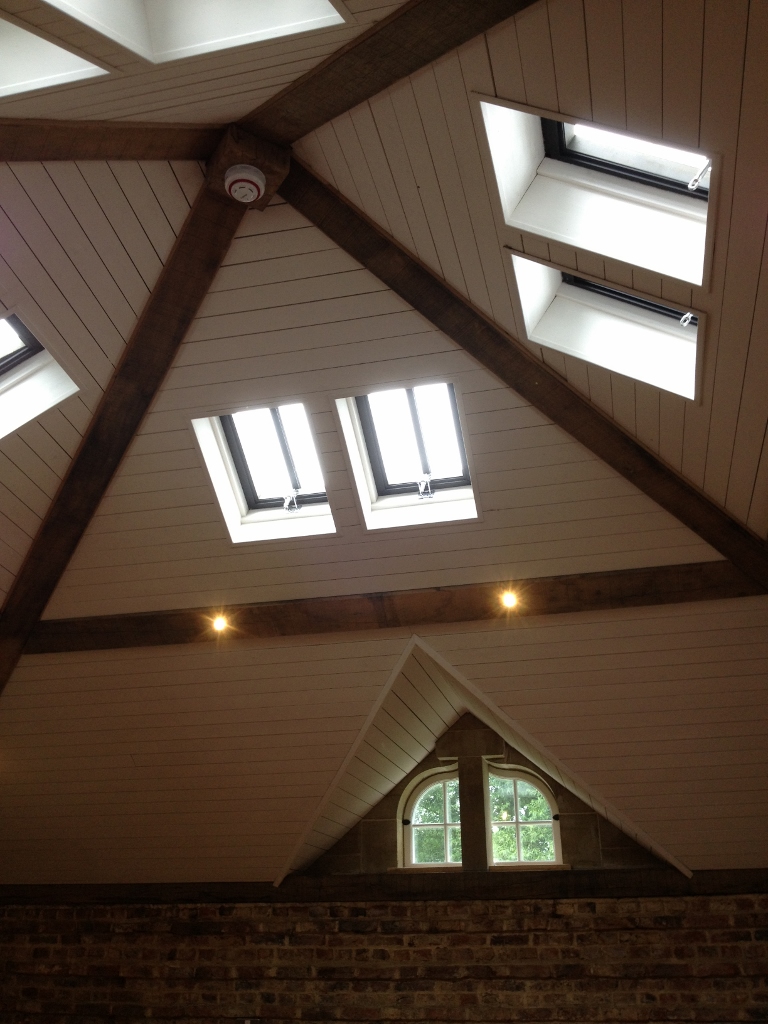
The magnificent restored ceiling in Howsham Mill
Howsham Mill - copyright Eco Evolution)
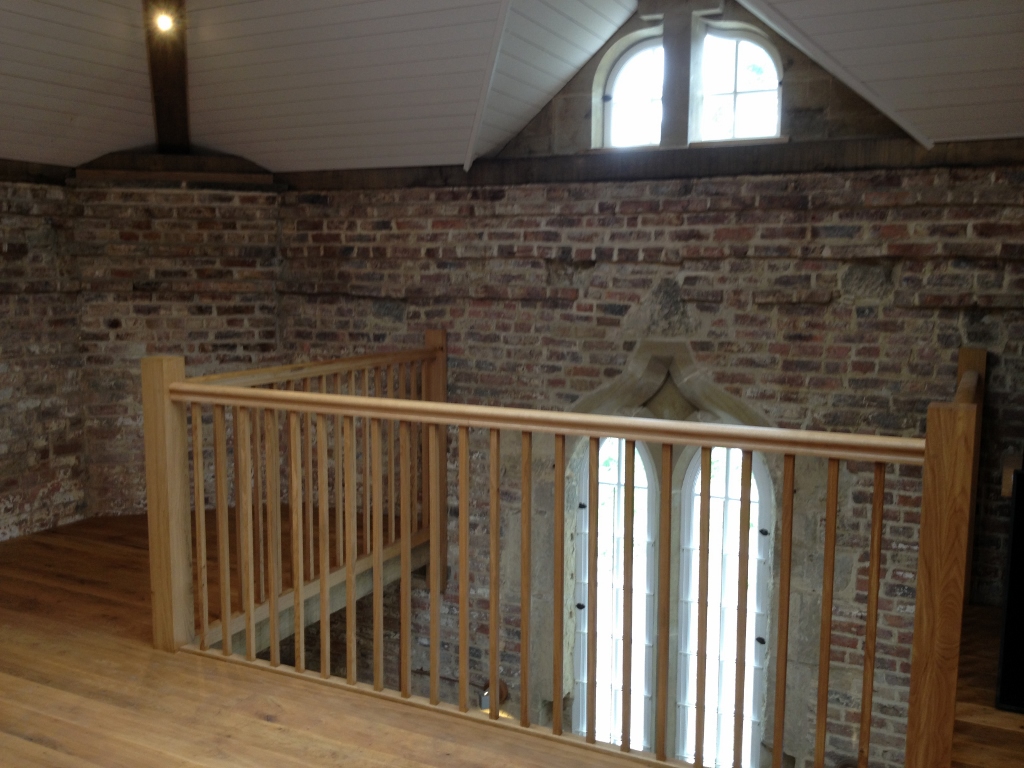
The magnificent Gothic windows and stone work at Howsham Mill

The aim of the Renewable Heritage Trust is to make the building totally self-sustaining for the 21st century using revenue from power sales to fund future restoration and conservation work at the site.

The mill has underfloor heating beneath the flag stones which is a wet system with a sealed network of pipes connecting to a coil in the hot water tank, which is heated partly by the solar thermal panel installed on the roof of the mill and topped up by an immersion heater run from their own electricity.  A wood-burning stove connected to a flue liner has been installed in the original fireplace and will burn logs from the island.
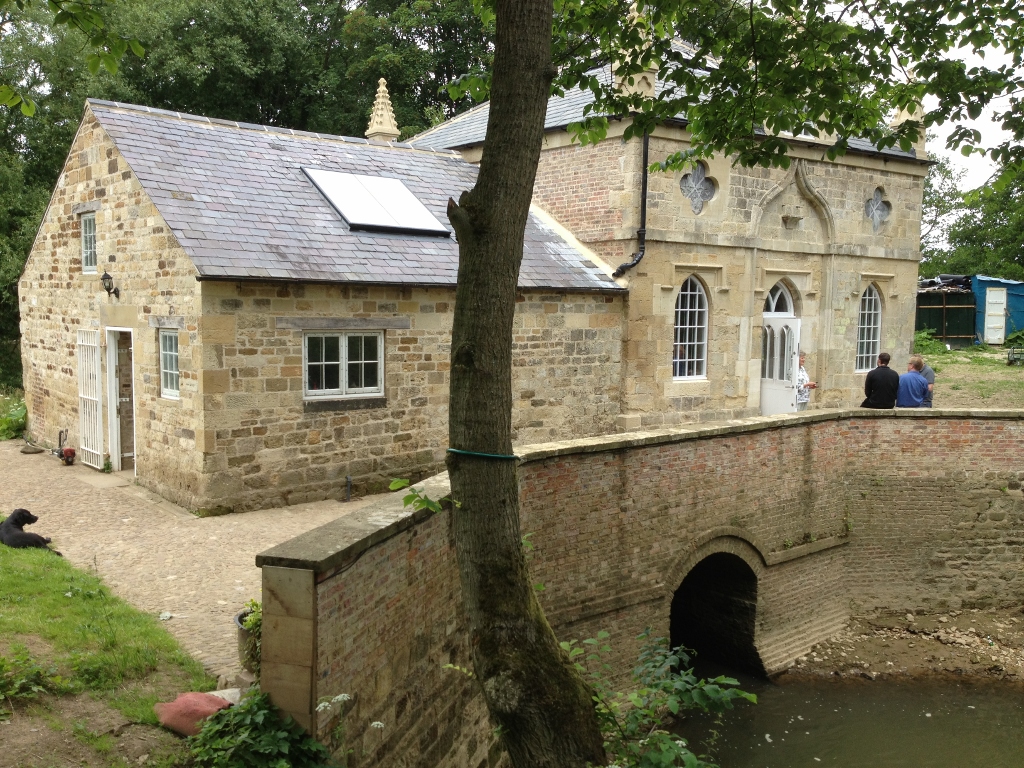
Solar Thermal panels supplement the underfloor heating in the mill

The final stage of the restoration was the placing of the statue of Diana the huntress created by wire-mesh sculptor Nikki Taylor which replaces the original lead sculpture of the Roman goddess, most of which was taken for scrap.
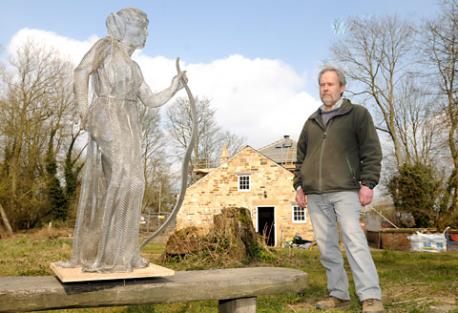
Sculpture of the goddess Diana - Photo Credit www.yorkpress.co.uk
Sculpture of the goddess Diana – Photo Credit www.yorkpress.co.uk

Howsham Mill is located in a Site of Special Scientific Interest (SSSI) and Special Area of Conservation (SAC). The small wooded island has a wealth of native trees including ash, sycamore, oak, wych elm and hawthorn trees.  Above and below the weir are beds of water crowfoot, teeming with invertebrates eaten by fish and birds. Otters were re-introduced to the river in the mid-1980s and can occasionally be spotted from the island.
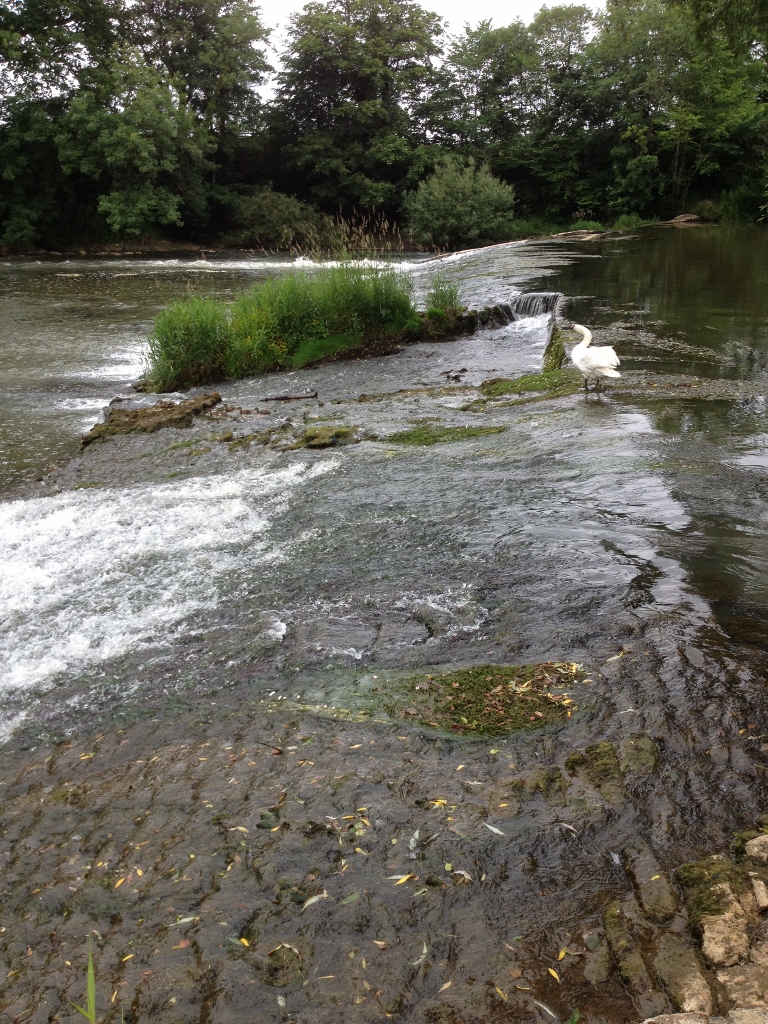
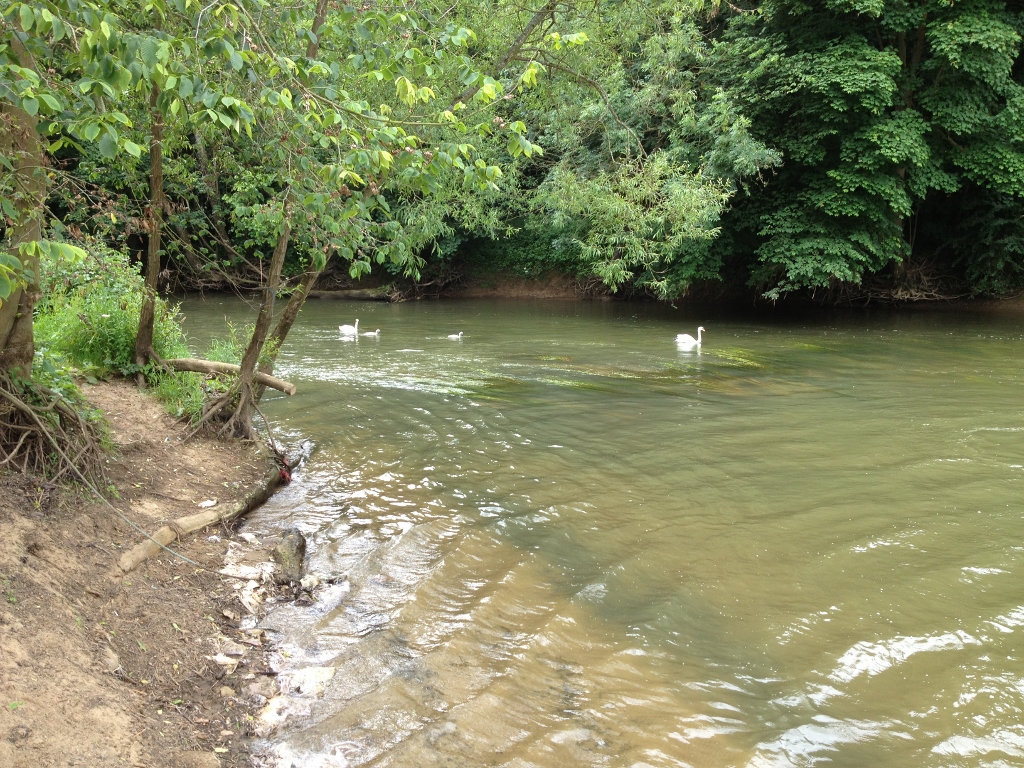
The weir on the River Derwent
A rich diversity of plant and animal life

Photographs unless otherwise credited are copyright of Eco Evolution

Blog Awards Ireland 2013 ~ We’ve been Short Listed!

Wow, Friday 13th 2013 will be a day to remember for Eco Evolution as we were short listed in the Blog Awards Ireland 2013. We were thrilled to have been nominated in the first place but are absolutely blown away by the fact that we made the short list in the Best Eco/Green Blog category sponsored by ESB eCar.

The quality of blogs in every category is very high this year and it’s great to see that so many of the blogs that we read on a regular basis have also been short listed in the various categories.

Thank you so much to those who nominated our blog and a big thank you to the judges who read it and decided that it was worthy of a place in the short list and to the organisers who were hard at work behind the scenes. I hope you all had a relaxing weekend after such a mammoth task.

Wishing everyone the very best of luck in the next round!

Better Energy Homes Schemes to continue in 2014

Today marked the significant milestone of 250,000 homes upgraded in Ireland through the highly successful Better Energy Homes schemes. Free home energy upgrades have been completed in 100,000 homes through Better Energy Warmer Homes Scheme. A further 150,000 homeowners have availed of the popular Better Energy Homes grants for insulation and heating upgrades. These homeowners  have already made energy savings of €150m over the past few years, and will continue to save €60m annually.

Funds for the ‘Better Energy Homes’ Schemes will continue to be available throughout 2014.  A separate programme of retrofit investment in the Local Authority housing stock has also recently commenced and a new fund has also been created this year to boost activity in terms of public and commercial building energy efficiency initiatives.

We will continue to provide funds for the Better Energy Schemes next year. We recently commenced a separate programme of retrofit investment in the Local Authority housing stock. We have also created a new fund this year to boost activity in terms of public and commercial building energy efficiency initiatives.” – See more at: http://www.seai.ie/News_Events/Press_Releases/2013/250-000-homes-upgraded-to-date-through-Better-Energy-schemes.html#sthash.2oAcDpcL.dpuf
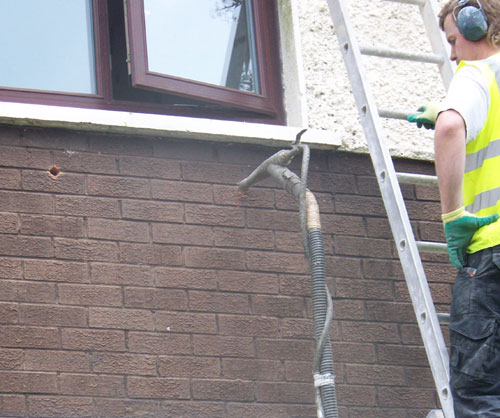
Cavity Wall Insulation
Improve the Energy Efficiency of your home with Cavity Wall Insulation

The Better Energy Warmer Homes scheme (BEWH), administered by the Sustainable Energy Authority of Ireland, funds energy efficiency improvements in the homes of the elderly and vulnerable, making the homes more comfortable, healthier and more cost effective to run. The Better Energy Warmer Homes services are provided by a panel of SEAI appointed non-profit community based organisations (CBO’s) and a panel of SEAI appointed private contractors. The Installers are assigned to a household depending on their geographic location. CBO’s and contractors deliver the BEWH to the highest quality assurance standards. Inspections are carried out on a sample of homes completed to ensure the standards are maintained.

The scheme is available to non-Local Authority owner occupied homes constructed before 2006. The owner of the property has also to be in receipt of one of the following:

  • Fuel Allowance as part of the National Fuel Scheme
  • Job Seekers allowance for over six months and with children under 7 years of age
  • Family income support

The service involves the installation of standard energy efficiency measures appropriate to the eligible household subject to SEAI survey, budget allocation and available capacity. The service is provided at no cost to the household and the measures currently available under this scheme are:

  • Attic insulation.
  • Draught proofing.
  • Lagging jackets.
  • Low energy light bulbs.
  • Cavity wall insulation.
  • Energy advice.
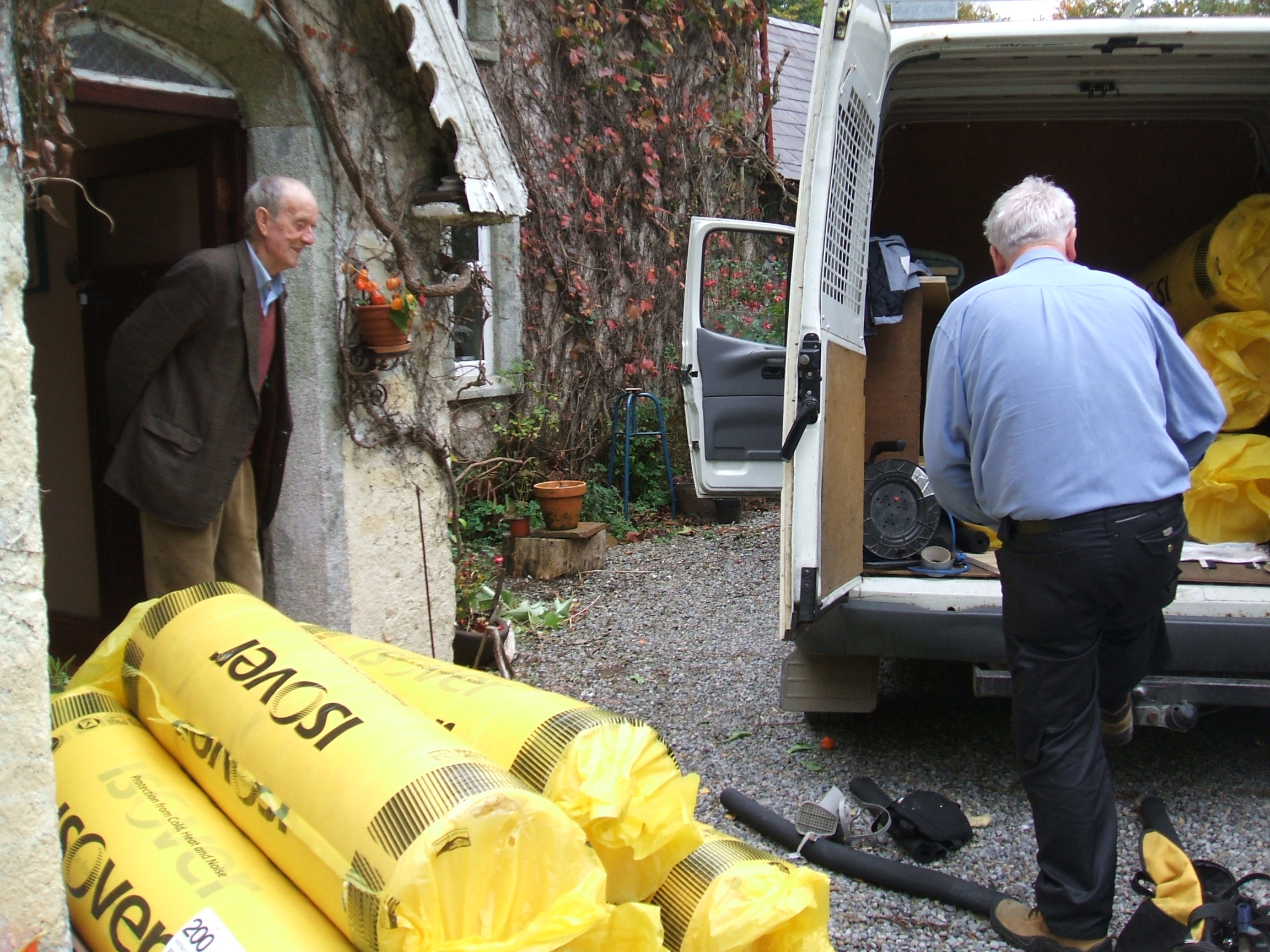
Attic Insulation - The Better Energy Warmer Homes Scheme
Improve the Energy Efficiency of your home with  Attic Insulation

Landlords can avail of grants from Better Energy Homes if they have tenants in, or at risk of, energy poverty.

The Better Energy Homes scheme provides assistance to homeowners to reduce energy use, costs and greenhouse gas emissions and improve the comfort levels within their home. It is a national scheme therefore all homeowners of dwelling built before 2006 may apply. Landlords and owners of multiple properties may also apply, however they must submit a separate application form for each property.  Grants are available for eligible applicants for under taking the following upgrades.


The Minister further commented: “The significance of reaching this milestone should not be underestimated – retrofitting 250,000 homes out of 1.6m permanently occupied homes is a huge achievement. However, it’s also appropriate to look forward and consider the economic and health benefits that we could realise if the rest of the inefficient housing stock was upgraded. I encourage everyone to ‘get efficient’ and take advantage of the Better Energy grant programmes.”
– See more at: http://www.seai.ie/News_Events/Press_Releases/2013/250-000-homes-upgraded-to-date-through-Better-Energy-schemes.html#sthash.AN22IxeN.dpuf
Better Energy Warmer Homes (BEWH) services are provided by a panel of SEAI appointed non-profit community based organisations (CBOs) and a panel of SEAI appointed private contractors. – See more at: http://www.seai.ie/Grants/Warmer_Homes_Scheme/How_are_the_services_provided.html#sthash.Fy4cpN9g.dpuf
The Better Energy Homes scheme provides assistance to homeowners to reduce energy use, costs and greenhouse gas emissions and improve the comfort levels within their home.  – See more at: http://www.seai.ie/Grants/Better_energy_homes/About_the_Scheme/#sthash.70EBadk9.dpuf
Mr Pat Rabbitte TD, Minister for Communications Energy and Natural Resources, today marked the significant milestone of 250,000 homes upgraded in Ireland through the highly successful Better Energy schemes. Free home energy upgrades have been completed in 100,000 homes through Better Energy Warmer Homes Scheme. A further 150,000 homeowners have availed of the popular Better Energy Homes grants for insulation and heating upgrades. – See more at: http://www.seai.ie/News_Events/Press_Releases/2013/250-000-homes-upgraded-to-date-through-Better-Energy-schemes.html#sthash.fgqwjAOa.dpuf
Mr Pat Rabbitte TD, Minister for Communications Energy and Natural Resources, today marked the significant milestone of 250,000 homes upgraded in Ireland through the highly successful Better Energy schemes. Free home energy upgrades have been completed in 100,000 homes through Better Energy Warmer Homes Scheme. A further 150,000 homeowners have availed of the popular Better Energy Homes grants for insulation and heating upgrades.
– See more at: http://www.seai.ie/News_Events/Press_Releases/2013/250-000-homes-upgraded-to-date-through-Better-Energy-schemes.html#sthash.fgqwjAOa.dpuf
Mr Pat Rabbitte TD, Minister for Communications Energy and Natural Resources, today marked the significant milestone of 250,000 homes upgraded in Ireland through the highly successful Better Energy schemes. Free home energy upgrades have been completed in 100,000 homes through Better Energy Warmer Homes Scheme. A further 150,000 homeowners have availed of the popular Better Energy Homes grants for insulation and heating upgrades.
– See more at: http://www.seai.ie/News_Events/Press_Releases/2013/250-000-homes-upgraded-to-date-through-Better-Energy-schemes.html#sthash.fgqwjAOa.dpuf
Mr Pat Rabbitte TD, Minister for Communications Energy and Natural Resources, today marked the significant milestone of 250,000 homes upgraded in Ireland through the highly successful Better Energy schemes. Free home energy upgrades have been completed in 100,000 homes through Better Energy Warmer Homes Scheme. A further 150,000 homeowners have availed of the popular Better Energy Homes grants for insulation and heating upgrades.
– See more at: http://www.seai.ie/News_Events/Press_Releases/2013/250-000-homes-upgraded-to-date-through-Better-Energy-schemes.html#sthash.fgqwjAOa
Mr Pat Rabbitte TD, Minister for Communications Energy and Natural Resources, today marked the significant milestone of 250,000 homes upgraded in Ireland through the highly successful Better Energy schemes. Free home energy upgrades have been completed in 100,000 homes through Better Energy Warmer Homes Scheme. A further 150,000 homeowners have availed of the popular Better Energy Homes grants for insulation and heating upgrades.
– See more at: http://www.seai.ie/News_Events/Press_Releases/2013/250-000-homes-upgraded-to-date-through-Better-Energy-schemes.html#sthash.fgqwjAOa.dpuf
Waterwheels ~ Ancient Wheels of Power

Travelling throughout the country both here in Ireland and in the UK I see mills dotted around the countryside that are just derelict structures on a river bank and some that are working mills with water wheels generating electricity. The waterwheel is an ancient device that uses flowing or falling water to create power by means of a set of paddles or buckets mounted around a wheel. A waterwheel consists of a large wooden or metal wheel, with a number of paddles or buckets  arranged on the outside rim forming the driving surface. Most commonly, the wheel is mounted vertically on a horizontal axle.

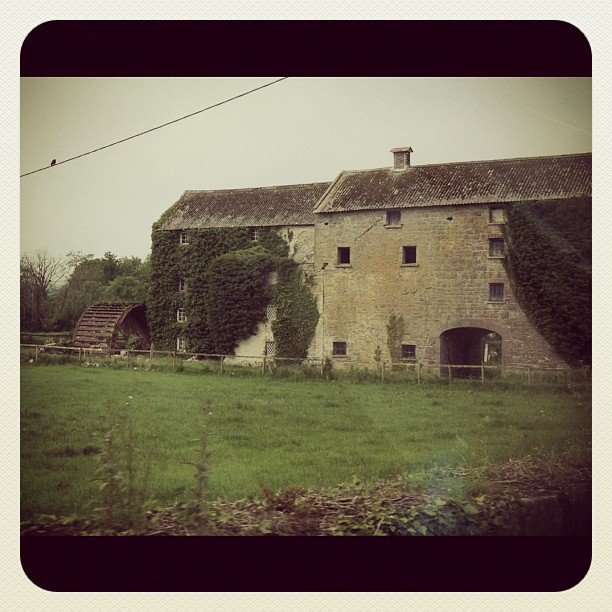
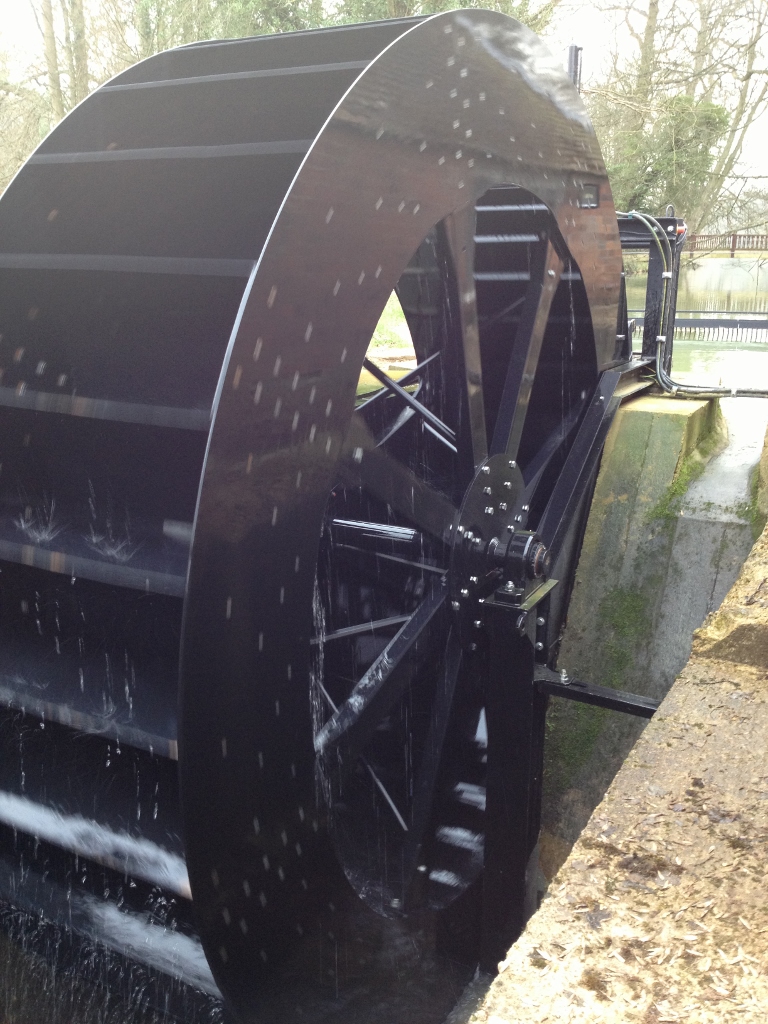
Derelict Mill and Waterwheel

Prior uses of water wheels include milling flour in gristmills and grinding wood into pulp for paper making, but other uses include hammering wrought iron, machining, ore crushing and pounding fibre for use in the manufacture of cloth.

Bretts Sion Mills
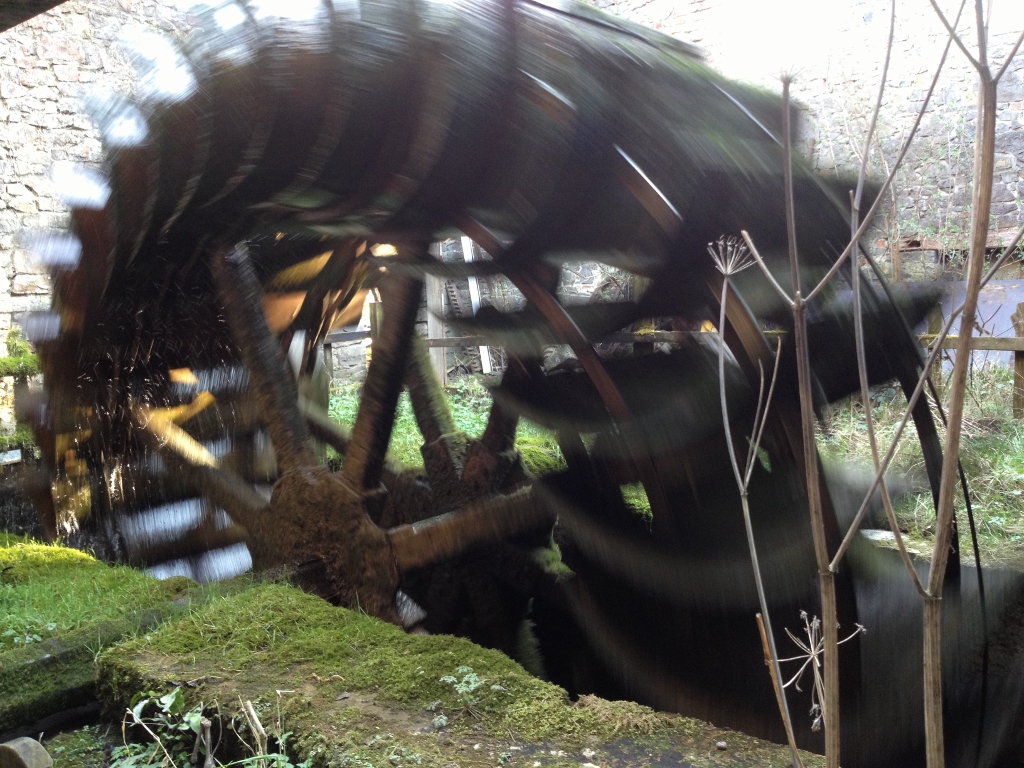
Working Waterwheel

On occasion the old water wheel is still insitu and can be refurbished but in many cases the wheel has been removed and sadly sold for scrap metal value or taken apart to be kept as keepsakes or used as garden ornaments.

Derelict Mill and Wa
Derelict Mill and Waterwheel

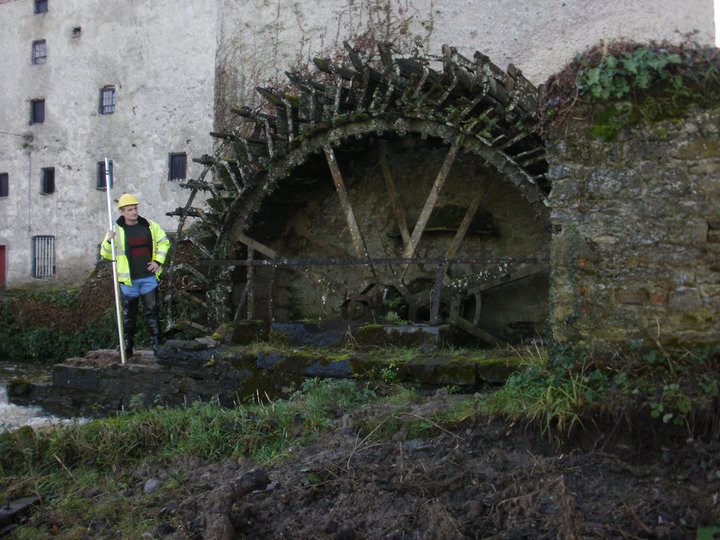
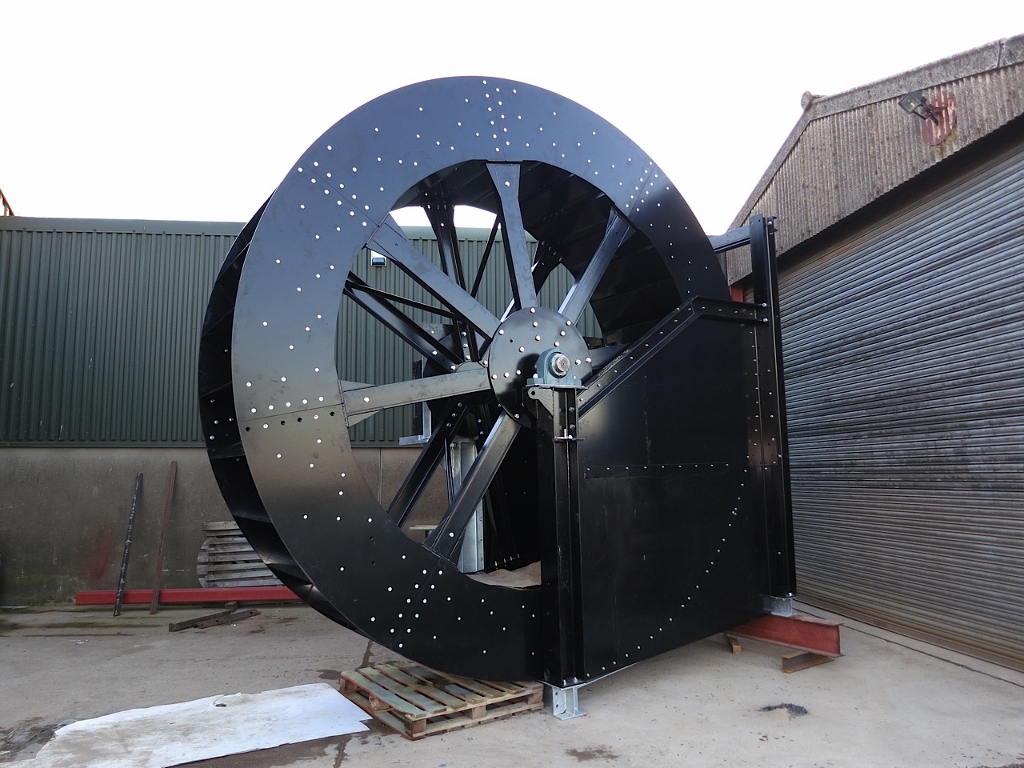
If a mill has a vacant wheel pit it is possible to construct a water wheel which is aesthetically pleasing and brings the character back to the old mill.

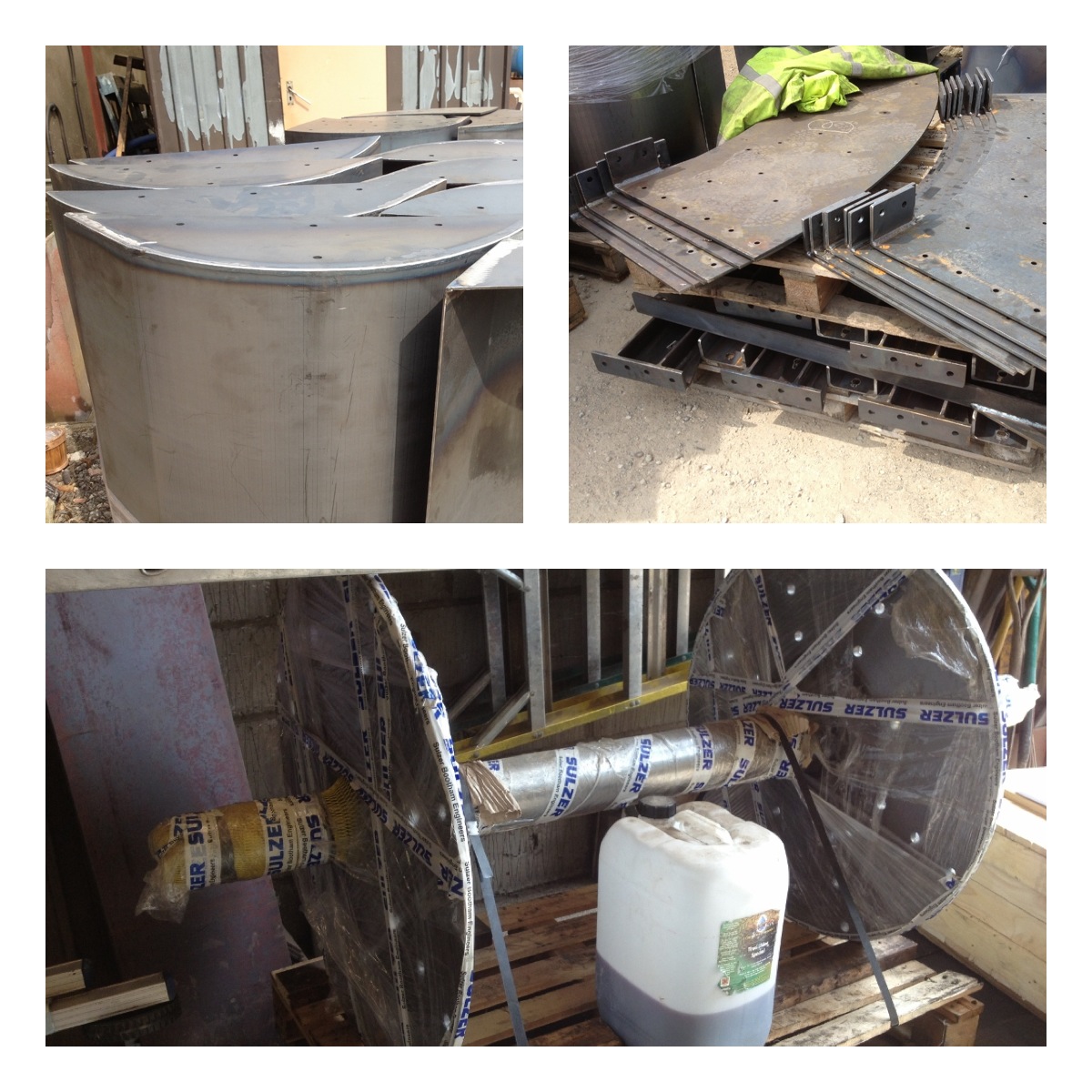
Waterwheel Components


Completed laser cut waterwheel
The installed laser cut waterwheel

Advantages of waterwheels

Waterwheels are widely regarded as being rather inefficient compared with turbines. This is not necessarily the case as studies have shown that waterwheel efficiency can be in excess of 80% for Overshot waterwheels and 75% for Breast-shot waterwheels [Muller 2004]. This in combination with highly respectable part-flow performance and lack of fine intake screening requirements can often result in very worthwhile overall energy capture so are still a viable proposition for producing electricity for domestic purposes. They are simple to control and aesthetically pleasing. Although they run relatively slowly and require a high ratio gearbox to drive a generator, for low powers – say below 5kW – and heads below 3m, they are worth considering.

Water wheels are also safe for the passage of fish.

  • Output reduction due to screen blockages is avoided since fine intake screens are not required.
  • Part-flow performance of waterwheels can be very good without requiring complex control systems.
  • Often minimal building work is required, particularly at former watermills if there is a vacant wheel pit.
  • Waterwheels have obvious aesthetic benefits over turbines and provide an excellent attraction at sites where visitors are encouraged.

If you are the owner of an old mill or indeed a mill site and would like to find out more please contact us here for further information and we will endeavour to point you in the right direction.

All photographs are copyright of Eco Evolution
It’s True! The Archimedean Screw is Fish-friendly.

Archimedean Screws are the preferred hydro-turbine for the development of low head sites. They provides a fish-friendly alternative to conventional turbines and sites with fish protection issues.

As a renewable energy company that cares about environment we have done our research on all our products before taking them on board and are happy with the test results proving that the Archimedean Screw is in fact fish-friendly.

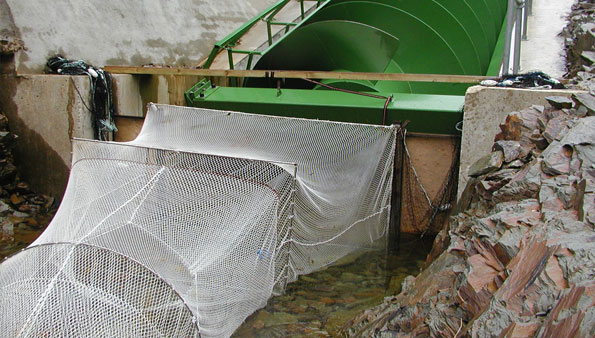
Fyke Net at oveflow
Fyke Net at oveflow

Fish Passage Testing:

Extensive fish passage tests have conclusively demonstrated that the large water chambers and slow rotation of the Archimedean Screw allow fish of all sizes, and debris safe passage through the turbine. As a result, the Environment Agency has agreed that no screening is required. Literally thousands of fish passages have been monitored and recorded using underwater cameras at the intake, inside the chamber of the Screw itself and at the outflow to assess the effect of the Screw on salmonids (including smolts and kelts), brown trout and eels.

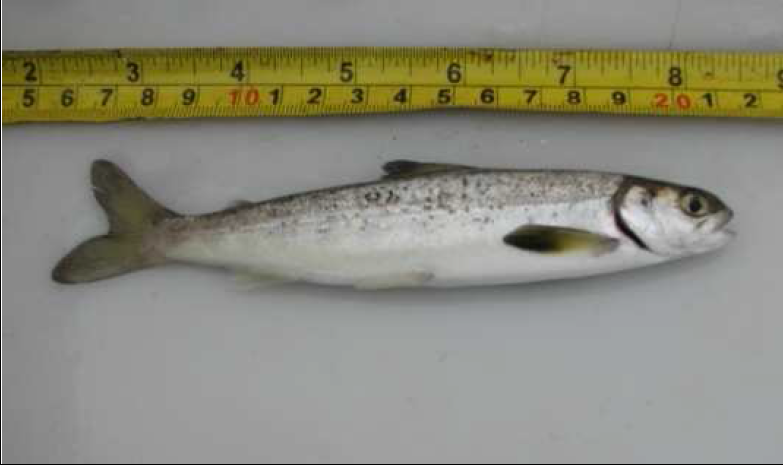
Salmon smolt caught passing naturally downstream through the turbine

Fish Passage Test Results Phase 1

Fish Passage Test Results Phase 2

Fish Passage Test results Phase 3

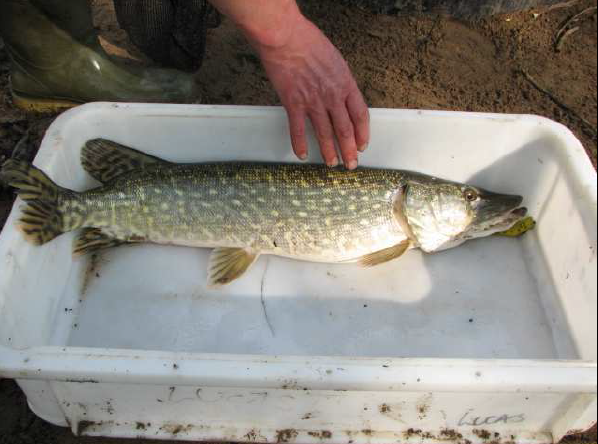
73cm Pike after passing through the turbine

The trials looked at fish passage across a broad spectrum of sizes and turbine speeds, possibly the most impressive of which was the safe passage of a kelt measuring 98cm in length and weighing 7.6kg. In addition, behavioural and migrational patterns across the species have been shown to be entirely unaffected by the turbine. The implication of these findings is extremely positive for the economics of micro-hydro. Sites previously written off for hydro development owing to fish protection issues can be revisited, and the cost of installation for an Archimedean Screw turbine will be significantly reduced by the requirement for only minimal screening.

New recommendations in place for the UK:

Although over 100 screw turbine systems are currently operational on the continent, with no reported fisheries issues or problems, in the UK recommendations are in place to reduce the risk of Archimedean Screws even further.

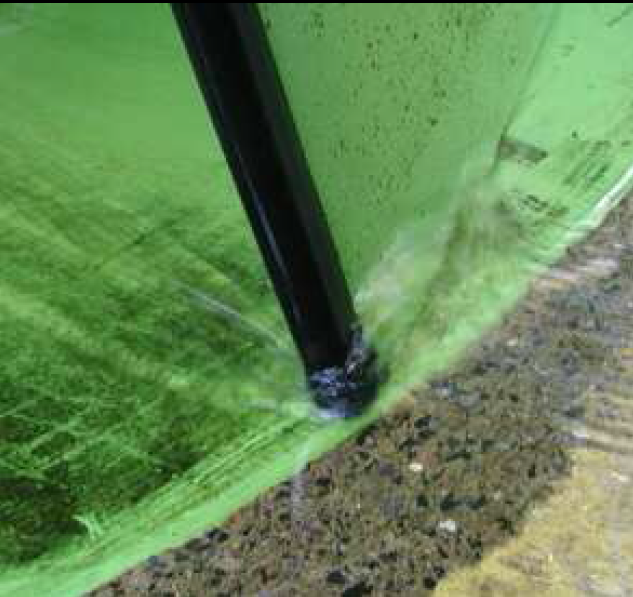
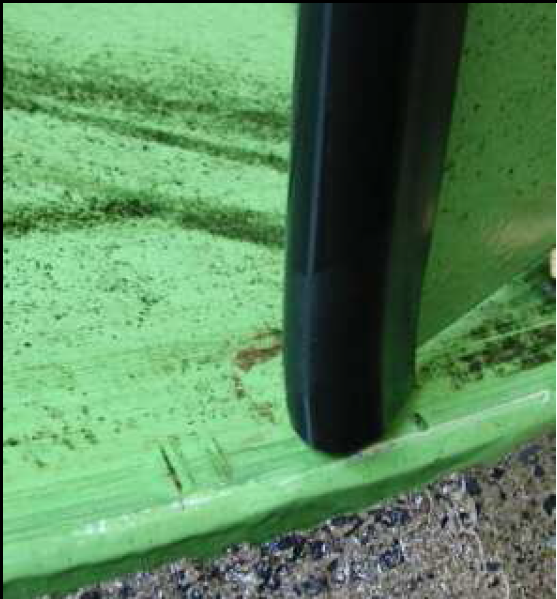
Rubber bumper on leading edge of the Archimedean Screw
Rubber bumper on leading edge of turbine blade

Work by Fishtek Consulting  on risk of injury should a fish be struck by the leading edge of a turbine led to the recommendation that in order to minimise the risk of injury, the leading edges of small Archimedean Screws under 2.5m in diameter should be fitted with rubber bumpers and larger turbines with fish friendly compressible bumpers to mitigate the effects of higher inpact speeds on the largest screw turbines in use. These bumpers are now required as standard on larger Archimedean Screws.

For full report see: Archimedean Screw Risk Assessment: Strike and delay Probabilities

Rubber bumper attached to leading edge of the Archimedean Screw
Rubber bumper attached to leading edge of turbine blade


Photographs copyright  Fishtek and Mannpower Consulting Ltd.,

Please Note: All the reports are copyright and may not be used for commercial purposes without the prior consent of Mannpower Consulting Ltd.


Blog Awards Ireland 2013

What a surprise when we discovered our blog had been nominated in the Blog Awards Ireland 2013. Over 3,500 blogs were nominated in this years awards and we were lucky enough to be nominated in the Best Eco/Green Blog category which is sponsored by ESB eCars. A very big thank you to our blog readers who felt that our blog deserved this recognition.

For now we are in the Long List of nominations which we are delighted with as we are among the cream of Irish Eco/Green Bloggers. We will wait with baited breath now to find out on the 8th September to see if we managed to get into the Short List.  The finalist judging will then take place and the winner will be announced and presented with their well deserved award in the Osprey Hotel in Naas on the 12th October.

Good luck everyone!

thank you

Image: Photopin


Global Wind Day 2013 – Ireland
Global wind day
Global wind day

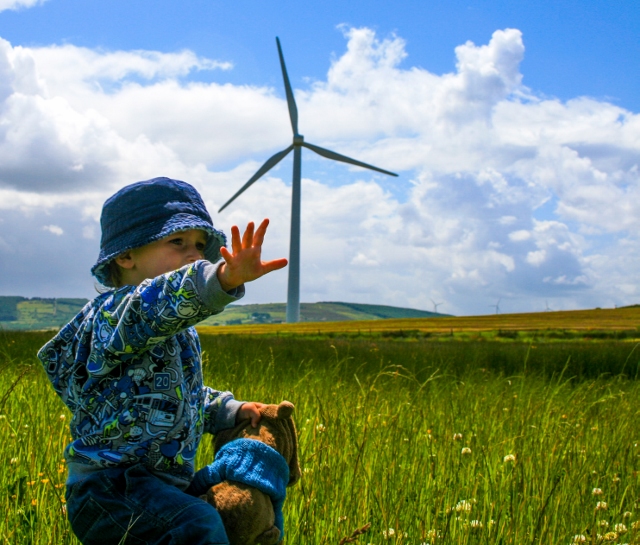
Global Wind Day is a worldwide event that occurs annually on 15 June. It is a day for discovering wind, its power and the possibilities it holds to change our world. This year it is being marked in Ireland through a series of events across the country including ‘Walk and Talk’ open days at numerous wind farms across Ireland.

It is also a day for discovery of the work that has already begun by pioneers around the world. In more than 75 countries around the world, wind farms are in operation, generating energy from a clean and renewable source.

Thousands of individuals are involved in the production of energy from the wind, but for many people, wind energy is a mystery. Global Wind Day is the day when you can visit wind farms, meet experts, attend events and find out everything you want to know about wind energy.

The European Wind Energy Association (EWEA ) and the Global Wind Energy Council (GWEC ) coordinate the Global Wind Day through a network of partners. The day started as a European one in 2007 and went Global in 2009. On 15 June, thousands of public events are organised all over the world.

IWEA Global Wind Day 2013 Winner: Paul Whelan highlights the need to create a sustainable future in order to protect the wellbeing of future generations. Location: Tournafulla wind farm, Co.Limerick
IWEA Global Wind Day 2013 Photography Competition Winner: Paul Whelan Location: Tournafulla wind farm, Co.Limerick

How it all began:

The Wind Day was first held in 2007, as the European Wind Day organised by the European Wind Energy Association (EWEA). The main idea was to connect a network of partners as well as using centralised communication tools, press releases and distribution of gadgets and coordinate of event organised by national wind energy associations and companies active in the wind energy field. The Wind Day in 2007 reached 18 countries, with a participation of around 35,000 people. By 2008, the event’s reach extended to 20 European countries and attracted 100,000 people.

In 2009, EWEA joined forces with the Global Wind Energy Council (GWEC) and extended the reach from European associations and companies to coordinate Wind Day events across the globe. That year, the 300 events in 35 countries across the globe reached up to 1,000,000 people.

In 2010 and 2011 between 220 and 230 events took place in around 30 countries. Since 2009, Global Wind Day has reached more than 1,000,000 people plus the thousands of people engaging and supporting the event through online means such as social media.

Last year was a great success in Ireland  with over 1000 people visiting wind farms across the country. This year sees a number of wind farms across Ireland hosting an array of events to celebrate wind energy. The activity dates vary and some are hosting family days whilst others are inviting schools for fun, games and facts on wind.

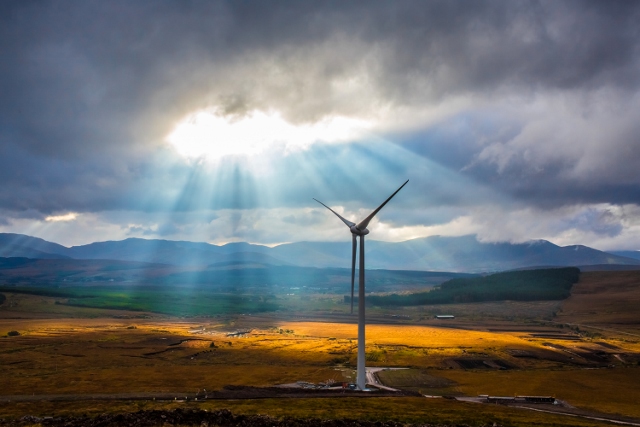
IWEA Global Wind Day Photo Competition Runner Up: Keith Arkins highlights how wind turbines can become immersed in their environment and often complement their surroundings. Location: Cahersiveen, Co. Kerry.
IWEA Global Wind Day Photo Competition Runner Up: Keith Arkins Location: Cahersiveen, Co. Kerry.

Global Wind Day sends the message across the world that wind energy is a key solution to the looming energy crisis – our over dependency on imported and finite fossil fuels – and the climate change crisis, and that it is already working. It helps people realise that wind energy is a popular and mainstream power technology.

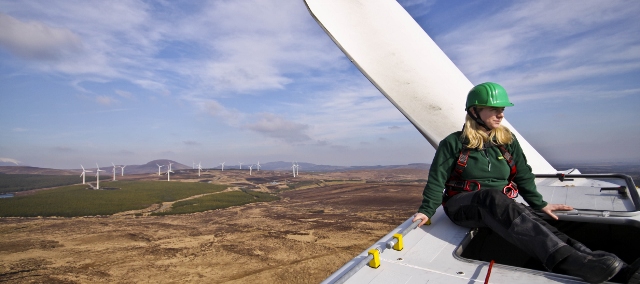
IWEA Global Wind Day 2013 Photography Competition 2013  Runner Up: Philomena Kenealy's entry, taken by photographer Ross Harding captures the economic and societal benefits wind energy delivers for Ireland’s next generation with her picture of Engineer JulieBrett sitting upright atop a wind turbine with a 44 metre hub height in Raheem Barr Windfarm, Castlebar Co. Mayo
IWEA Global Wind Day 2013 Photography Competition Runner Up: Philomena Kenealy’s entry, taken by photographer Ross Harding. Location: Raheem Barr Windfarm, Castlebar Co. Mayo

IWEA Photography Competition Winners:  Global Wind Day photo competition  – highlighting the benefits of harnessing wind power to replace unsustainable fossil fuels.

Events organised around Ireland to celebrate Global Wind DayIrish Wind Energy Association (IWEA)

Take Action for Renewables – Tell world leaders to switch to renewable energy


Kings River Community – Building a Sustainable Future

Kingsriver Community was founded in 1986 and has been providing residential and daycare programmes for adults and young people with a variety of special needs in a community setting since that date. The focus is on people’s abilities rather than their disabilities. Initially providing  workplace training and employment possibilities through high end furniture manufacture, Kingsriver now concentrates on providing quality, person centred, opportunities in a range of areas including woodwork, arts and craft, health related exercise and living skills. Kingsriver Community also provides a residential service for a small group of people. Kingsriver Community is a FETAC registered centre providing accredited courses and an accredited hosting organisation in the Europen Voluntary Service (EVS) programme.

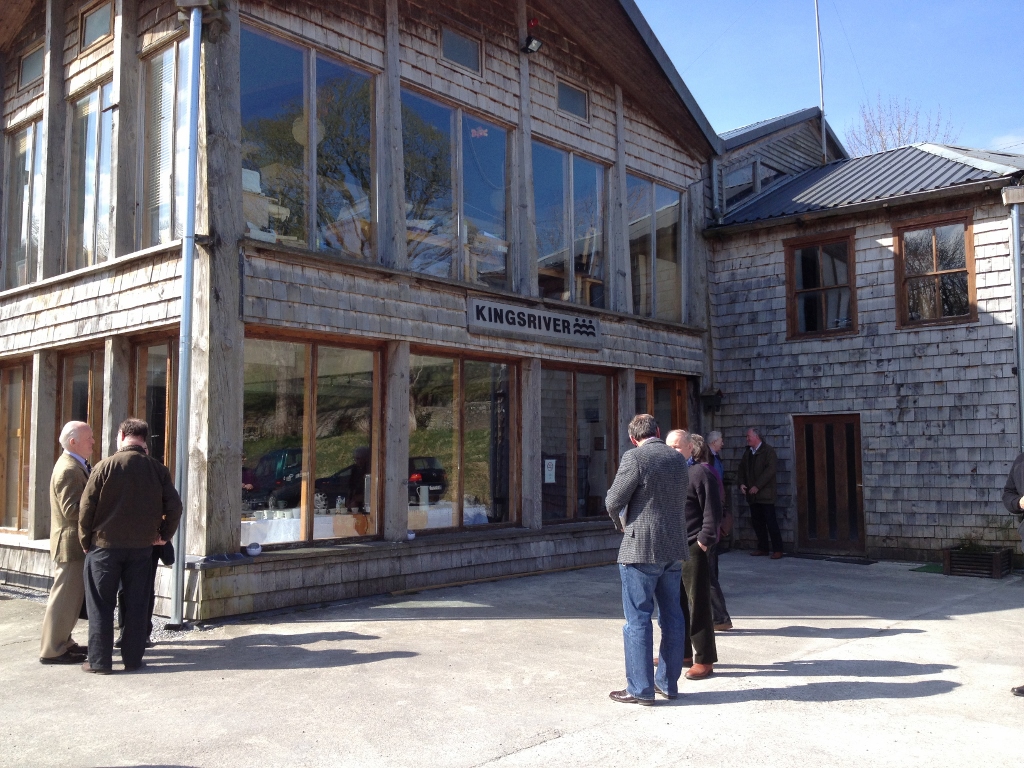
Kings River Community Timber clad building

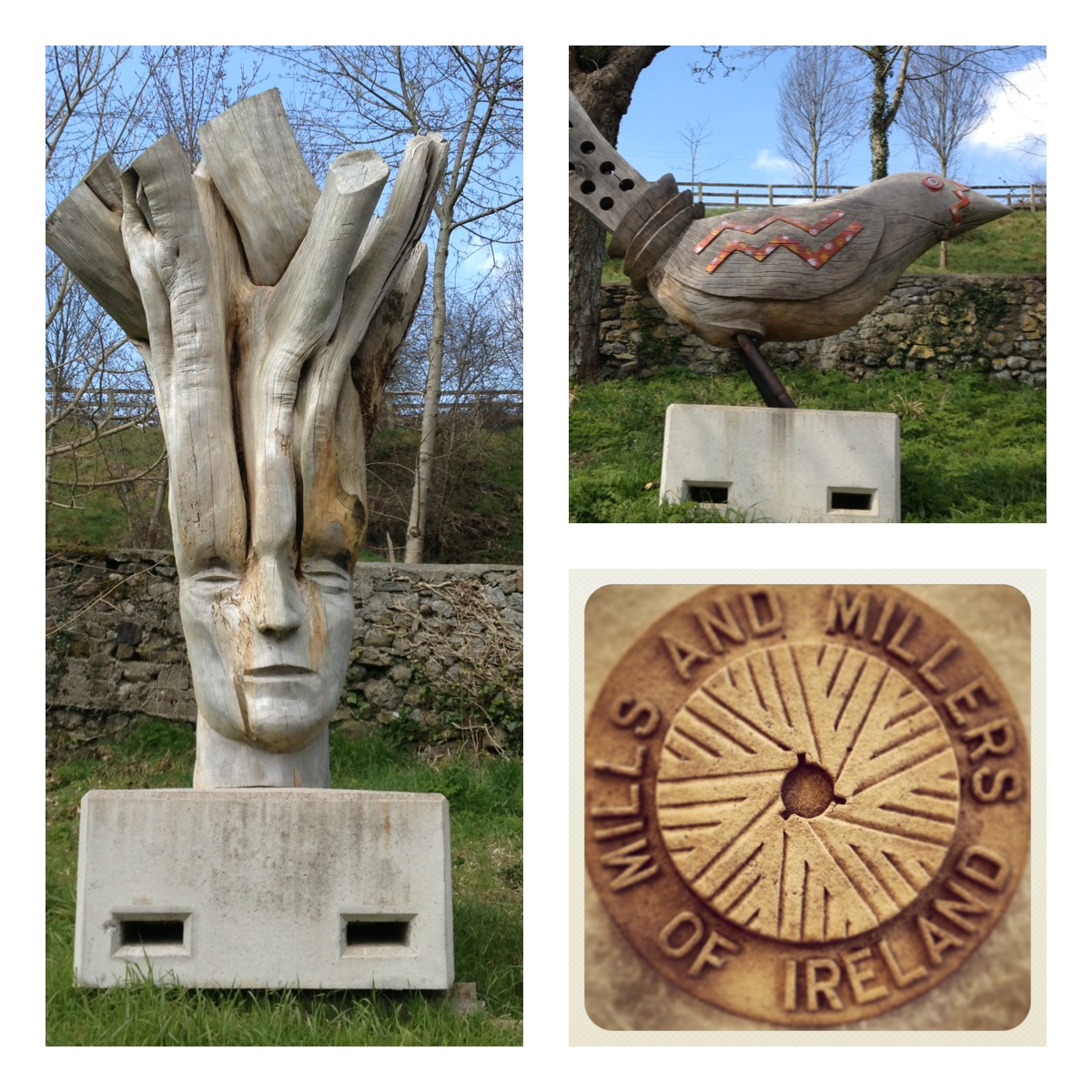
Blue skies and sunshine, what a way to start the Mills and Millers Spring Event. Arriving at the Kings River Community the first thing to catch our eye was the wonderful sculptures lining the entrance to the main building –  a wonderful timber clad energy efficient building.

Handmade timber sculptures and Mills and Millers plaque

The members of the Mills and Millers of Ireland gathered to hear Pat Phelan of the Kingsriver Community speak about the plans for the Kingsriver site, their hydro application and plans for the mill buildings. Colm Byrne of GLAS Learning Centre gave a quick overview of the mill sites we would visit and then showed us around the training rooms and display areas.

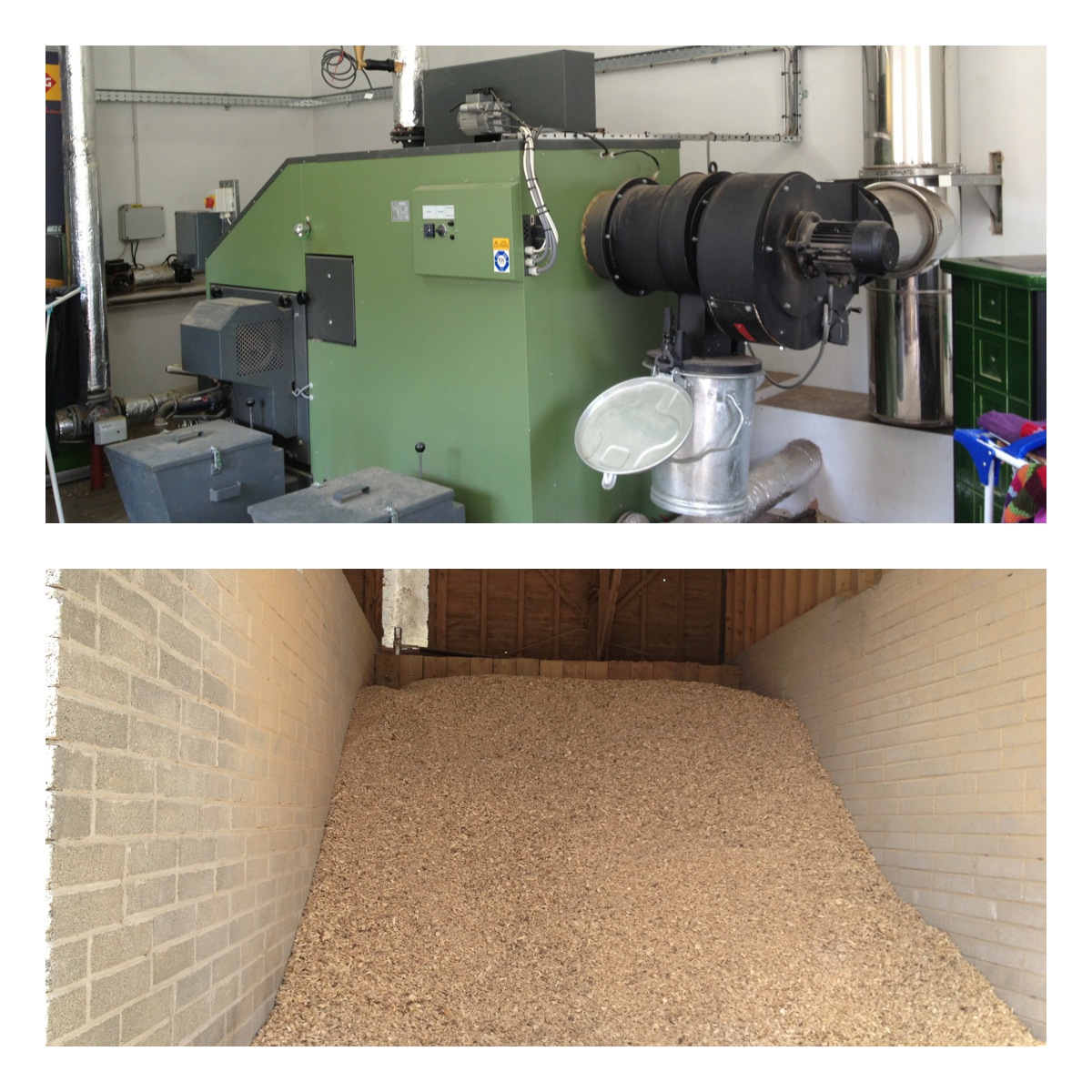
The installation of a 200kW wood chip boiler fuelled by locally sourced wood chip was installed at the centre in 2010. The boiler is at the centre of a local heating network, displacing gas and electricity as heat sources for the workshops, showrooms and accommodation units.

200kW Biomass Boiler fueled by locally sourced wood chip

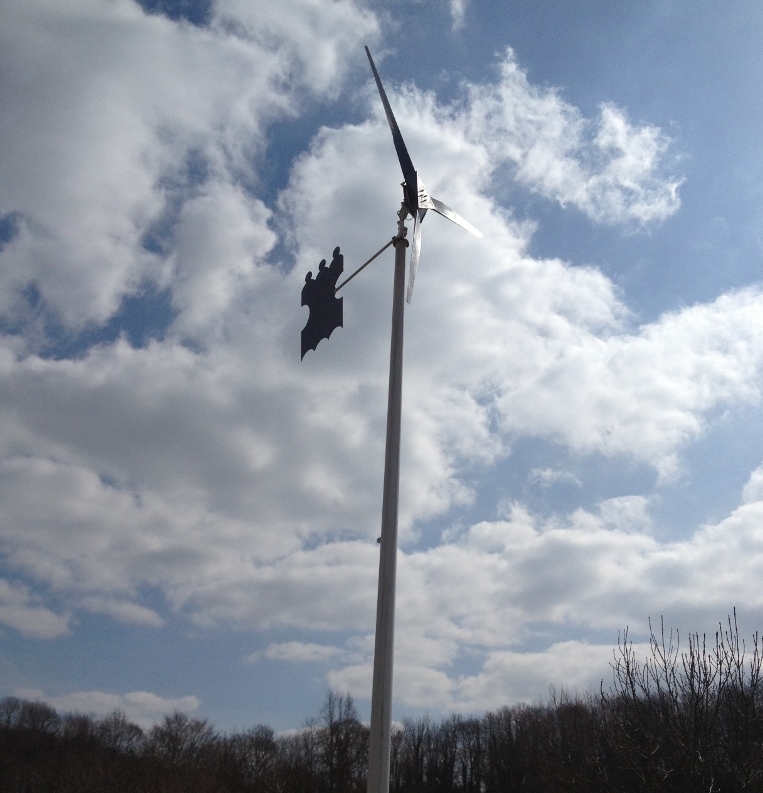
The Kingsriver Community built their own 4.2m off grid wind turbine on site and is now fully operational. Glas Learning organised the ‘Build Your Own Wind Turbine’ workshop which was conducted by Hugh Piggott.

The Kingsriver 4.2m off grid wind turbine

During the earlier presentation we heard about the plans for the old mill which has a preservation order on it. With its impressive seven stories it is the highest mill in the area. The Community group are planning to install an Archimedean Screw Hydro Turbine and convert the mill building into an educational and visitor centre.  The Archimedean Screw hydro scheme that is planned is currently at the design stage. .

Pilworth Mill situated on the Kingsriver
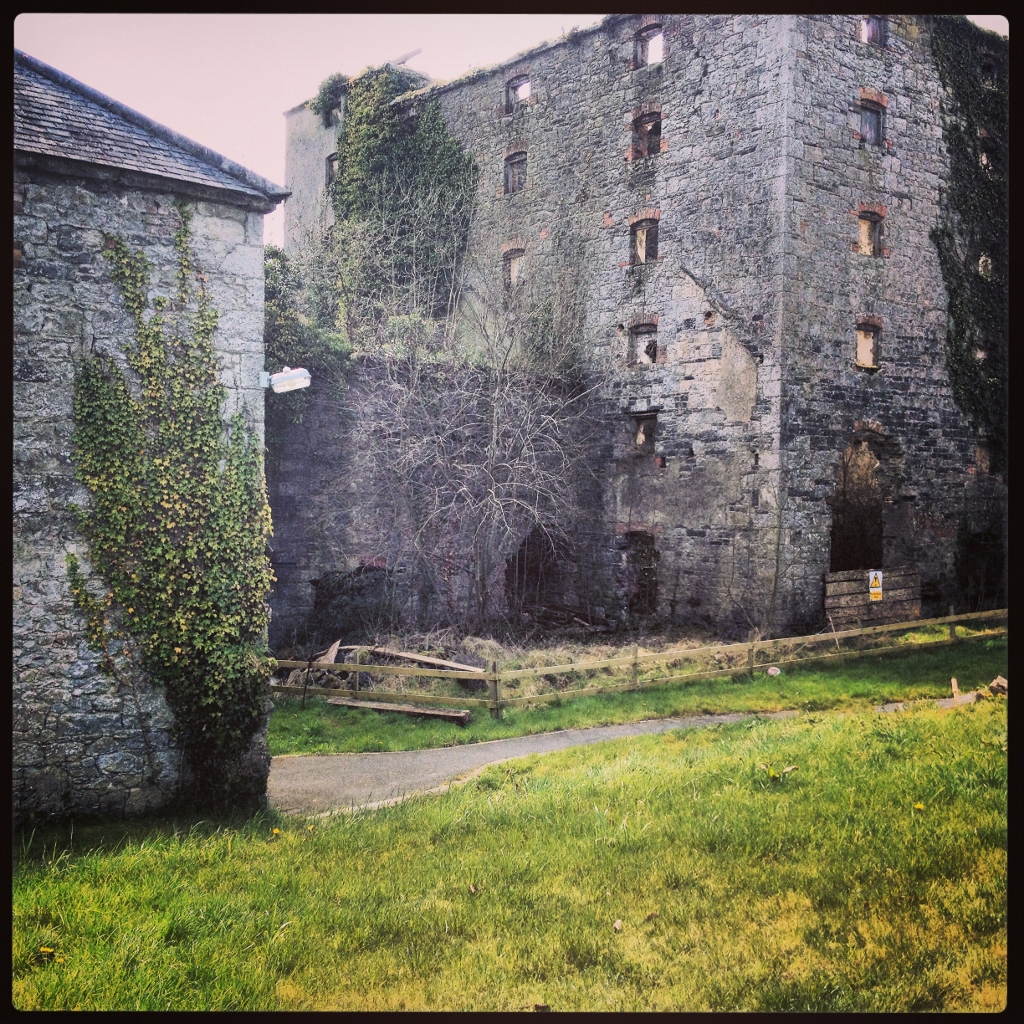
Rockview Mill also known as O’Brien’s Mill situated on the Kingsriver

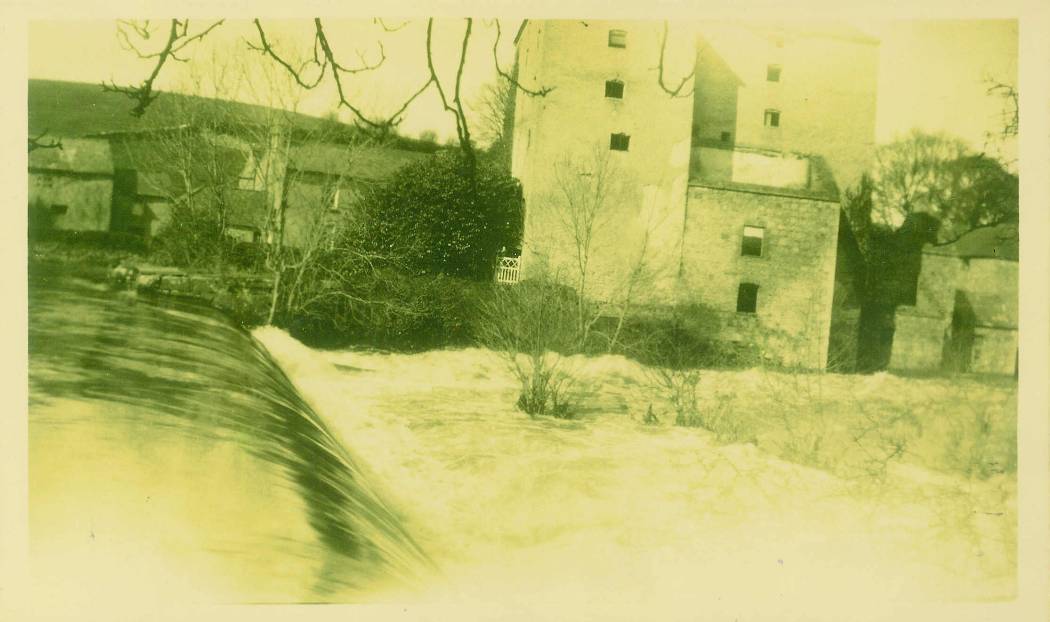
Rockview Mill  this was a fine seven-storied limestone structure.  It was well  preserved until 1989 when part of the front roof was damaged in a storm.  The  Griffith Valuation Records show Rockview Mill leased by Robert Pilsworth from  Margaret Mc Creery in 1845 – the value of the buildings being £113.

Rockview Mill in operation and prior to its collapse
Rockview Mill prior to its collapse

The Pilsworth family of Thomastown commenced  their milling enterprise in 1845 when Robert leased the above mill and the  nearby Merino factory.  In 1847, Robert married Ellen, daughter of William Bull,  owner of Grennan Mill, Thomastown.  William died in 1848 and Robert became  owner.  He installed his brother Thomas as manager of Grennan Mill and his  brother William as manager of Merino Mill.  In 1864 Robert took over the  management of Grennan Mill which by then had become the more important business,  as it was adjacent to the railway in Thomastown.  Management of Rockview was  given to a relative – Thomas Booth, he was to work the mill for one third of the  profits.  Robert died in 1870, leaving two sons under 21 years.  They were  placed under the guardianship of Rev. James Graves, Rector of Ennisnag.  By 1876  the two young Pilsworths were suing Booth for mismanagement as Rockview began  losing money.  Booth was fired and Rockview was closed the two Pilsworths  taking over management of Grennan Mill (Silverman and Gulliver 1986).  Later,  Rockview Mill and house were owned by Dr. T. O’Brien – the mill being used for  storage purposes. In 1986 the King’s River Community purchased the house and  mill.

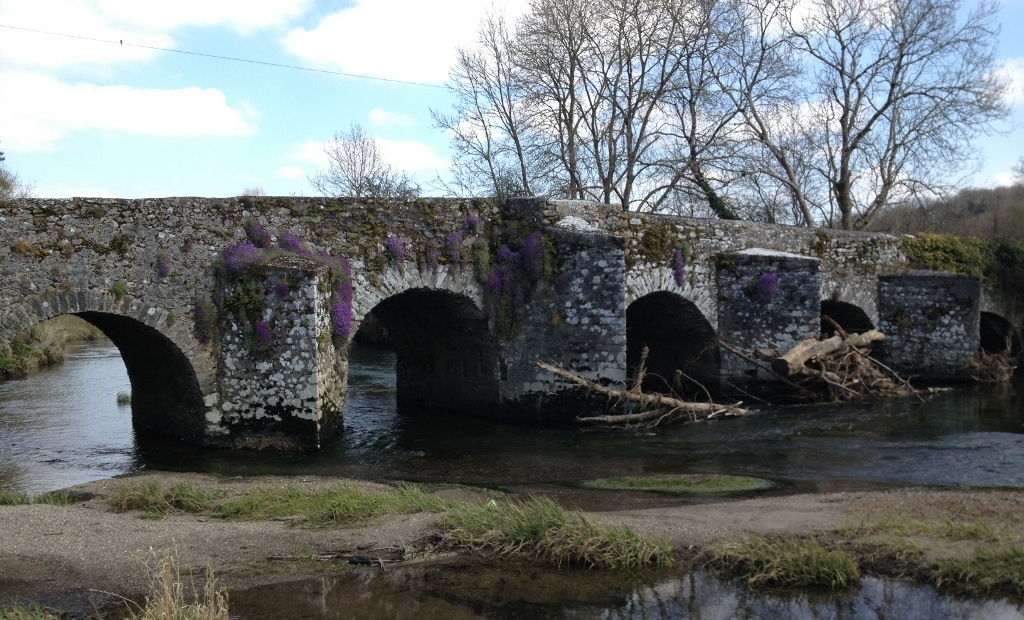
The oldest or one of the oldest bridges in Ireland

The students and residents are busy preparing the Community Garden for the season ahead where they grow a vast range of organically grown fruit and vegetables. A glasshouse and a room in front of it for changing into garden clothes and washing hands is under construction at present. The Kingsriver Community have to be admired for their vision and continuous efforts in working towards a sustainable future. Other plans for the area include the building of independant houses, development of the islands, bridges and the 6 acre wood.

At the entrance to Kingsriver Community one cannot help but notice and admire the wonderful old stone bridge covered in campanula. The bridge is the  oldest, or one of the oldest bridges in Ireland.  It was once a toll bridge on what was then the main Waterford/Dublin Road over which horses and carts crossed heading to the mill.


Bealey’s Weir Hydropower

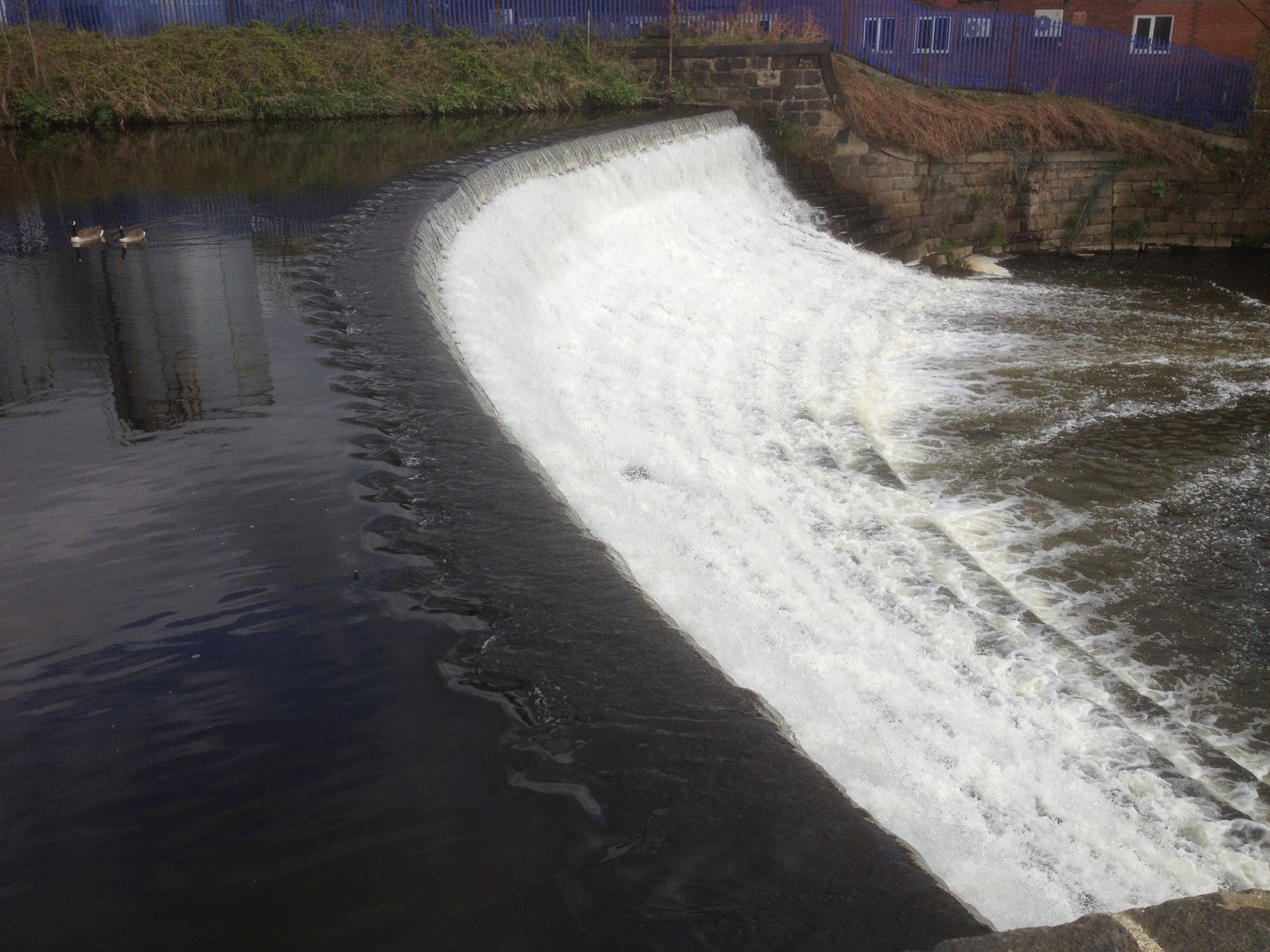
The Bealey family arrived in Radcliffe in 1732, operating as whitsters (bleachers) from a factory in Drumers Lane and used bleach fields close to the parish church of St. Mary’s, next to the river Irwell. Although the Drumers Lane site was close to the river, it was above the river level. The bleach works used large quantities of water for both processing and power (Bealey’s had eight water wheels in 1794) so they built a weir in 1811 further upstream on the Irwell to provide a constant head of water with long feeder or millrace.

A channel known as Bealey’s goit  was dug to carry the water the 1.4 miles (2¼ kilometres) to the factory and this can be seen today along with a Sluice Gate that is situated between the river and the Goit.

The Sluice Gate that is situated between the river and the Goit.

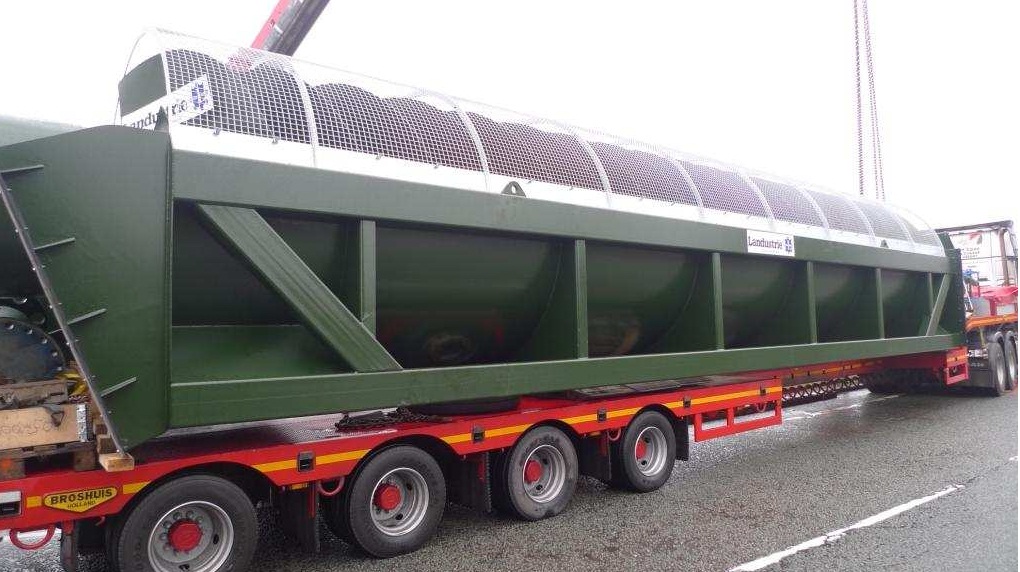
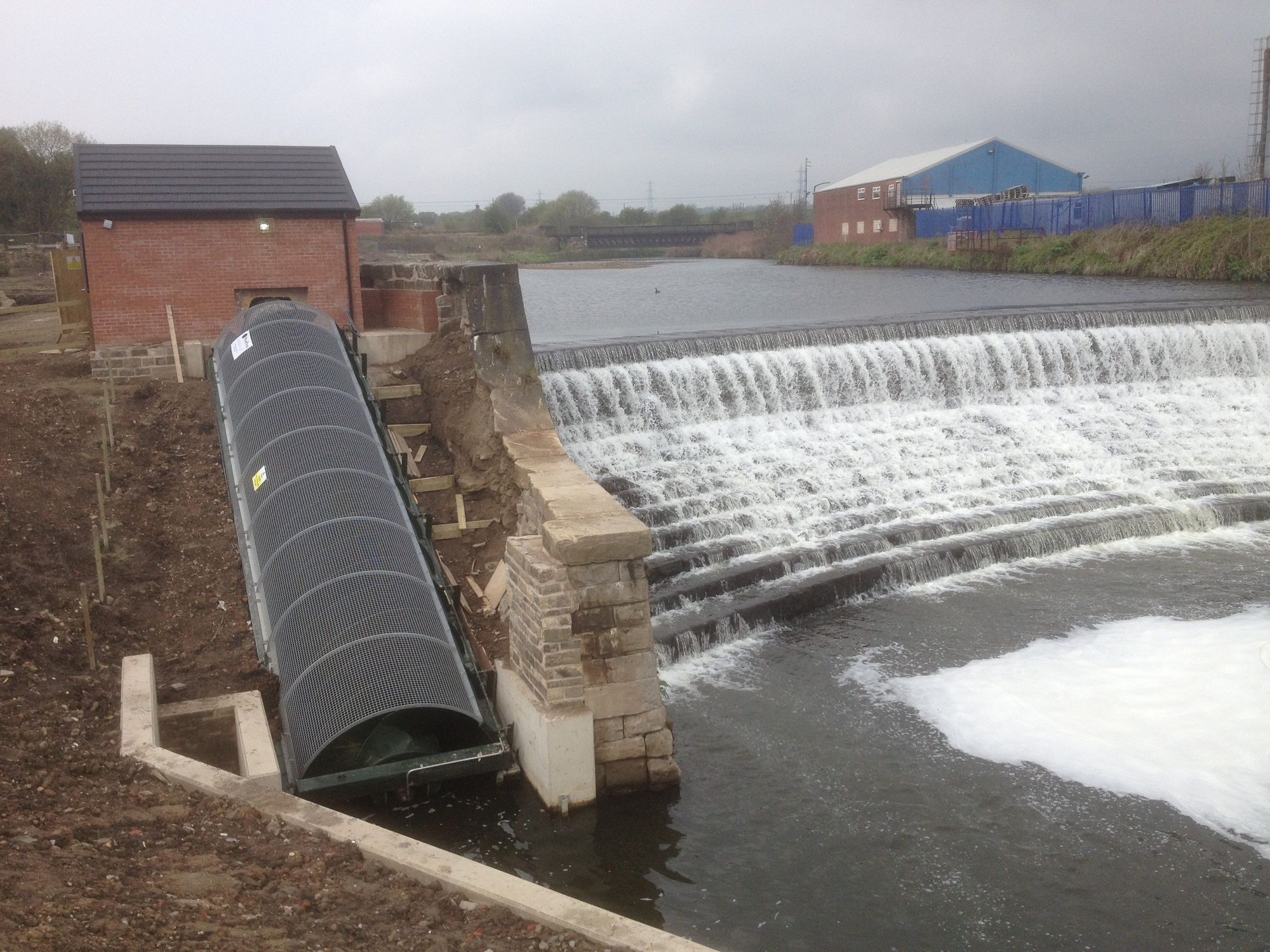
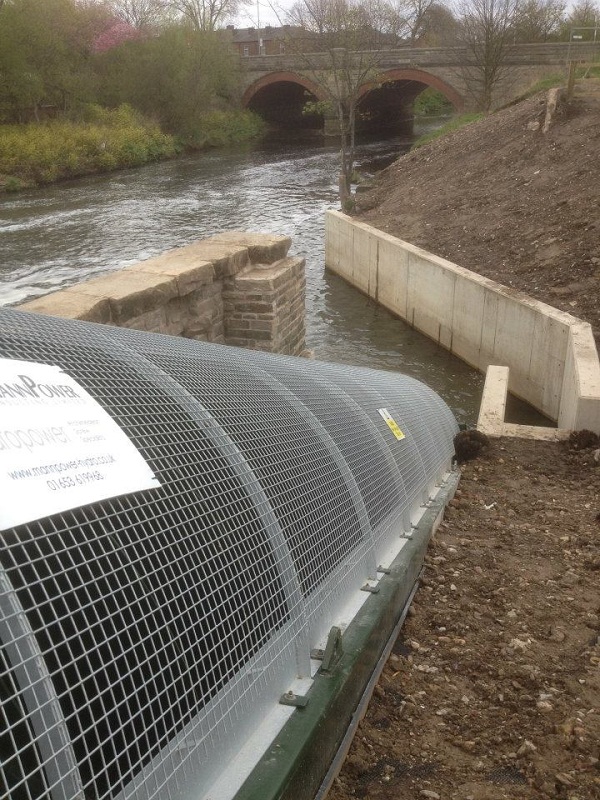
An Archimedean Screw Hydro turbine has been installed, commissioned and is now generating electricity at Bealey’s Weir.  An Open Compact Archimedean Screw was designed for this project. An Open Compact is a self-supporting U-shaped steel construction minimising necessary civil work on site. The generator unit is an integral part of the construction, easily accessible via a weatherproof, hinged generator cover.

The length and diameter of an Archimedean Screw will be dictated by the parameters of the particular site and are finished in the colour of your choice. All Archimedean Screws are manufactured as bespoke installations.

Open Compact Archimedean Screw

Rated at 96 kilowatts this hydro turbine is predicted to save in excess of 205 tonnes of Carbon Dioxide (CO2) annually. It measures 2500mm in diameter with a length of 14m. The site has a head of 4.62m, capacity of 2910l/s and the rotation speed is 27.5rpm.

Bealey’s Weir

Mann Power Consulting Ltd., the UK based Archimedean Screw specialists designed the equipment for this project.  It  was manufactured by Landustrie based in Holland and Eco Evolution were involvd in the commissioning of the project with Mann Power Consulting.
Archimedean Screw Hydro Turbine in situ
Archimedean Screw Hydro Turbine

In comparison with most turbines the Archimedean hydropower screw makes use of an open construction and a low rotational speed. This results in a natural flow and there is no pressure build up in the entire installation. Furthermore extensive testing shows that due to the size of water chambers and the fact that there is no pressure difference fish will pass through unharmed.

The Landy hydropower screw makes use of a specially designed inlet and outlet that make the screw absolutely fish friendly. The water outlet is designed in such a way for the water (and fish) to smoothly exit the screw without splashing. This also reduces the noise that water creates.

All photographs copyright of  Eco Evolution.

Better Energy Warmer Homes Scheme – Free Energy Efficiency Improvements For Your Home

In Budget 2012 the Winter Fuel allowance payment period was cut from 32 weeks to 26 weeks. This equates to a cut of €20 a week for 6 weeks – or €120. The fuel allowance is currently paid to people over 66 and on low incomes. With the decrease in fuel allowance and the increase in fuel prices more and more home owners are finding it difficult to afford to heat their homes.

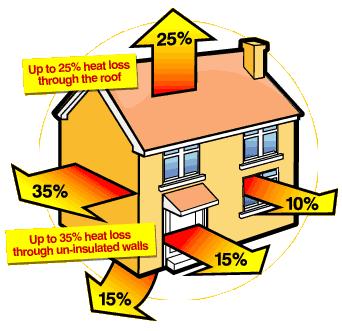
Heat Loss in a typical home

The Better Energy Warmer Homes scheme (BEWH), administered by the Sustainable Energy Authority of Ireland (SEAI), funds energy efficiency improvements in the homes of the elderly and vulnerable, making the homes more comfortable, healthier and more cost effective to run.  The scheme is available to non-Local Authority owner occupied homes constructed before 2002. The owner of the property has also to be in receipt of one of the
following:

  • Fuel Allowance as part of the National Fuel Scheme
  • Job Seekers allowance for over six months and with children under 7 years of age
  • Family income support

Landlords can avail of grants from Better Energy Homes if they have tenants in, or at risk of, energy poverty.

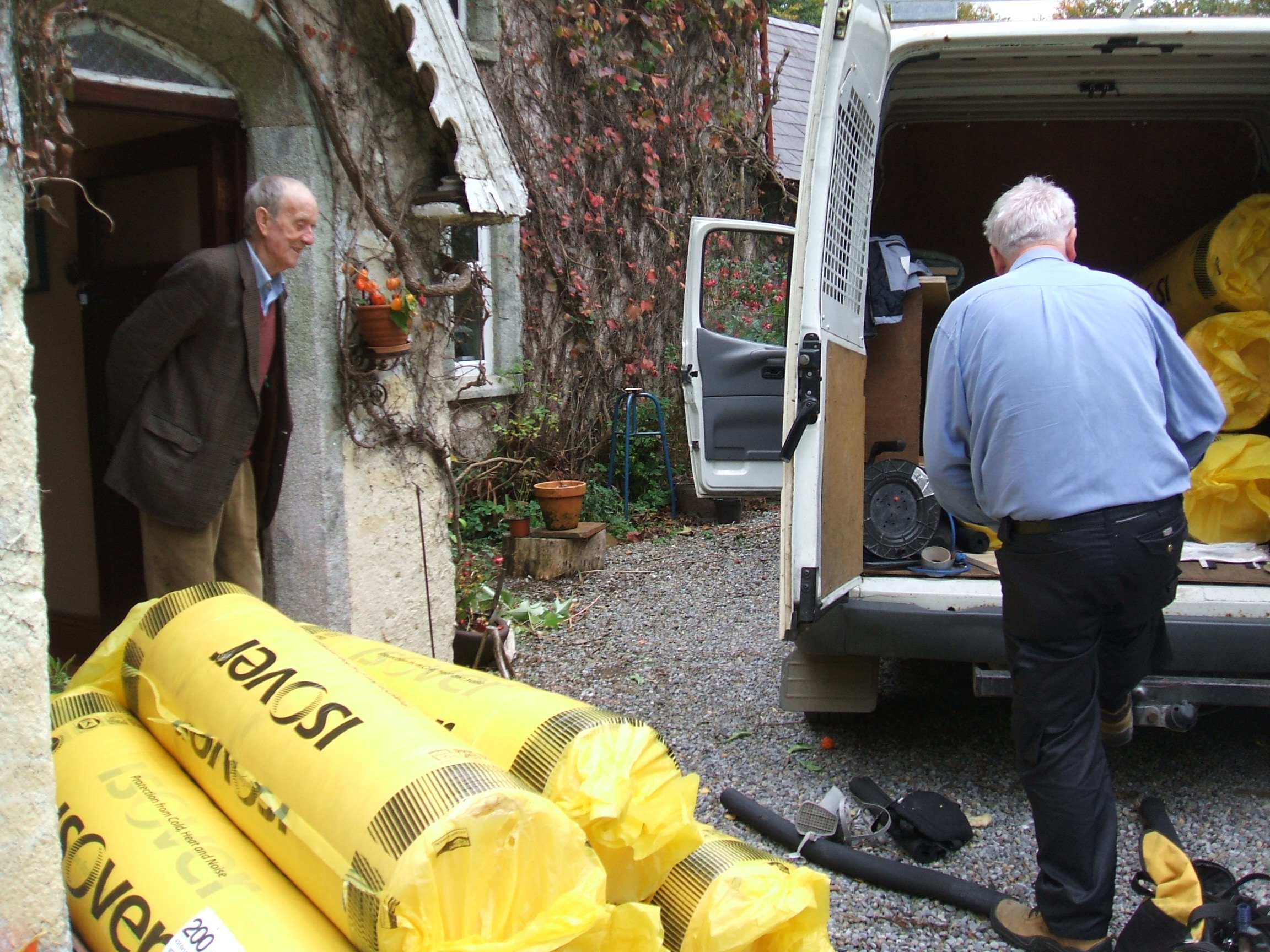
Homes are surveyed to see what energy efficiency measures are needed and then the appropriate steps are taken to make the home more energy efficient. The service is provided at no cost to the household and the measures currently available under the scheme include attic insulation, cavity wall insulation, draught proofing of doors and windows, installation of lagging jackets and low energy light bulbs and also provides energy advice to the householders.

Warm project – Courtesy of Wexford Local Development

The services are provided by a panel of SEAI appointed non-profit community based Organisations, Local Development Companies and a panel of SEAI appointed private contractors. The Community Based Organisations or Contractor installers are assigned to a household depending on their geographic location. Energy efficient measures are delivered to the highest quality assurance standards. Inspections are carried out on a sample of homes completed to ensure the standards are maintained.

To apply contact the Better Energy Warmer Homes helpdesk on 1800 250 204 or email warmerhomes@seai.ie

Wexford Local Development

Alternatively if you live in Wexford you can contact Wexford Local Development as they operate this scheme under the banner of the Warm Project. Contact details and application form can be found here. Since the inception of this project they’ve made Winters warmer for well over 2,500 households. A study some years ago found many people, particularly elderly, suffered health problems due to  draughty and damp houses. The Warm Project addresses this issue. If you qualify for the fuel allowance, own your own home and it was built before 2002, you qualify for WLD’s retrofitting scheme.

With the weather turning colder we would urge everyone to keep an eye on their elderly or vulnerable neighbours and if you think they qualify for this scheme why not help them to take the steps necessary to have a warmer home this Winter.