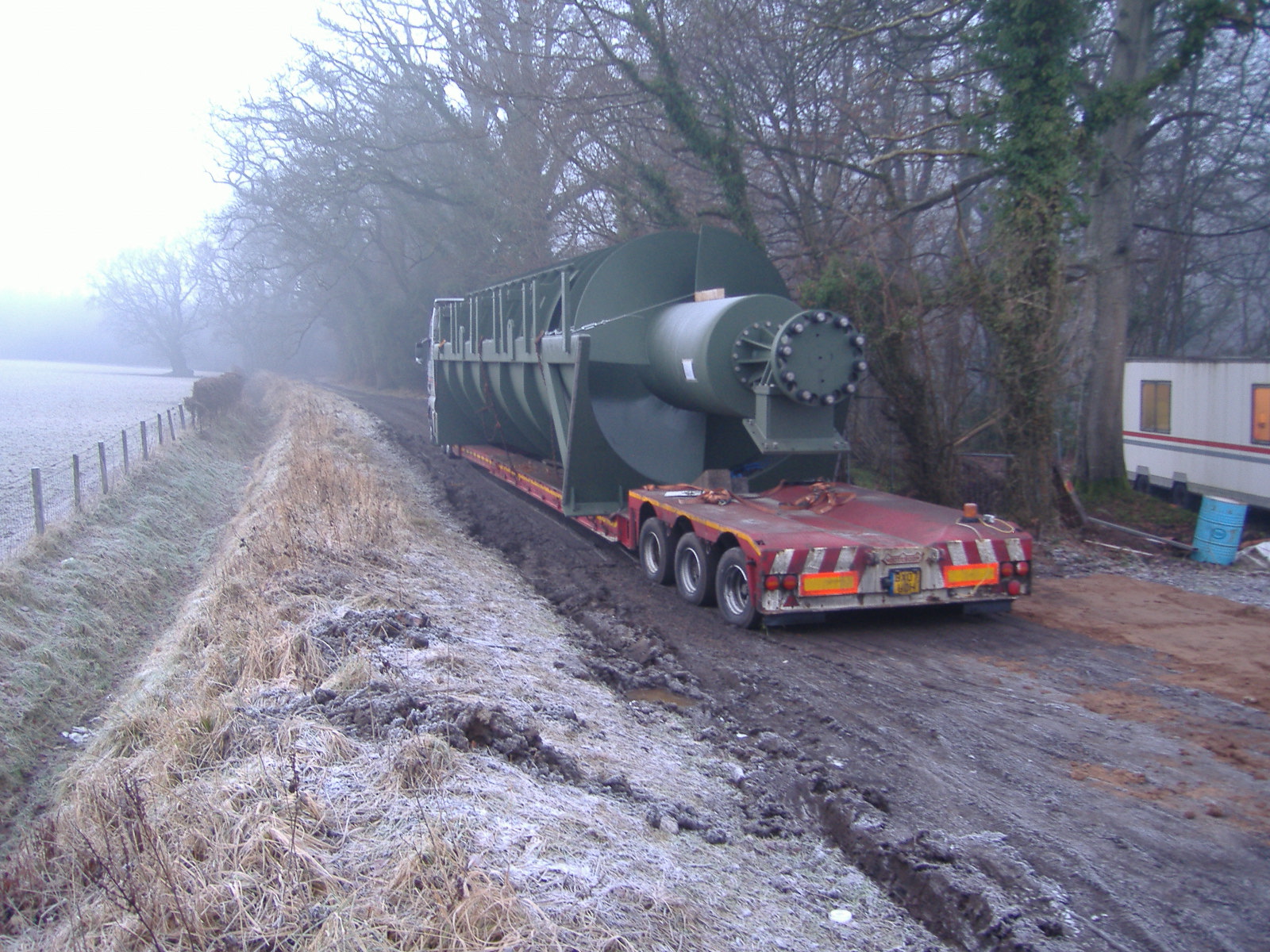
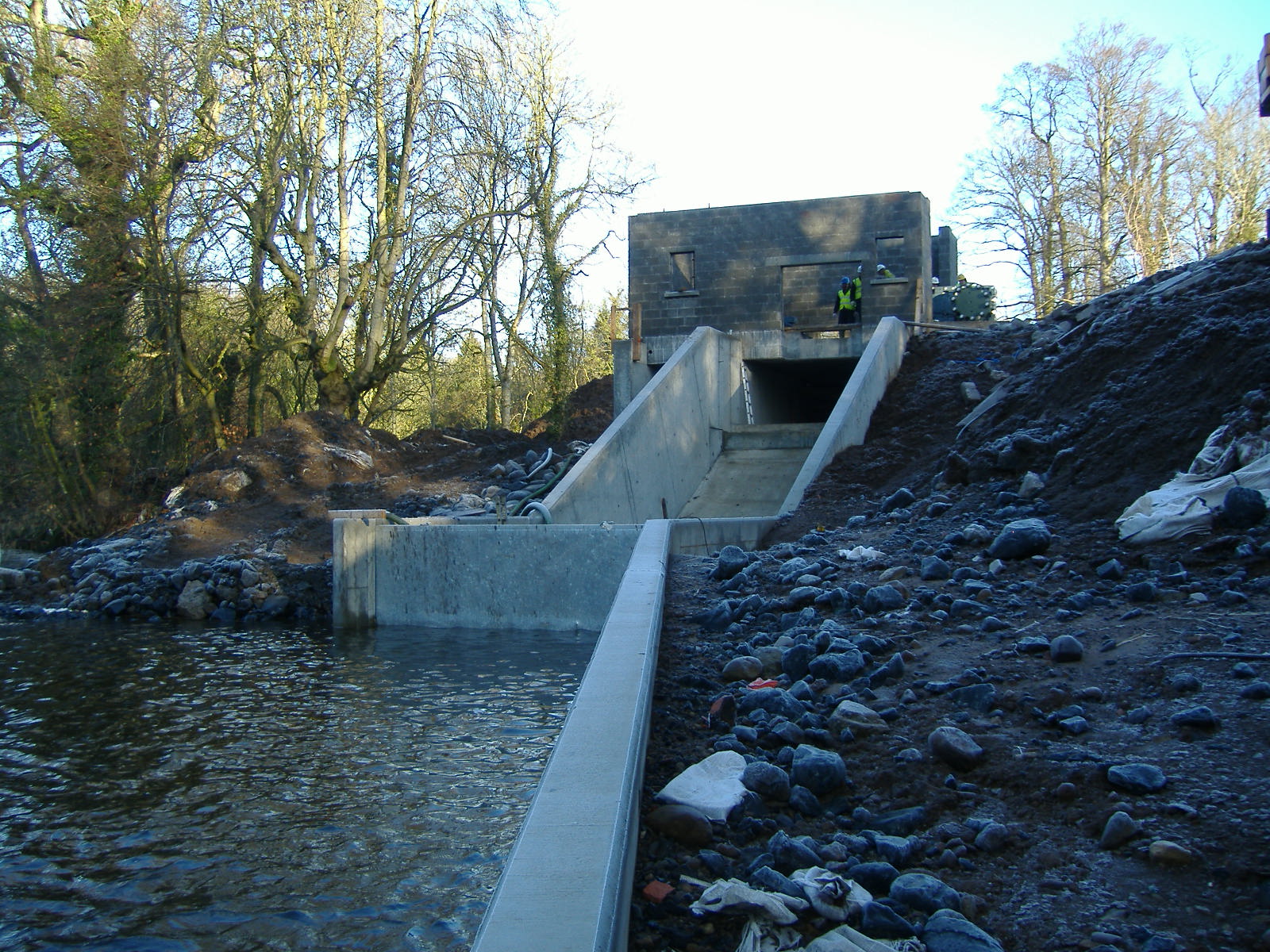
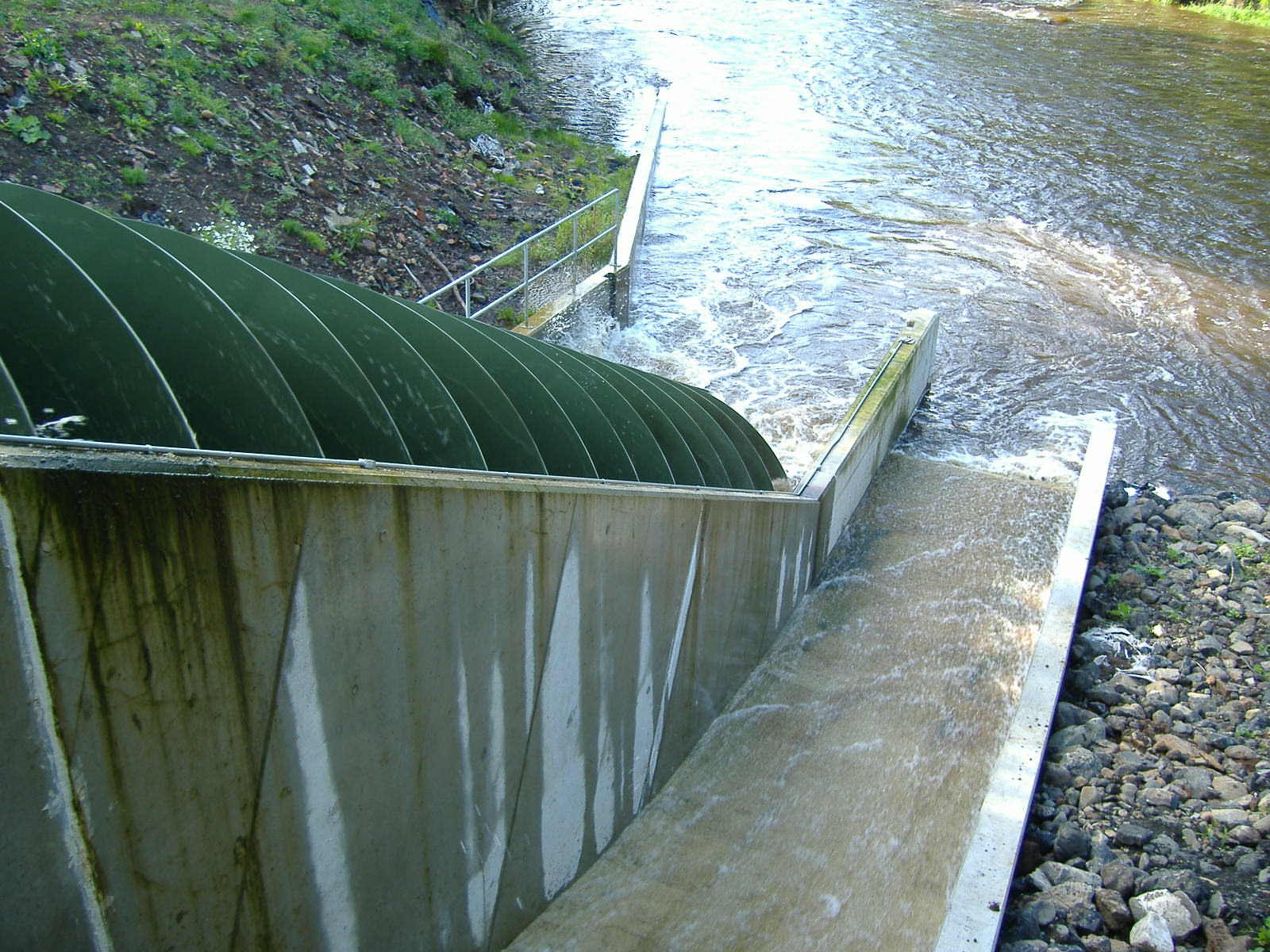
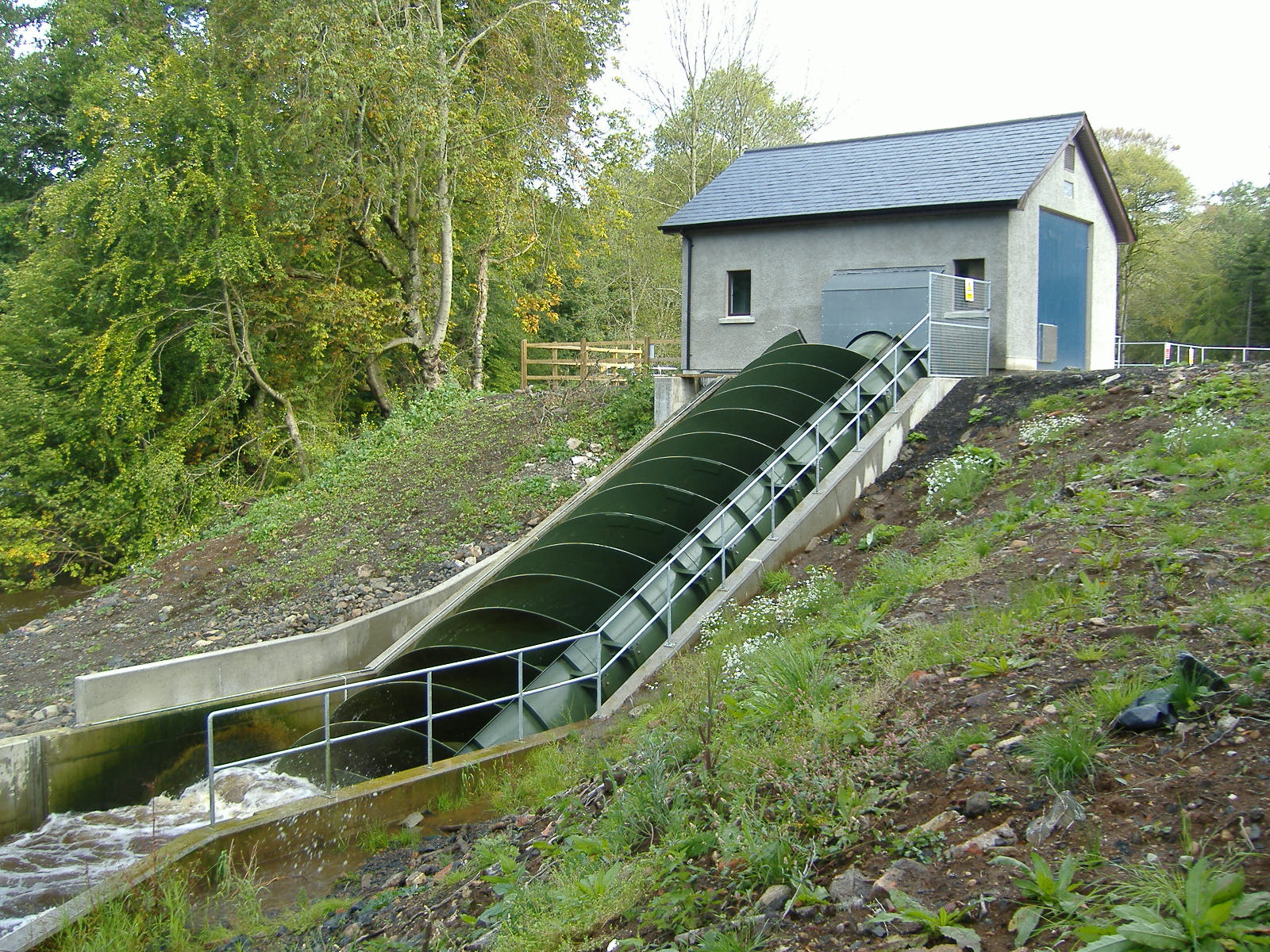
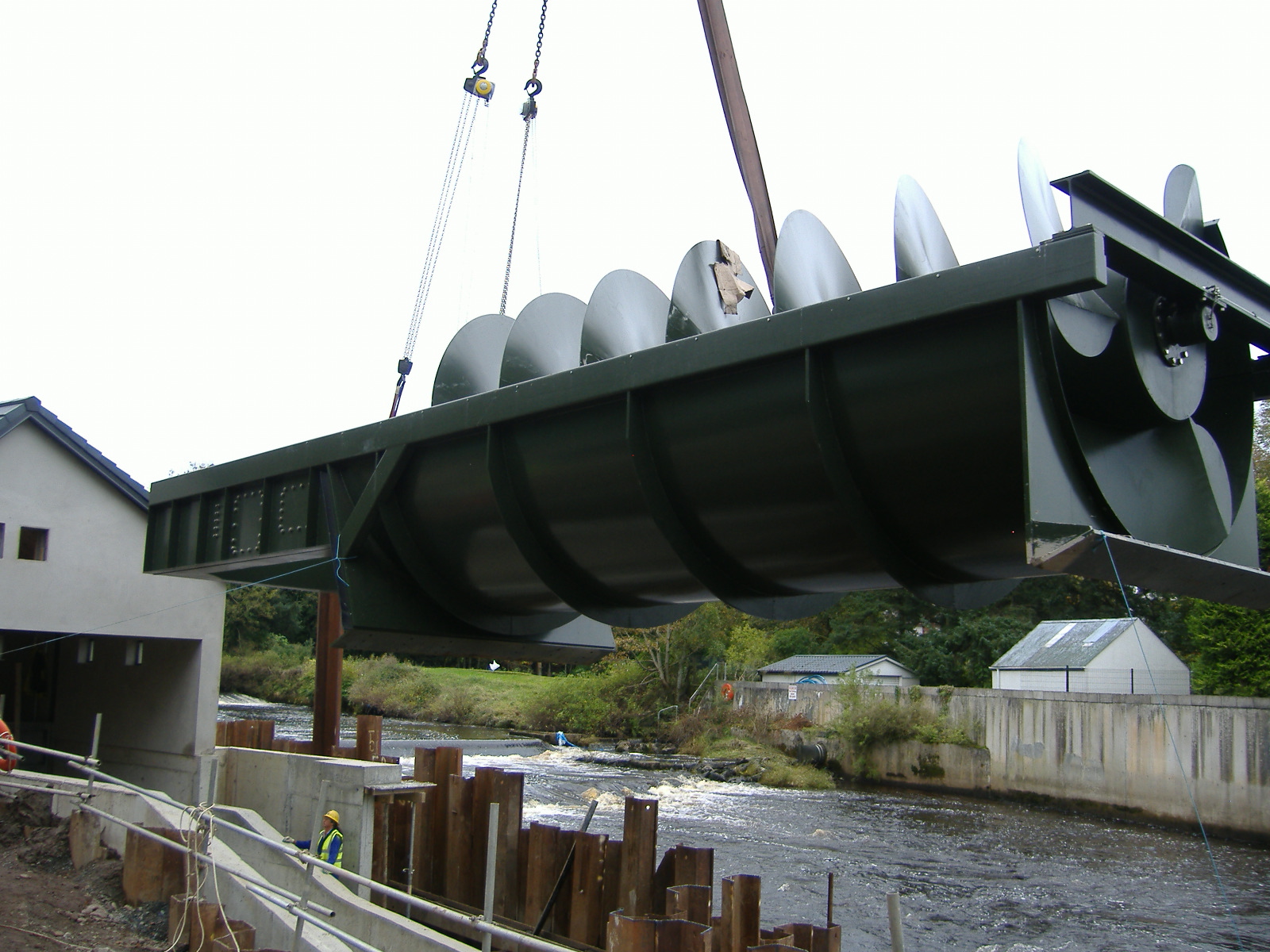
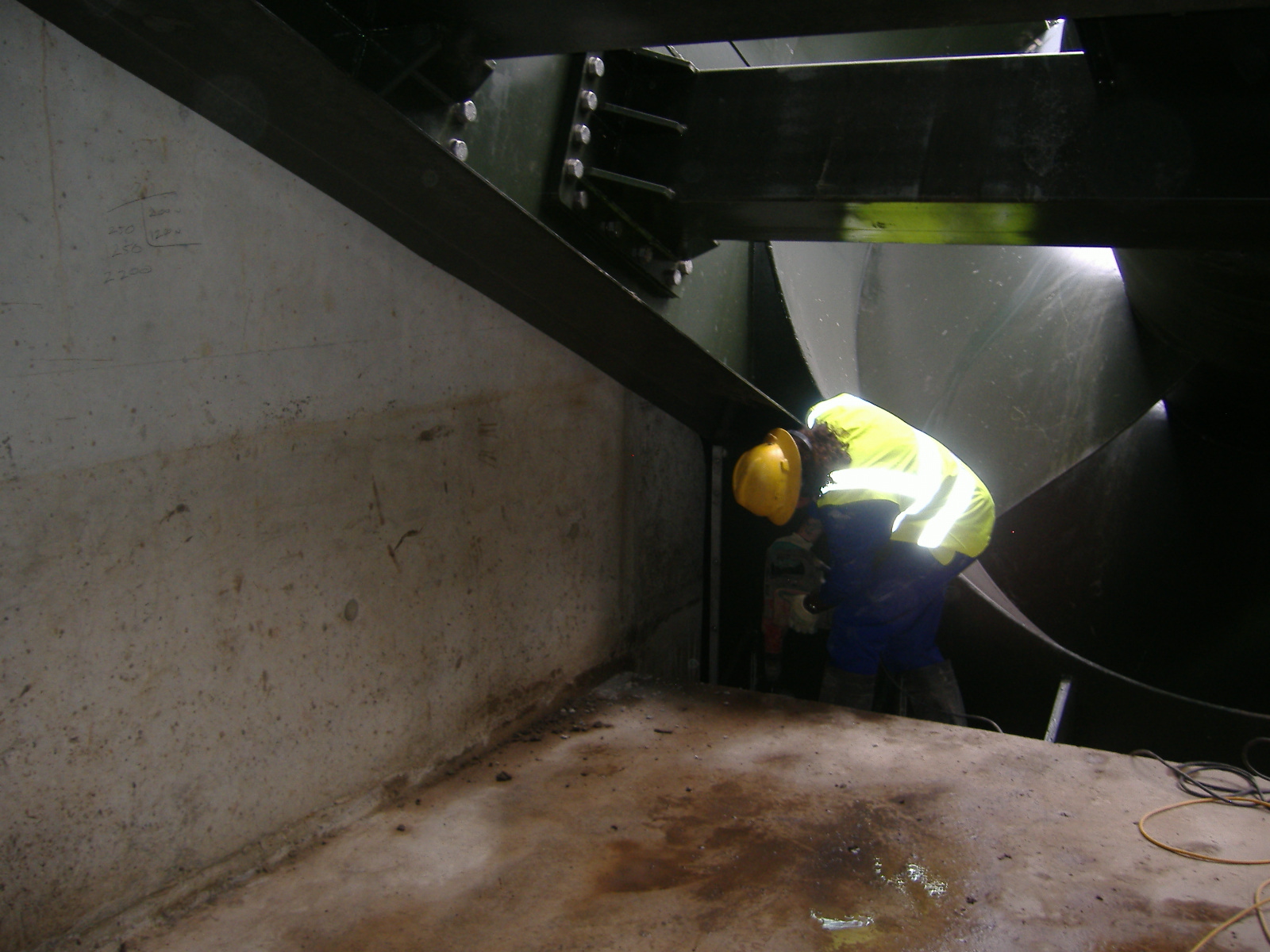
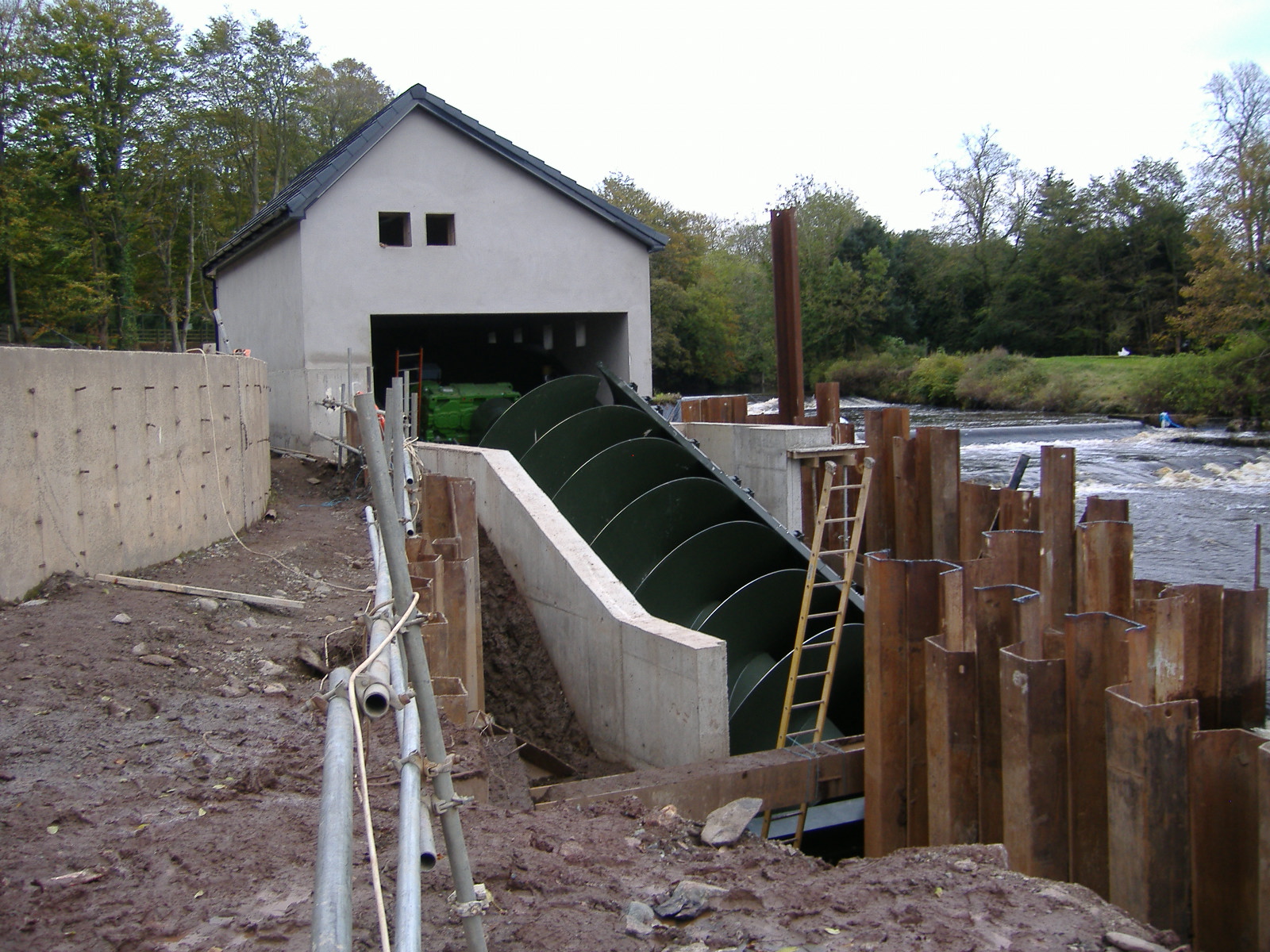
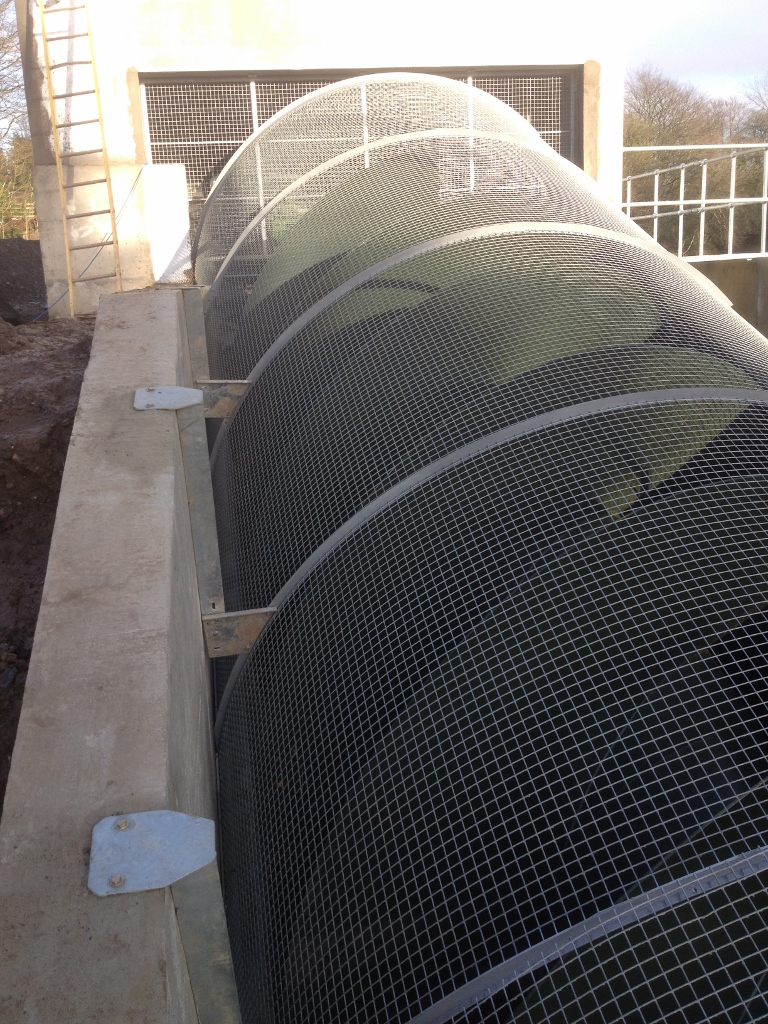
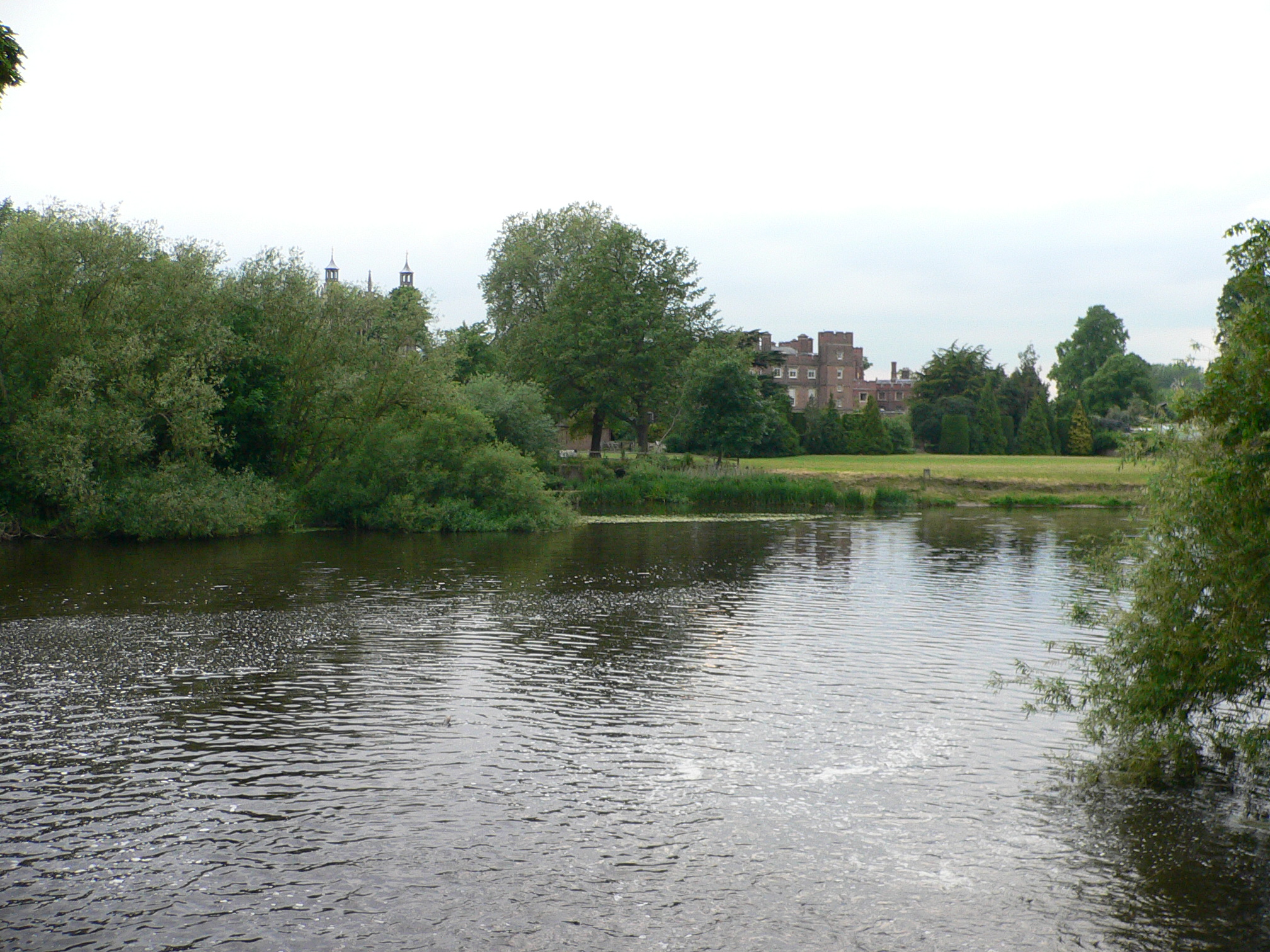
Shane’s Castle on the shores of Lough Neagh near Randalstown in Co. Antrim is the family seat of the O’Neills of Clandeboy. The Demesne is one of the most beautiful and well maintained in Ireland with a rich variety of flora and fauna, including a lovely herd of fallow deer that have been resident there for many years. The Castle is in ruins due to a devastating fire in 1816 but the remaining structure, including a unique Camellia House designed by John Nash, is still a prominent feature in the landscape. A recent and fitting addition to the Demesne is an Archimedean Screw hydro turbine, ancient technology but with a 21st century application.
The O’Neill family are well known for their preservation and conservation and love of nature and the environment and this Archimedean Screw hydro project complements their environmental initiatives very well indeed. Rated at 214 kilowatts the hydro turbine is predicted to save an impressive 840 tonnes or more of Carbon Dioxide (CO2) emissions annually by generating clean, green electricity and will make a major contribution to the Demesne’s green philosophy.
This project is a reinstatement of an old hydro system that was installed circa 1900 that was used to power the estate before mains electricity was introduced to Shane’s Castle in the 1950’s. The old system was capable of generating a maximum of about 55 kW so the new Archimedean Screw system, with its high efficiency across a wide range of flows, is capable of producing at least five times the amount of energy over the year.
The predicted annual output is a massive 1,300,000 kilowatt-hours. To put this in perspective, an average household uses less than 5,000 kilowatt-hours per year, so this hydro scheme has the potential to power more than 260 houses in the locality.
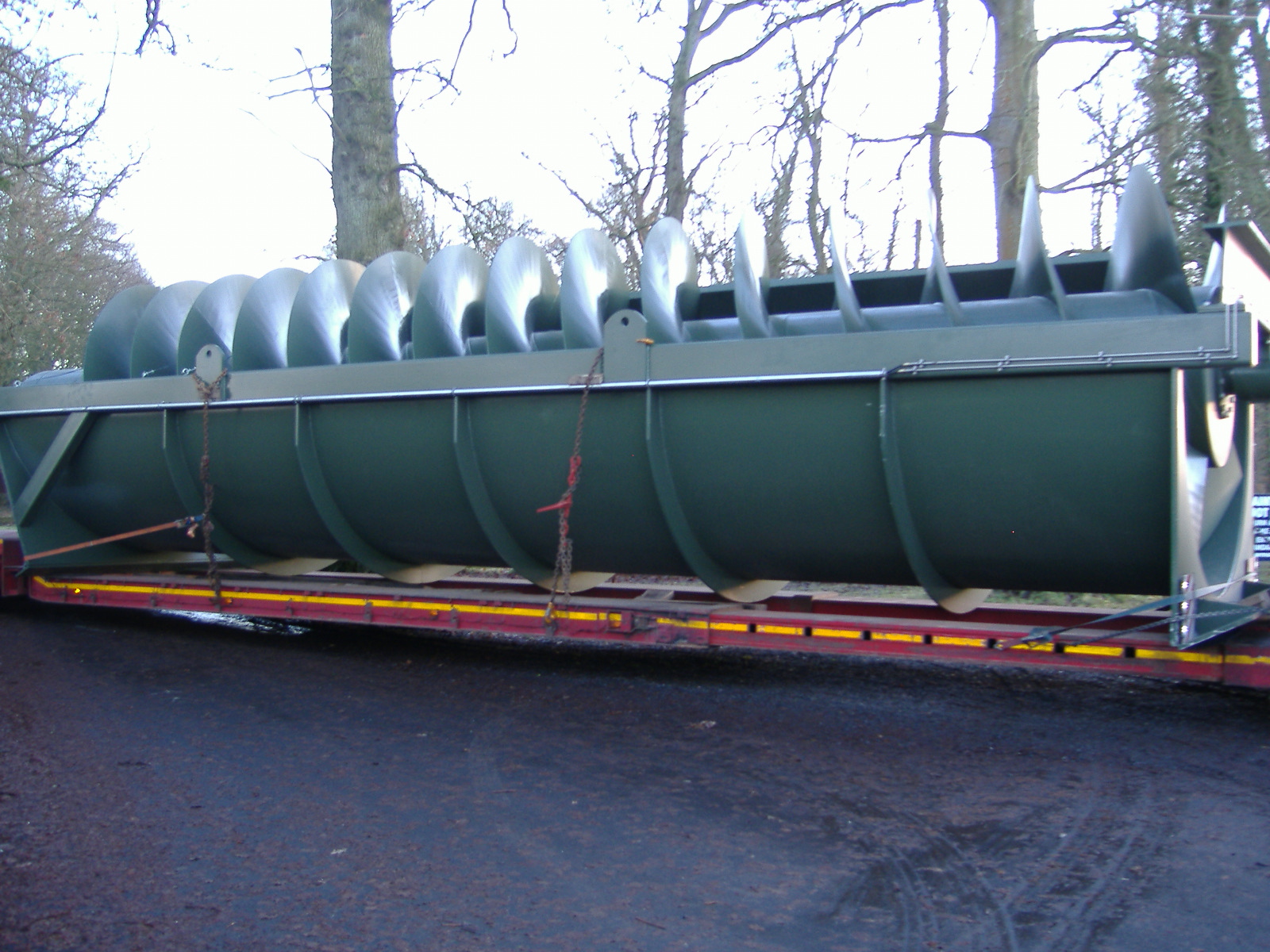
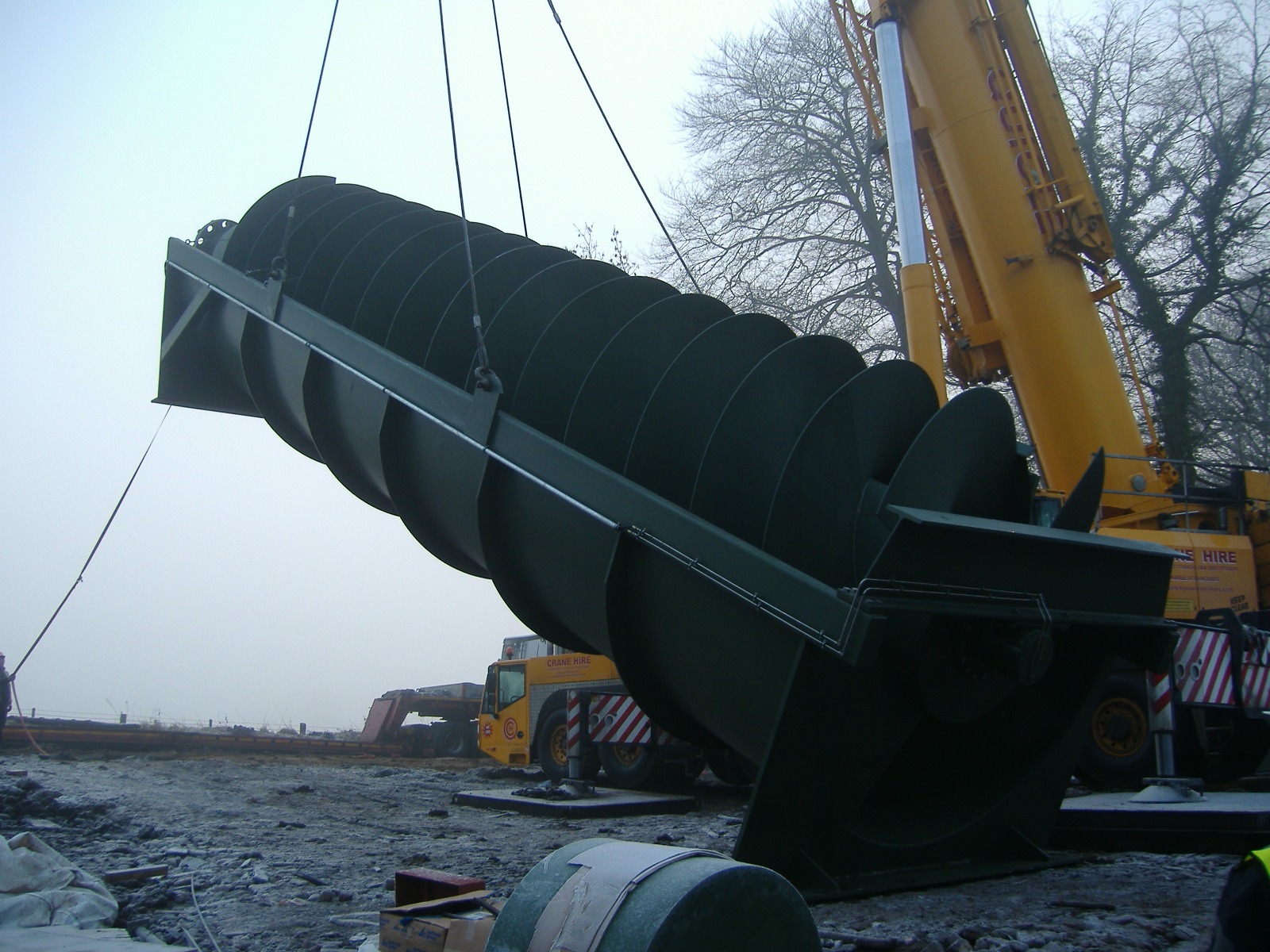
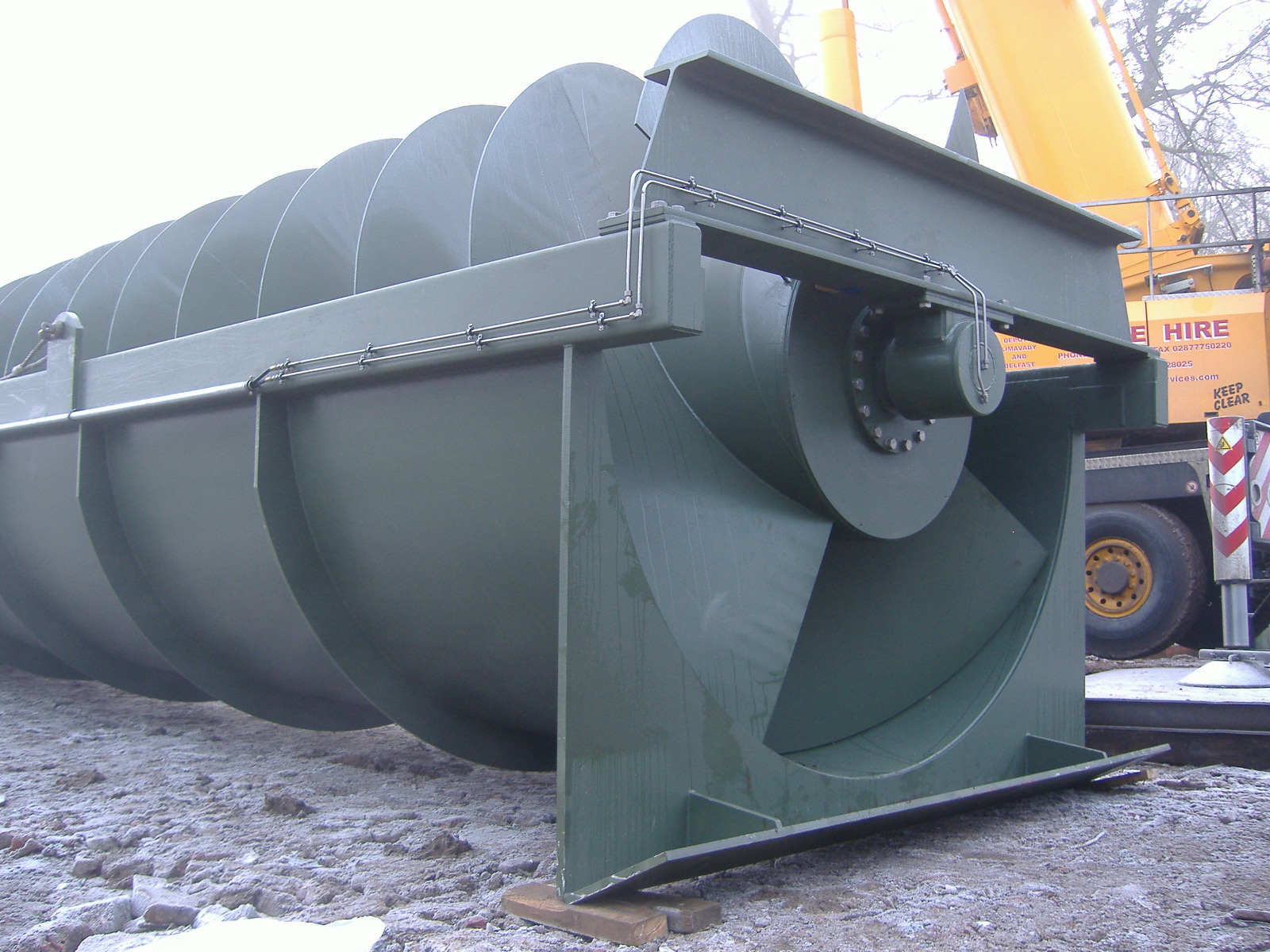
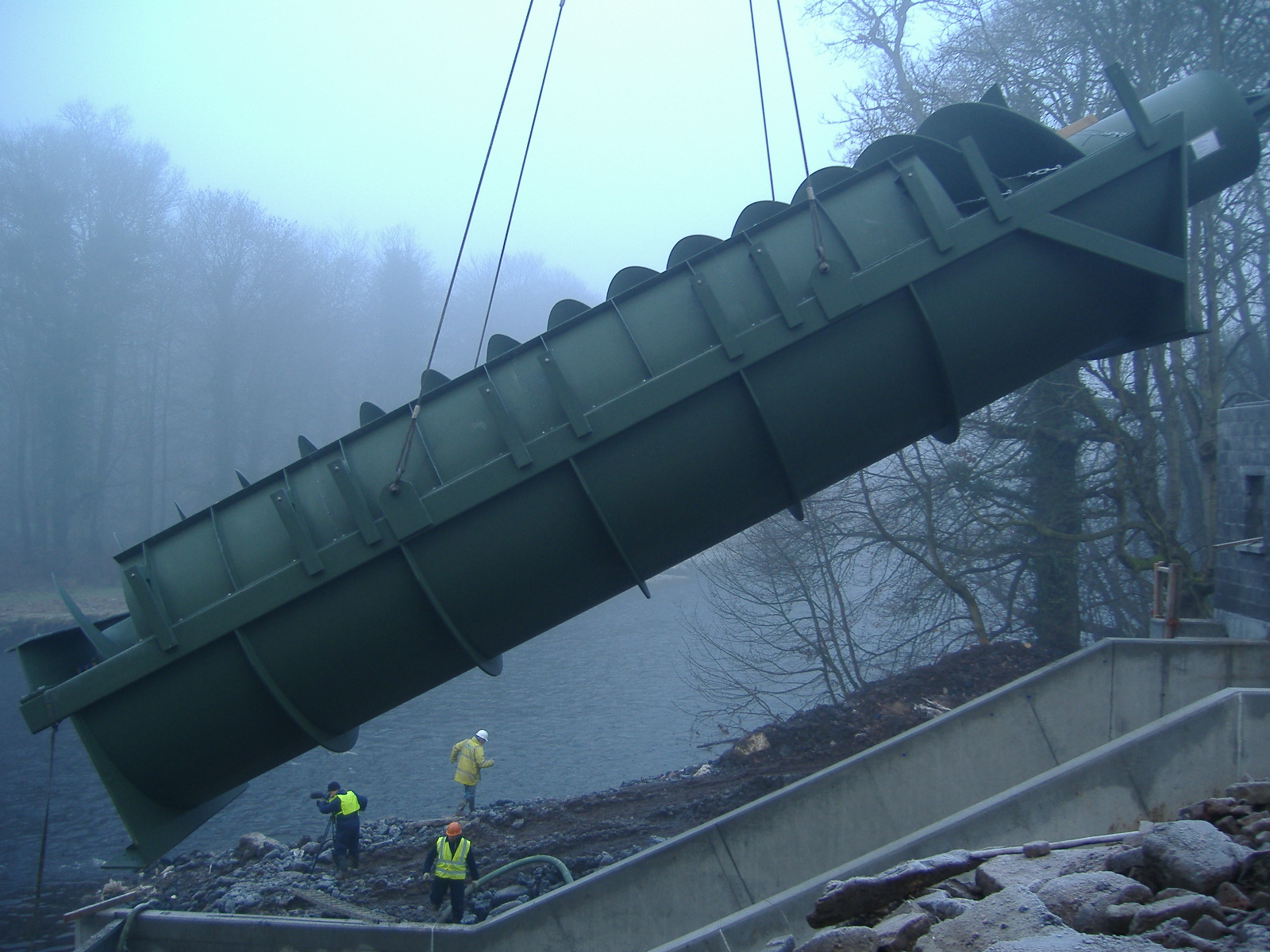
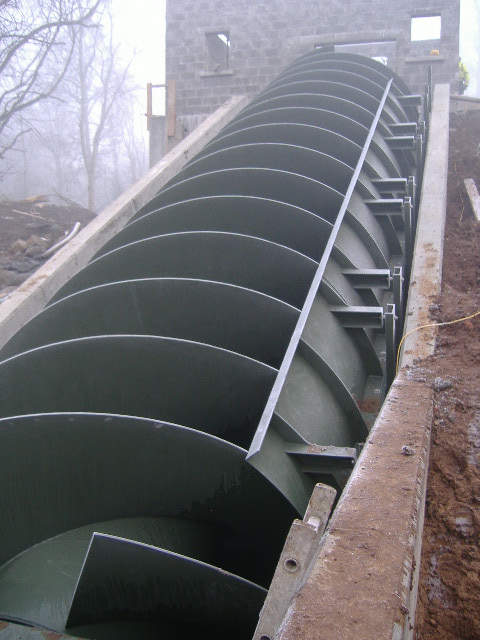
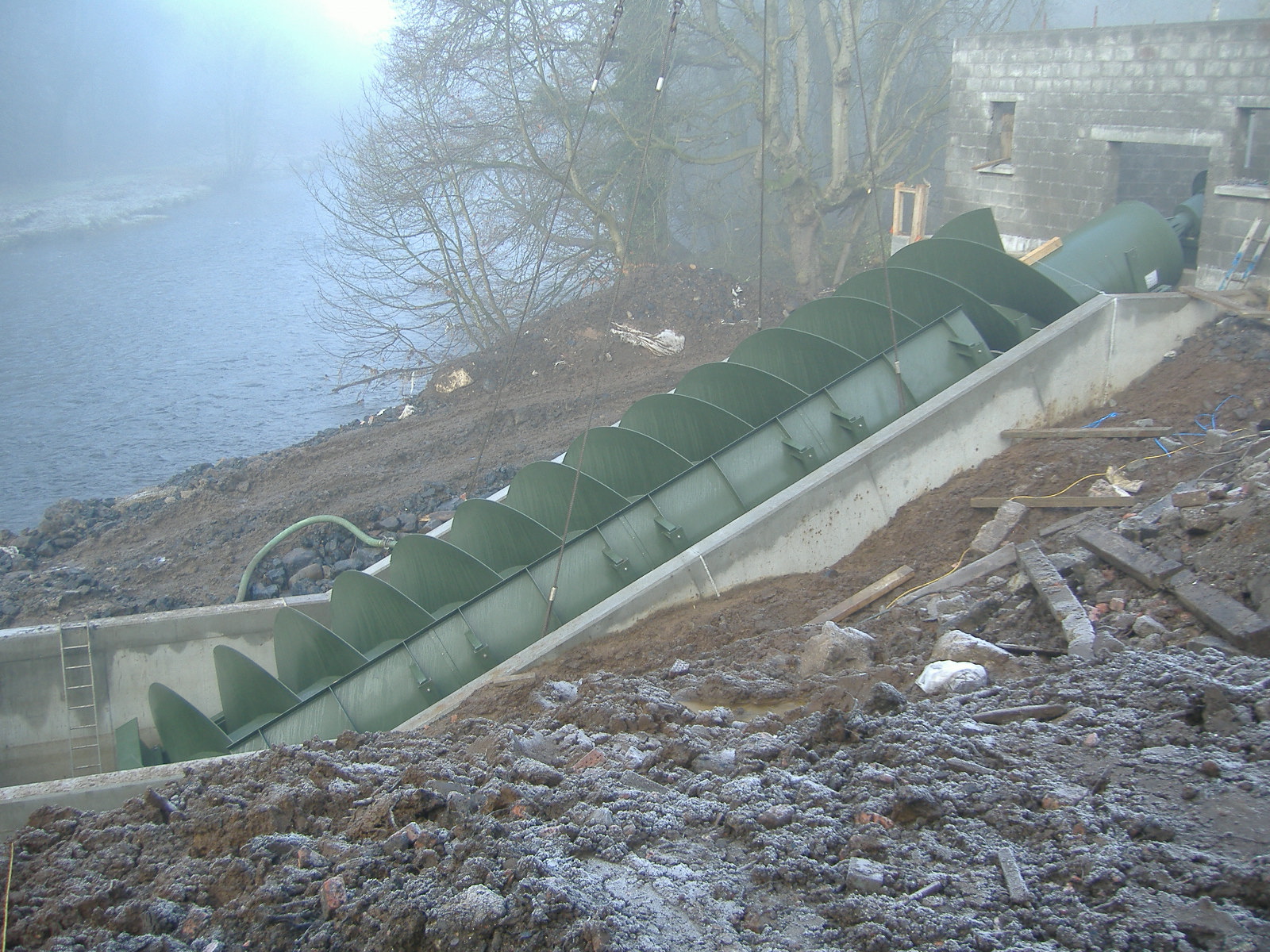
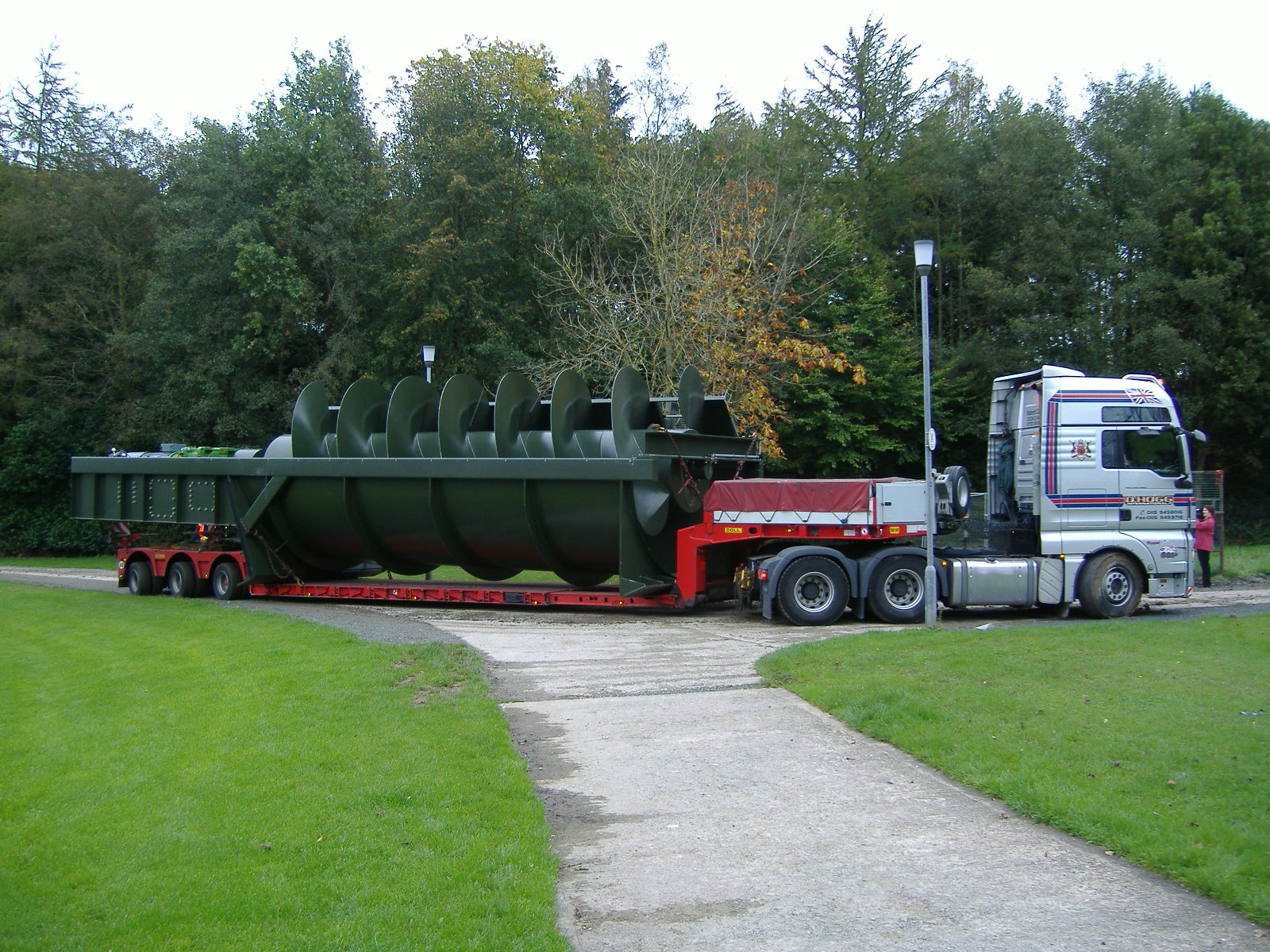
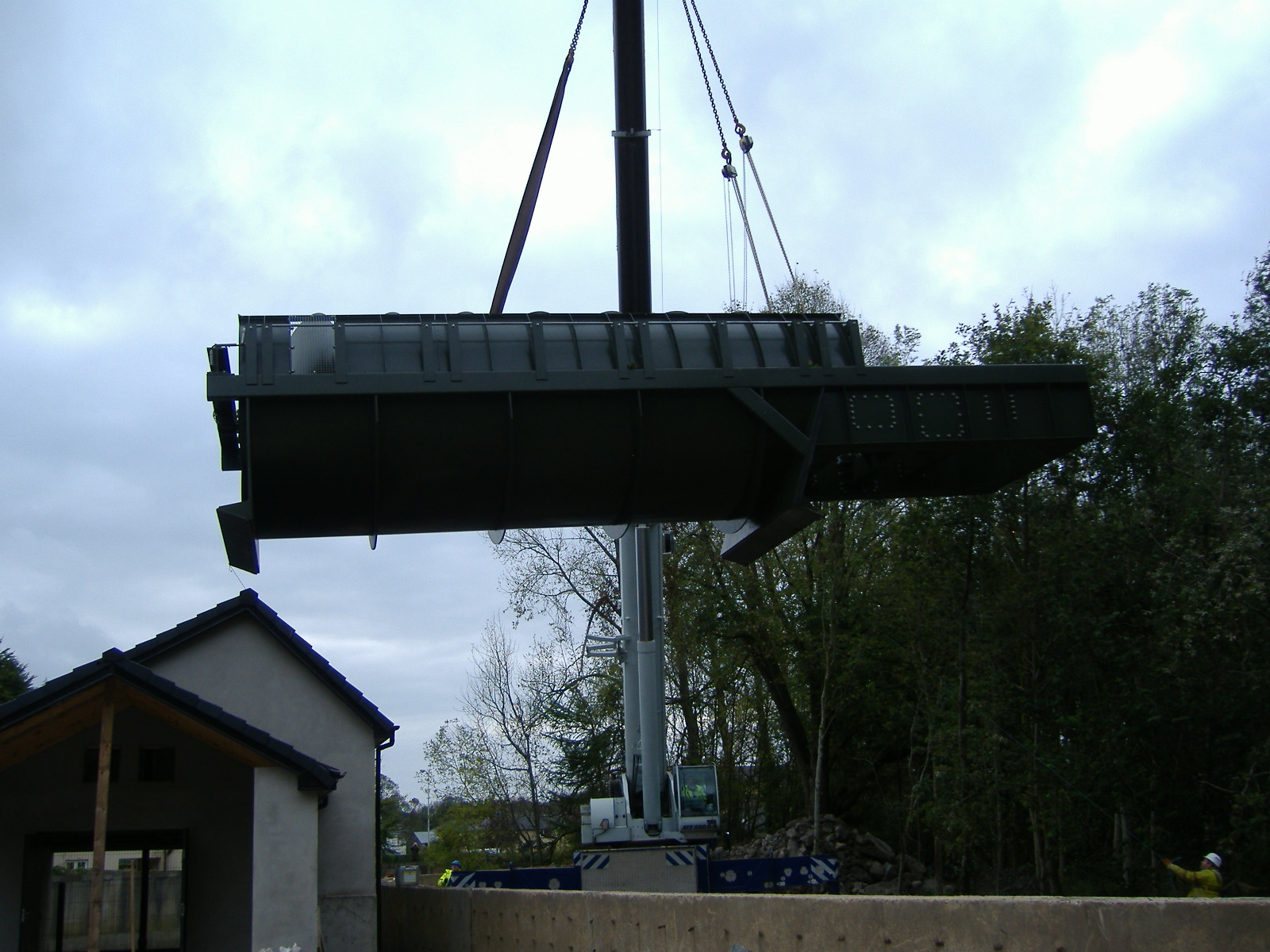
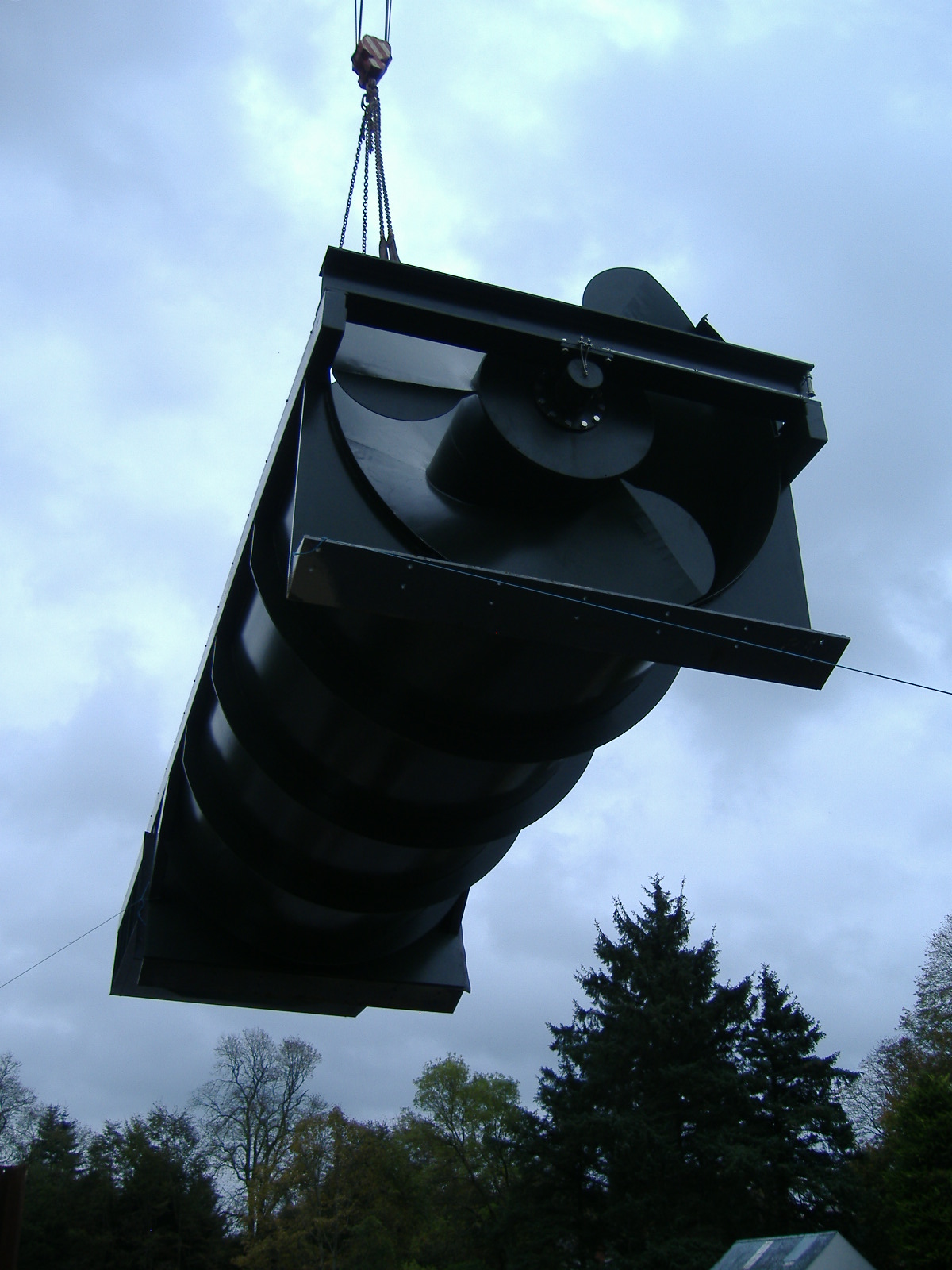
Arriving on siteAlmost 15m long the screw weighs approximately 35 tonnesOffloading from the lorryWith a diameter of 3.5m this screw can take a flow rate of up to 5.5m3/s
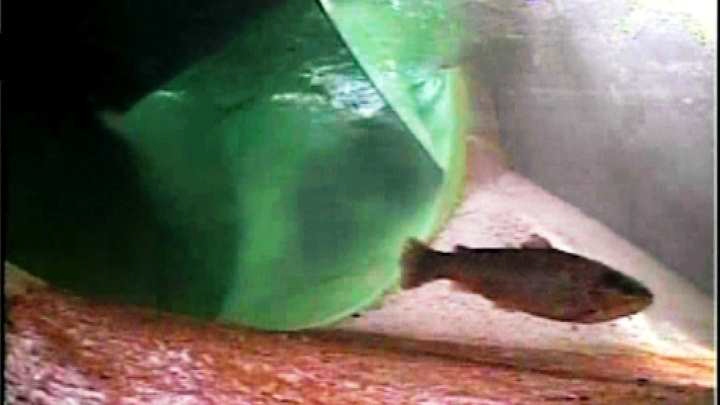
The Archimedean Screw turbine provides a fish-friendly alternative to conventional turbines, ideally suited to low-head (1m-15m) sites, and sites with fish protection issues. Extensive fish passage tests have conclusively demonstrated that the large water chambers and slow rotation of the Archimedean Screw allow fish of all sizes, and debris, safe passage through the turbine.
As a result, the Environment Agency (UK) has agreed that no screening is required.Literally thousands of fish passages have been monitored and recorded using underwater cameras at the intake, inside the chamber of the Screw itself and at the outflow to assess the effect of the Screw on salmonids (including smolts and kelts), brown trout and eels.
The trials looked at fish passage across a broad spectrum of sizes and turbine speeds, possibly the most impressive of which was the safe passage of a kelt measuring 98cm in length and weighing 7.6kg. In addition, behavioural and migrational patterns across the species have been shown to be entirely unaffected by the turbine.
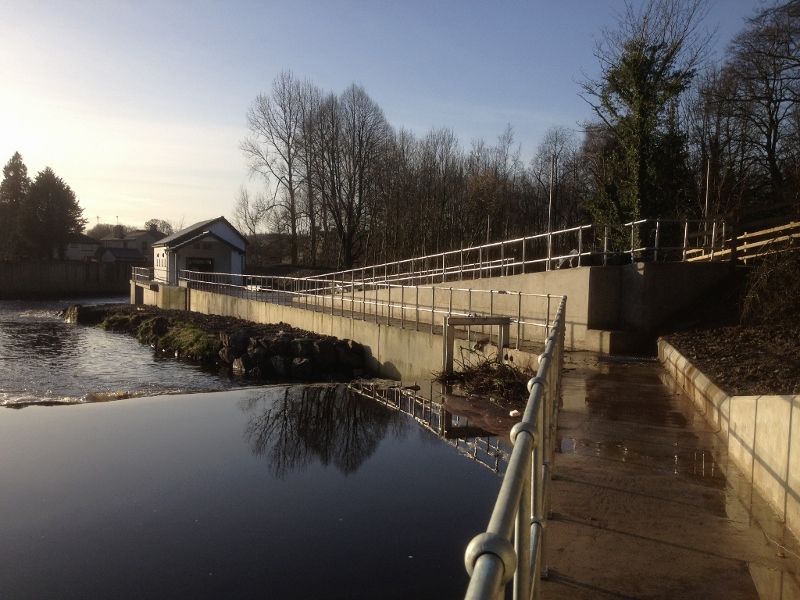
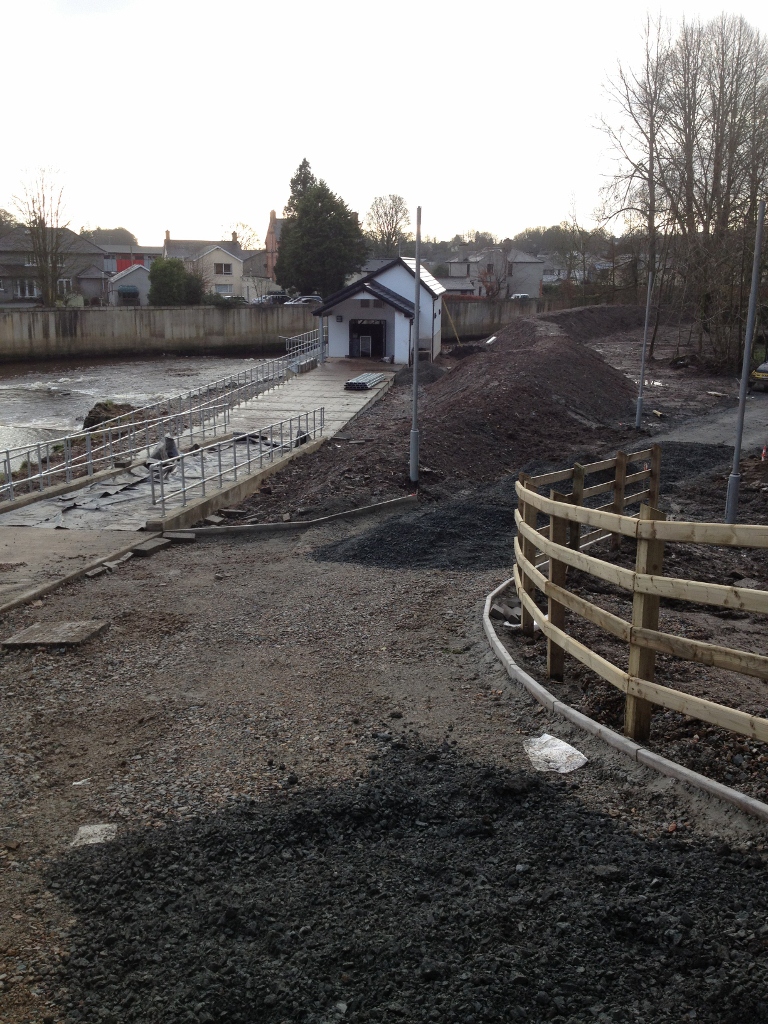
Screw is installed at an angle of 26deg. in this channelMoving into positionIn situA lifetime of clean, green generation aheadFish pass installed along side the ScrewCompleted project
This Hydro project at Shane’s Castle is the first of its kind in Northern Ireland and rated at 214 kilowatts this is the largest single Archimedean Screw generator ever manufactured. Eco Evolution and Mann Power installed the massive machine at Shane’s Castle earlier this year. The scheme was commissioned during the summer and it is now fully operational.
UK small wind turbine manufacturer Ampair has continued its push into the renewable hybrid power system market by launching the containerPod™ range of power solutions predominantly designed for providing platform power for the offshore wind measurement sector.
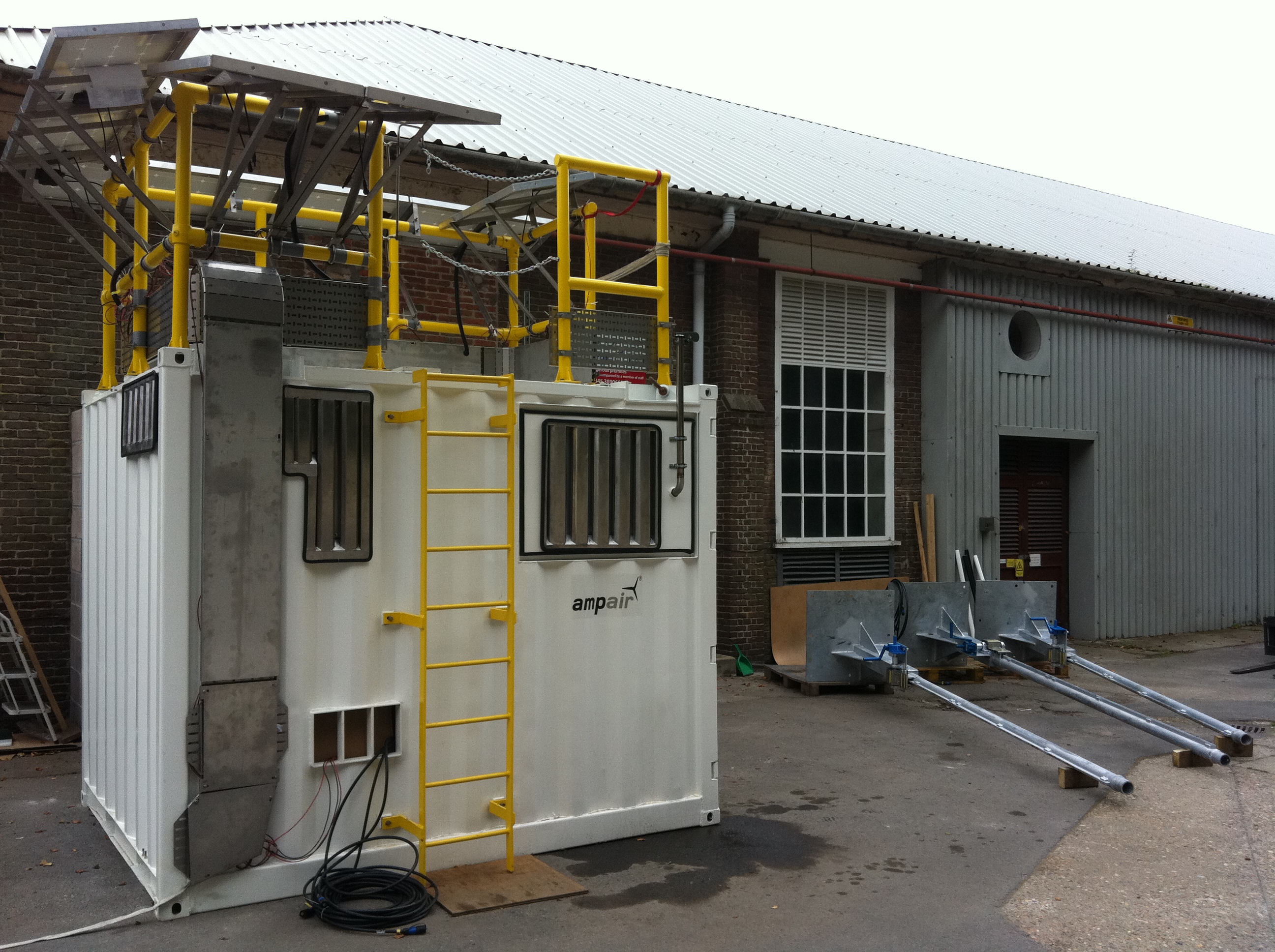
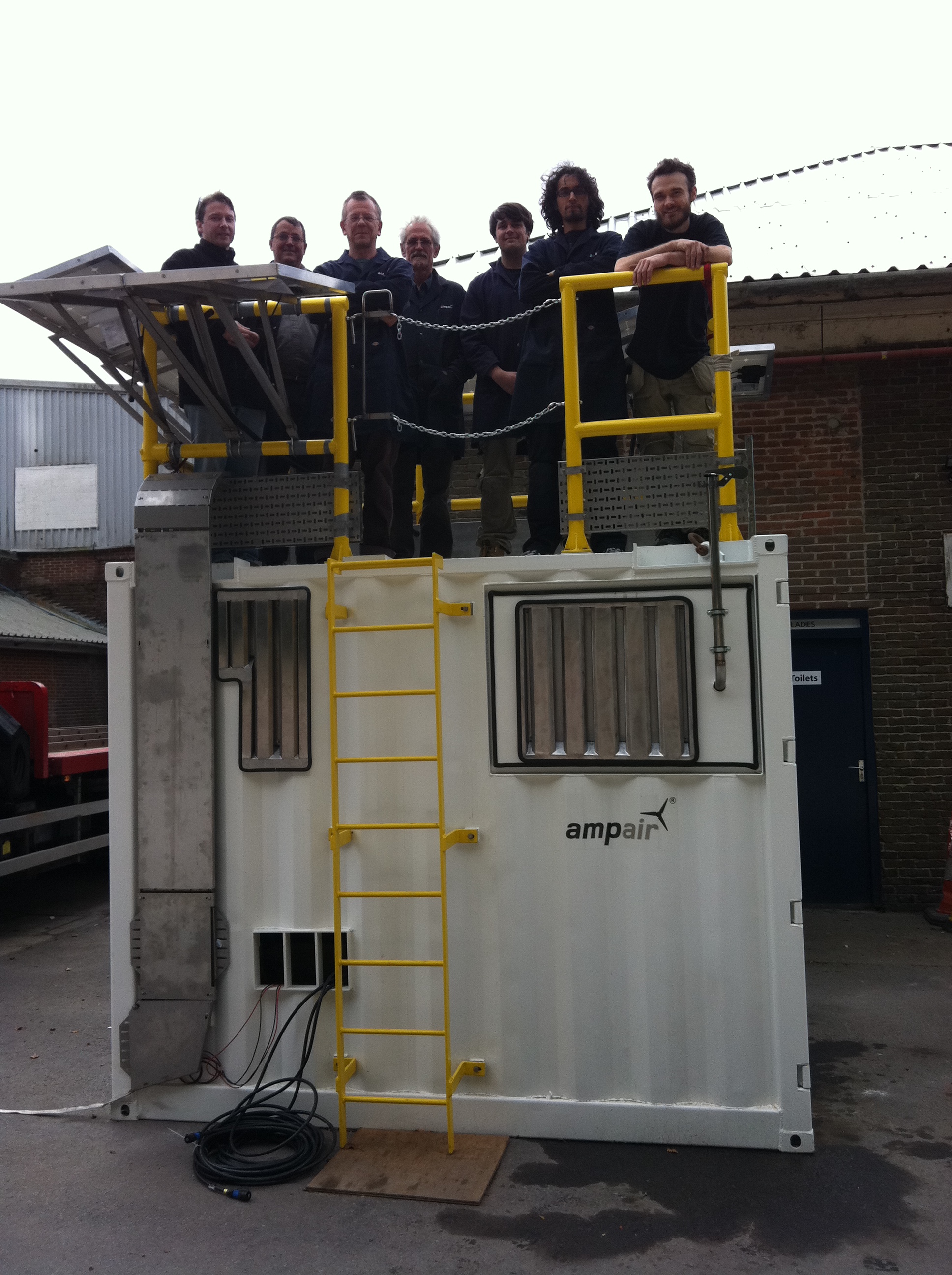
Ampair containerPod with vertical deploy masts at Ampair works
Jeremy Davies Ampair’s sales and marketing manager says that, “Onshore heated met-masts and LIDAR installations use between 50 and 200 watts of power and to date we have been able to power these with our existing solutions. However in any offshore installation, the loads are typically 400 Watts at a minimum, reaching up to well over 1kW for periods. The main reason for these higher loads is the requirement for essential navigation lighting and communications equipment to be powered coupled with the simultaneous use of traditional met-mast and LIDAR measurement systems on the same platform.”
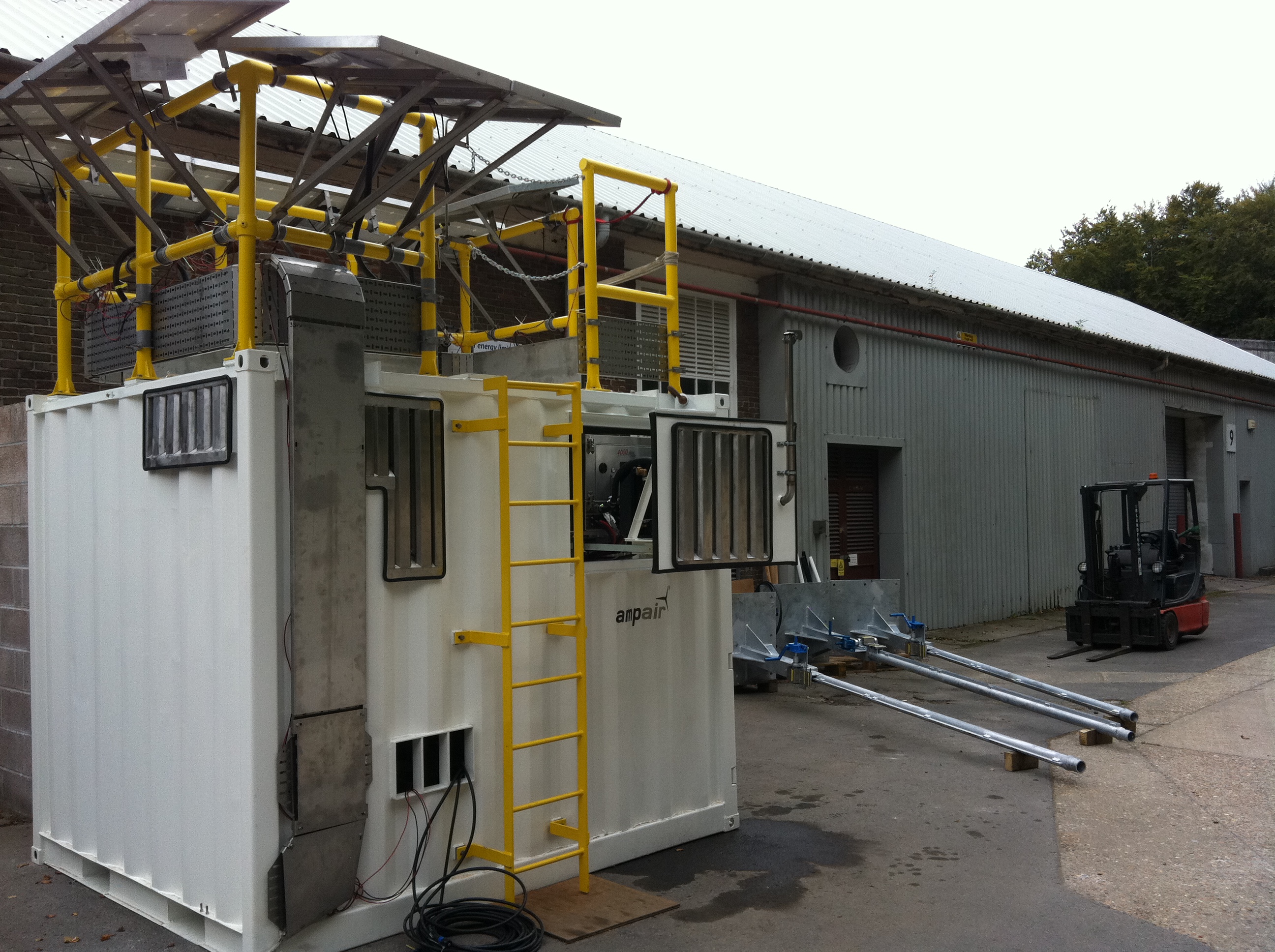
Ampair’s OF4000 ‘containerPod™’ unit is a turn-key packaged power solution that includes wind generators, PV arrays and an integrated back-up diesel generator which is designed to ‘rescue’ the system should there be a prolonged bout of poor renewable generation weather. The OF4000 system is designed to power continuous loads of up to 850W for 12 months without the need for a support vessel needing to be chartered to refuel the unit.
“After extensive modelling with our in-house stochastic modelling software proAmpair™ we could see that that using a purely renewable solution just didn’t add up as they required much larger battery banks, larger wind turbine arrays and larger solar arrays. These carried a price, weight and deck space premium that was not attractive. From the model, we could see that the best efficiency was obtained by using a small DC diesel generator that should only need to be run for 50-100 hours a year. By keeping the generator run time so low, we still deliver the low/no maintenance benefit of a purely renewables-based system, but we can supply power year round in a much more cost and size effective package”.
View of containerPod showing generator compartment
Ampair’s containerPod solution includes a variety of proprietary innovations designed to minimise the platform size needed by its customers. These include a unique ‘through-deck’ turbine pole which allows the Ampair 600 wind turbine to be lowered vertically to chest height, and also a tightly integrated generator and fuel tank compartment which share a common bund.
Ampair team on top of OF4000 containerPod
David Sharman, Managing Director at Ampair commented: “Ultimately Ampair’s system can be configured to power all of the required loads on a met platform in one single containerised package with the added benefit of providing additional internal real estate for all of the customers electrical panels. The containerPod is the natural progression from our successful land based heliPod and trailerPod hybrid systems, and leverages our deep understanding of the offshore industry. As a result interest to date has been significant and we have increased the size of our manufacturing plant and workforce to cope with demand which is a great step forward for us.”
For further information contact Eco Evolution – authorised representatives of Ampair in Ireland.
A NEW round of funding for rural development projects has opened in County Down.
Farmweek Edition – 20th October 2011
A NEW round of funding for rural development projects has opened in County Down.
In the latest call for applications for monies to help improve the quality of life in rural communities, the Down Rural Area Partnership (DRAP) is inviting local people across the Ards, North Down, Banbridge and Down areas to submit project proposals under the ‘village renewal and development’ theme.
The theme aims to support the development of village plans or fund the updating of existing plans, or to support the physical and environmental regeneration improvements in both large and small villages.
Nearly £4m has already been committed to over 80 projects across the four council areas since the rural development programme began in 2009, with grants ranging from a few hundred pounds to several hundred thousand, all with the aim of improving the quality of life in rural communities.
“This is a wonderful opportunity for progressive groups in our towns and villages to access funding for new ideas to improve and up-grade the environment of these areas. I would hope that all of the eligible towns and villages will take this opportunity with open arms and help make the places where we live better for everyone, resident and visitor alike,” said Councillor Jim Fletcher, Chair of the Partnership.
To apply for rural development funding you must live in a rural location in one of the four Council areas – rural is defined as a settlement with a population of 4,500 or less – or if you live in an urban setting, you must be able to demonstrate that your project will principally benefit a rural area. Farmers, private businesses and social economy enterprises, as well as individuals over the age of 18, can all take advantage of these funding opportunities.
Applications can be made online through the EU Grants website www.eugrants.org or hard copy application forms can be obtained by contacting the Down Rural Area Partnership office on 028 9182 0748. Guidance notes to include eligibility criteria and funding thresholds for the above measure are available at www.downruralareapartnership.com. The closing date for applications is Wednesday 7th December 2011 at 4.00pm.
Omagh District Council has recently commenced work on a hydro project utilising the weir on the Camowen River, adjacent to Omagh Leisure Complex, to generate electricity through an Archimedean Screw hydro turbine. The development of the hydro scheme on the Camowen River will generate sufficient power to meet the needs of Omagh Leisure Complex with excess electricity sold back to the national grid.
The Archimedean Screw arrived early on Friday morning by ferry from Germany.
Arrival of Archimedean Screw to site
Rated at 121 kilowatts the hydro turbine is predicted to save in excess of 133 tonnes of Carbon Dioxide (CO2) annually and will make a major contribution to the Council’s green philosophy. This project will complement the Council’s initiatives to develop ‘green’ energy from renewable sources, including the installation of a biomass boiler at Omagh Leisure Complex. The revenue generated by the electricity from the hydro scheme will be contributed to a sustainability fund, which would become a resource to support other sustainability projects in the district.
The Council was very conscious of the importance of the Camowen River as a fishery, and of the concerns of anglers. After various consultations it was decided that the most suitable turbine for the site was an Archimedean Screw. The Archimedean Screw turbine provides a fish-friendly alternative to conventional turbines, ideally suited to low-head (1m-10m) sites, and sites with fish protection issues.
The 220 tonne crean lifting the turbine into place
Lifting the turbine into place
Archimedean Screw craned into position
Bolting the Archimedean Screw securely into position
The Archimedean Screw in position
The site has seen many changes over the past few weeks. Safety screens and handrails have been installed. Landscape work is almost complete and it is is expected that this project will be commissioned and fully operational in the coming weeks.
Safety screens in placeHandrails in placeProject near completion
Hydro projects in Northern Ireland:
This Hydro project is the second of only two Archimedean Screw Hydro projects to date in Northern Ireland. Eco Evolution and Mann Power Consulting are installing both turbines. Mann Power Consulting based in Yorkshire are the pioneers of the Archimedean Screw in the UK and Ireland and Eco Evolution are their authorised representative for the whole of Ireland.
The first ever Archimedean Screw generator in Northern Ireland was only recently installed at Shane’s Castle in Antrim. Rated at 214 kilowatts this is the largest single Archimedean Screw generator ever manufactured. Eco Evolution and Mann Power recently installed the massive Rehart manufactured machine at Shane’s Castle. It is now fully commissioned fully operational.
The predicted annual output is a massive 1,125,000 kilowatt-hours. To put this in perspective, an average household uses less than 5,000 kilowatt-hours per year, so this hydro scheme has the potential to power more than 225 houses. This scheme will also save an impressive 840 tonnes or more of Carbon Dioxide (CO2) emissions by generating clean, green electricity.
Fish-friendly Hydro
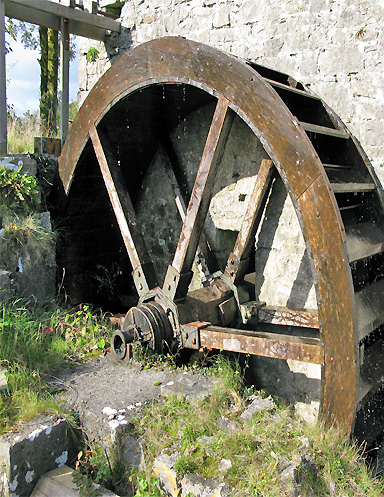
Eco Evolution and Mann Power together offer an unrivalled level of expertise and experience when it comes to the Archimedean Screw hydro turbine. Between us we have carried out well over 120 feasibility studies on low head hydro sites and have completed over 55 scheme designs. We also provide solutions for old mills that want to retain the traditional water wheel with a number of projects completed and operational with the old water wheel redesigned and refurbished or with a new water wheel manufactured.
Eco Evolution, as well as being involved in the relatively large sized projects in Omagh and Shane’s Castle in Antrim where the largest ever manufactured Archimedean Screw hydro generator of 214 kilowatts has been installed, are also currently working on a smaller 20 kilowatt private scheme in Co. Antrim that will shortly be submitted for planning. This scheme is situated on a farm and will generate an estimated 65,000 kilowatt-hours (or units of electricity) per annum with a Carbon Dioxide (CO2) emissions saving of over 40 tonnes. A small scheme like this would be capable of powering approximately 15 average households.
Eco Evolution also have two schemes planned on the river Slaney, the famous salmon and trout river in Carlow/Wexford that is also a Special Area of Conservation, one of these recently received planning approval and the other is currently in the planning process. The Archimedean Screw has made hydro schemes possible on rivers such as the Slaney when proper mitigation is implemented. In fact hydro schemes can, and have, enhanced and improved fish passage and migration on many sites that Eco Evolution and Mann Power have been involved in.
With regard to Microgeneration Certification Scheme (MCS) Certification, Mann Power are registered under the scheme as Transition Installer 109. Note however that the Department of Energy and Climate Change (DECC) in the UK recently announced that they are proposing to withdraw the exclusive link between micro hydro and the MCS for the purpose of the Feed-In Tariff eligibility as they have recognised that there is a case to treat micro hydro differently due to the special and complex nature of micro hydro development. DECC will consider how this can be taken forward as part of comprehensive review of the Feed-In Tariff.
Incentives and funding available in Northern Ireland:
Incentive payments in way of Northern Ireland Renewable Obligation Certificates (NIROCs) are available for renewable generators including hydro. NIROCs are available for the electricity generated by the hydro turbine, this electricity can then be used on site with the excess exported to the national grid. There is an Export Tariff available for any excess electricity that is exported to the national grid.
Funding may be available for hydro projects through the Rural Development Programme (RDP). The RDP aims to improve the quality of life in rural areas by supporting a wide range of projects. These include diversification into nonagricultural activities, support for business creation, encouragement of tourism activities, village renewal and development, basic services for rural communities and conservation and upgrading of the rural heritage. The RDP is delivered by seven Council Clusters using the LEADER approach, these Council Clusters have facilitated the creation of Local Action Groups (LAG’s), which cover all sectors of the community. If you would like to find out more about what is available in your area please contact your LAG or your local DARD office. All details available online at www.rdpni.info
The Eco Evolution professional team offers a friendly one-stop shop for hydro development, from feasibility studies to licensing, to installation and commissioning and everything in between.
Three Local Irish Authorities to take lead in testing new technologies and policies to stimulate national move towards sustainable energy practice.
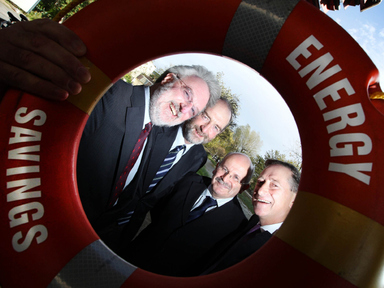
Professor J Owen Lewis, chief executive, SEAI; Dick Gleeson, planner, Dublin City Council; Tim McSwiney, senior executive engineer, Tralee Town Council; and Gerry Wardell, director CODEMA, Dublin City Council
The Sustainable Energy Authority of Ireland (SEAI) today announced Tralee, Dublin City and Tallaght as the three new exemplar Sustainable Energy Communities (SEC), all of whom will commit to specific energy saving projects for the next five years. The communities were selected from 14 local authorities for having a visionary co-ordinated approach to energy savings and integrating sustainable energy into community planning and development. The selection of the three SECs follows a competitive selection process and builds on the success of Ireland’s pilot SEC, Dundalk 2020.
SEAI’s Sustainable Energy Communities Programme aims to develop a series of Irish communities as ‘living laboratories’ to establish a culture of innovation and facilitate the emergence of new sustainable energy technologies and practices that grow energy smart towns and cities. SECs involve everyone in the community, across all sectors, working together to enhance sustainability by being as energy efficient as possible, using renewable energy where feasible and developing indigenous energy supplies. The programme acts as a catalyst on the ground to help stimulate a national move towards sustainable energy practice and to deliver national energy targets.
Dundalk 2020 was established as Ireland’s first SEC in 2007. Work to date has involved the installation of energy efficient technologies in a wide range of buildings as well as implementing energy efficient behavioural change. The project has led to savings of more than 5,000 tonnes of CO2 per annum, while organisations together are saving in excess of €500,000 per annum.
Speaking at the announcement of the winning SECs, Professor J. Owen Lewis, Chief Executive of SEAI said: “The standard of the proposals we received was excellent. Tralee, Dublin City and Tallaght will, with the support of SEAI, champion the testing and deployment of new sustainable energy technologies and practices in their communities, involving people across all sectors. The aim of the Sustainable Energy Communities Programme is to replicate best practice throughout the country and we will be helping other local authorities to improve the link between sustainable energy, economic development and planning, making significant energy savings in the process.”
SEAI will partner with the communities for five years, providing them with strategic guidance, as well as technical and project management support. As part of the programme, SEAI also set up an SEC Network to facilitate best practice and knowledge sharing among all local authorities that are progressing in sustainability.
The Society of Mills and Millers of Ireland was launched in 2001 to encourage and assist in the preservation and appreciation of mills as part of our industrial, architectural and landscape heritage. There are hundreds of mills and mill sites spread across the country and while many are beautifully refurbished or put to good use, there are also many others which could be restored or renovated while preserving their traditional context. The society aims to promote interest and awareness in this aspect of Ireland’s industrial heritage by building up knowledge and expertise in areas such as law, architecture, renewable energy and manufacturing and making information available through publications, lectures and events.
Mills & Millers of Ireland will hold their AGM on Saturday 8th October 2011 at 11.00am in the Glenavon House Hotel, Drum Road, Cookstown, Co Tyrone.
Tel: (048) or (028) 86764949. Registration tea, coffee from 10.30am.
At 12.00 noon following the AGM Mr Norman Kerr will give a presentation on linen processes. At 2.30pm following lunch in the hotel a guided tour of Wellbrook Beetling Mill, the last working water-powered linen beetling mill has been organised.
Following the tour a visit to the restored Gleshygolgan Flax Mill, Plumbridge incorporating a hydro electric scheme has also been organised.
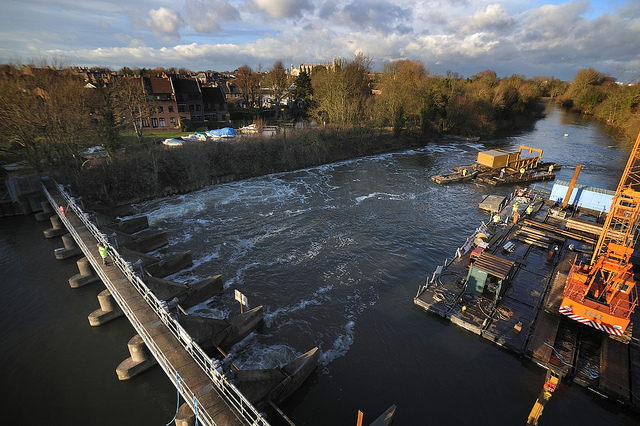
Romney weir is turning the screw on CO2. Two Archimedean Screw hydro turbines, rated at 150kW each and designed by Mann Power Consulting Ltd., are to be installed on the weir to generate clean, green electricity that will be used locally. With a total capacity of 300kW this will be one of the largest Archimedean Screw hydro schemes installed to date in the UK and Ireland. The largest single screw was recently installed at Shane’s Castle in Northern Ireland, rated at 214kW it is the largest ever manufactured Archimedean Screw hydro generator and was designed and supplied by Mann Power .
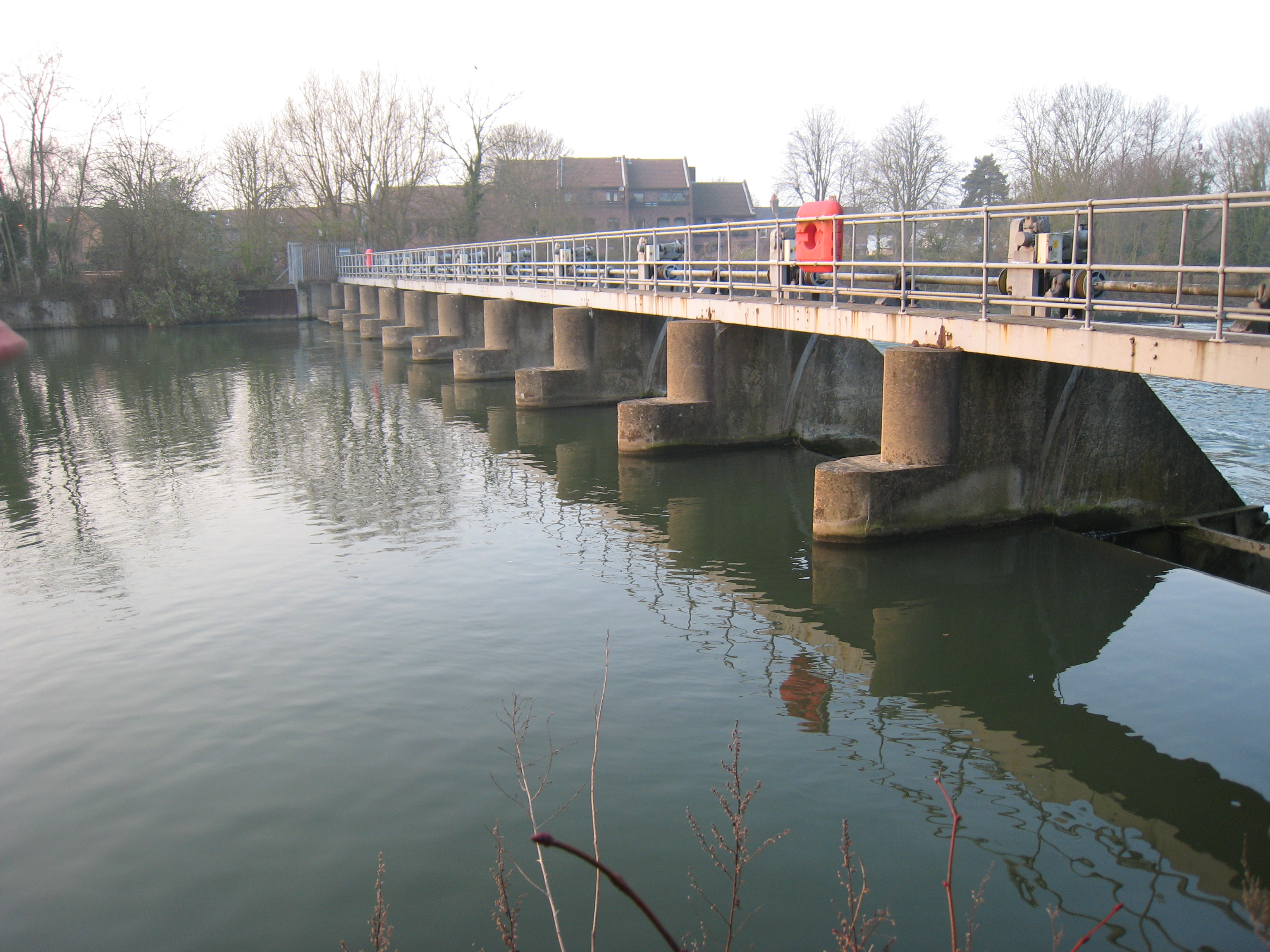
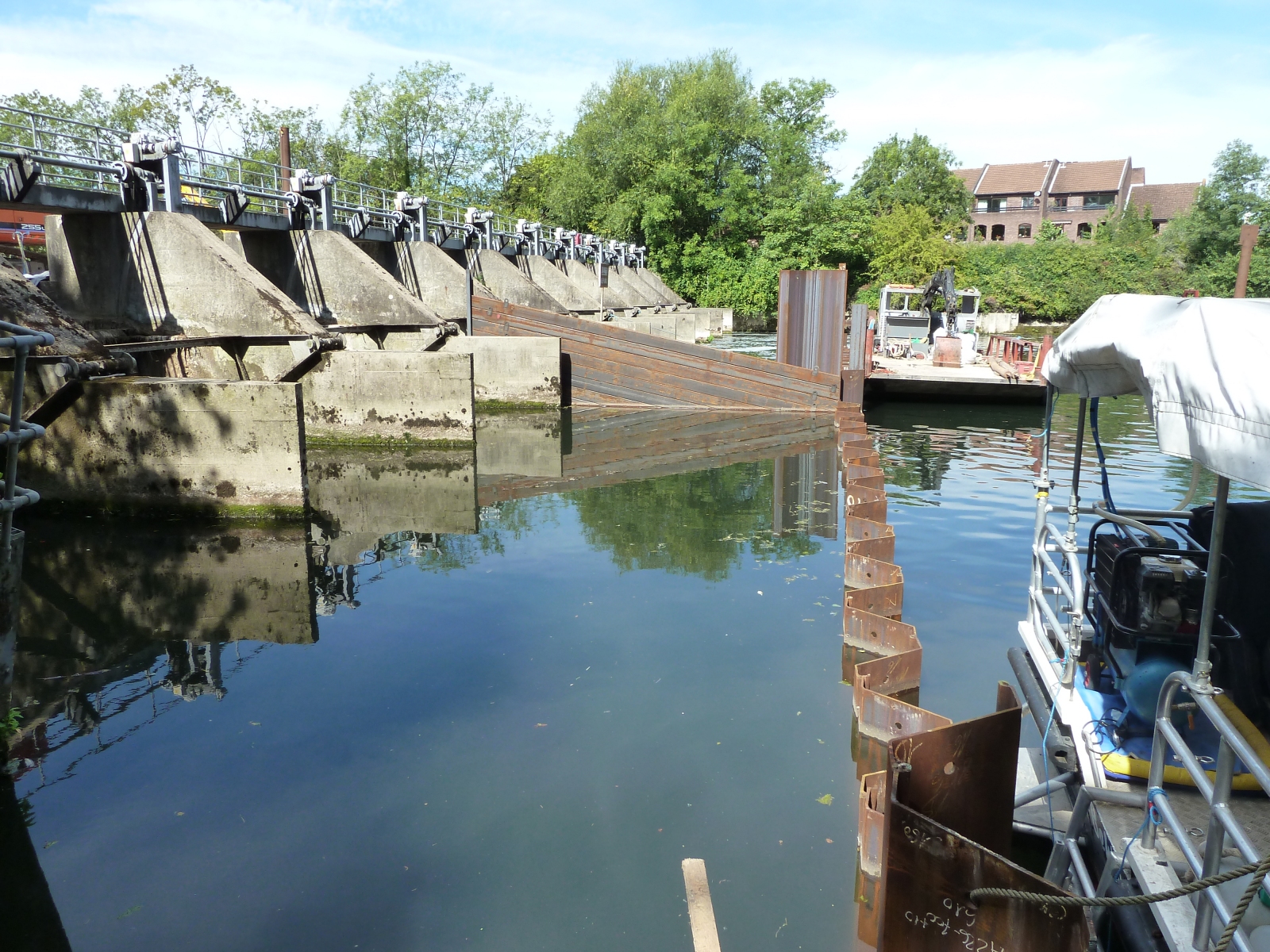
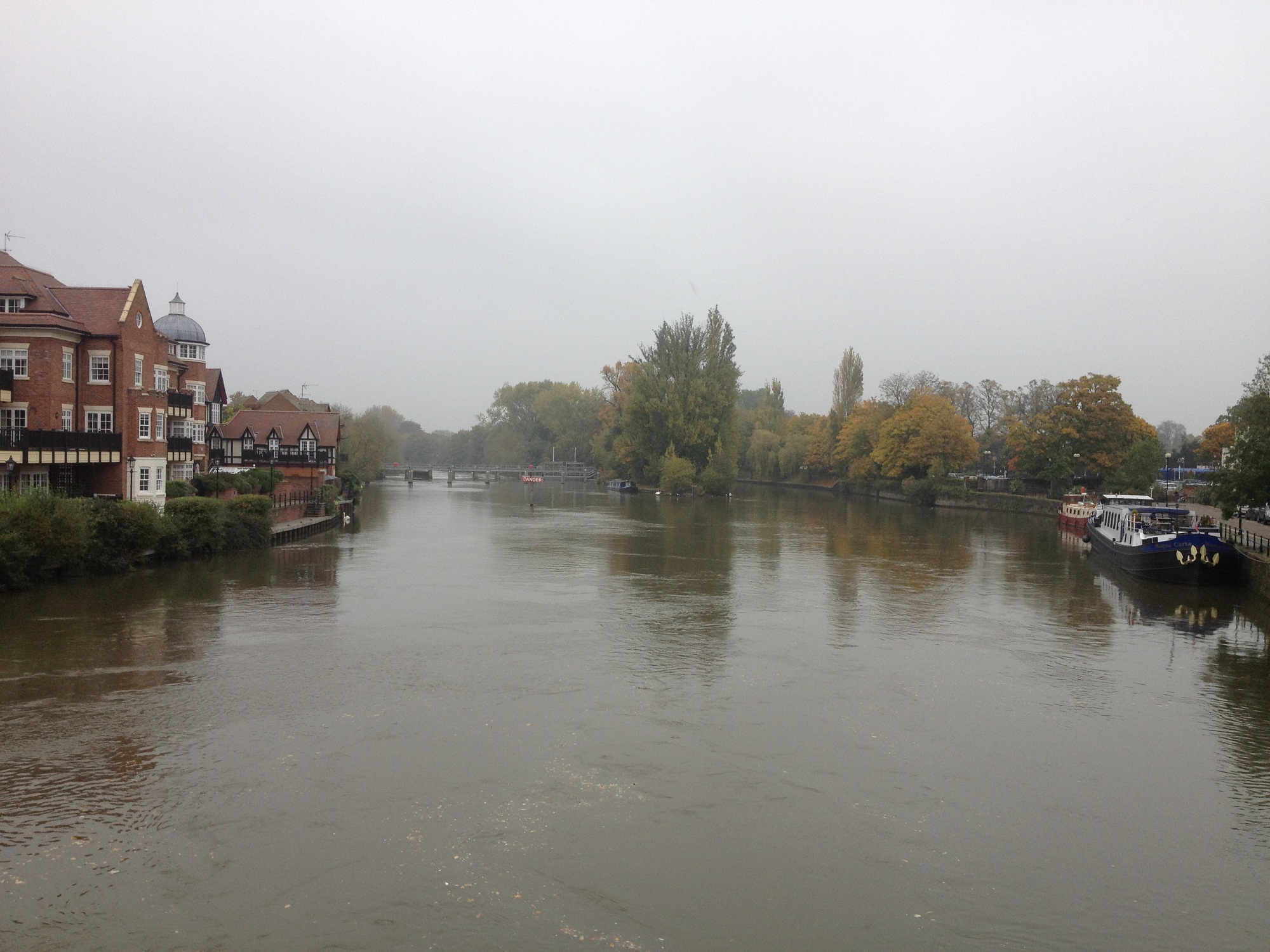
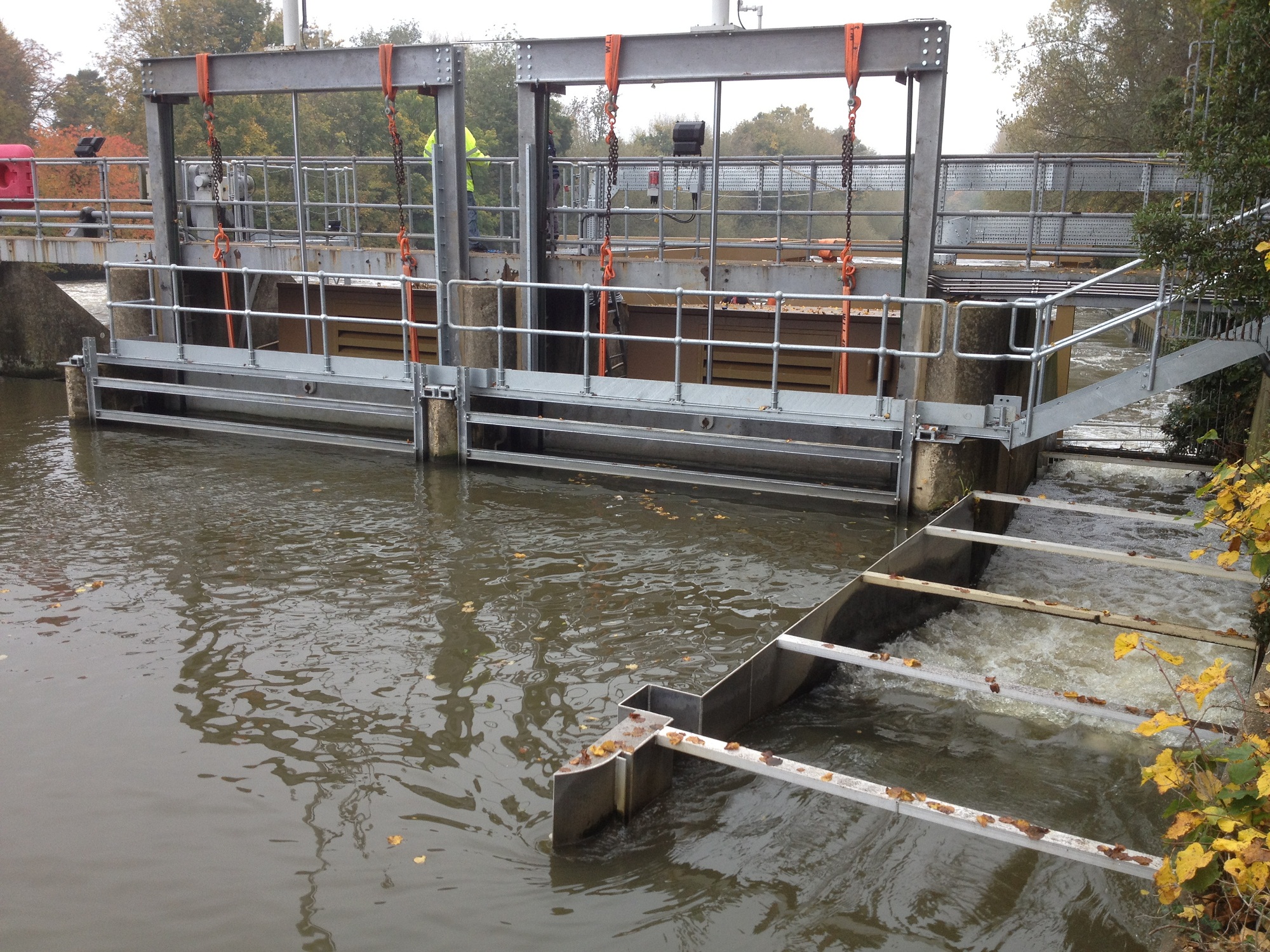
Romney Weir ‘A’ is in Windsor. The weir was built in the 1790’s and is used to control water levels between Old Windsor lock and Boveney lock. The Romney Weir hydro scheme will utilise just two of the ten existing weir bays and have little effect on current weir operations. Weirs were originally built to control water levels for navigation and flood risk purposes but can now take advantage of new technology to provide energy.
Romney Weir
To help ensure the £1.7million project both generates clean energy and improves the local environment the old Denil type fish pass will be replaced with a Larinier style fish pass which will enable over 12 species of fish including trout and perch, as well as endangered eels, to migrate up this stretch of river, some for the first time in over 200 years.
The scheme will be fitted with a number of environmental protection measures including rubber bumpers on the turbine blades to minimise risk to fish.
A four metre flood gate will also be linked to the scheme and will open automatically when river levels are high to ensure there is no increased risk from flooding
Pile driving completed at Romney Weir
The project, which was granted planning permission in August 2008, will consist of two four meter diameter Archimedes screw type turbines occupying two bays in the Romney Weir and will generate 300 kilowatts per hour at peak times, enough to power 600 households. It is estimated the turbines will reduce carbon dioxide emissions by 790,000 kilos per year. This clean, green electricity will be used to power Windsor Castle.
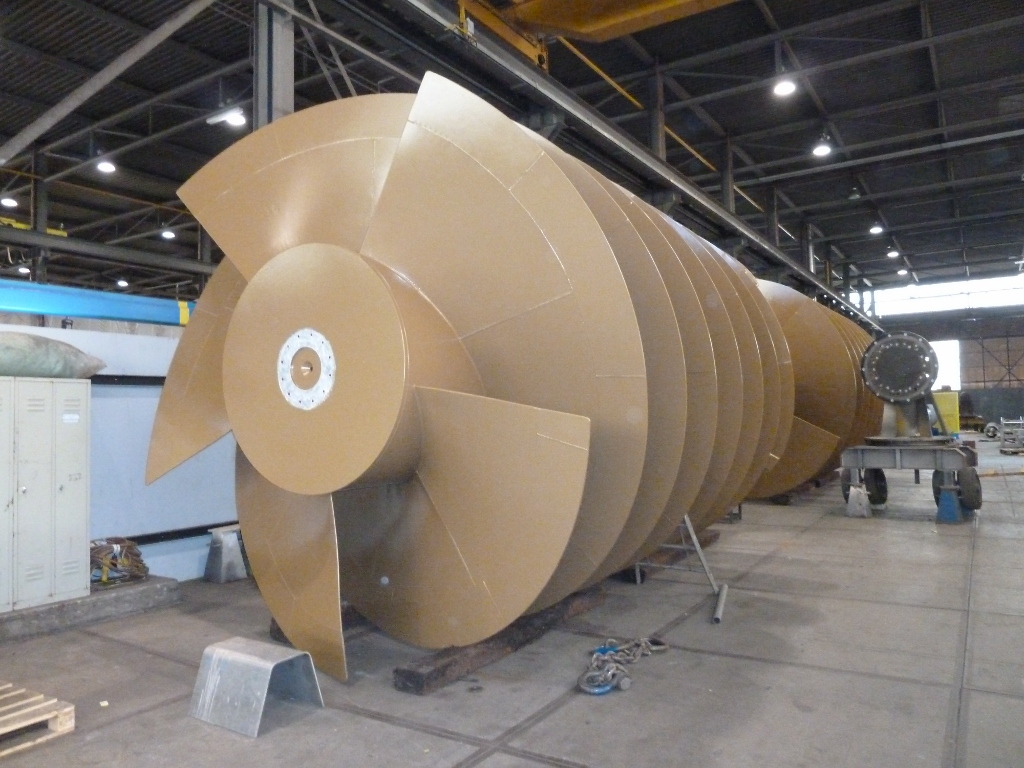
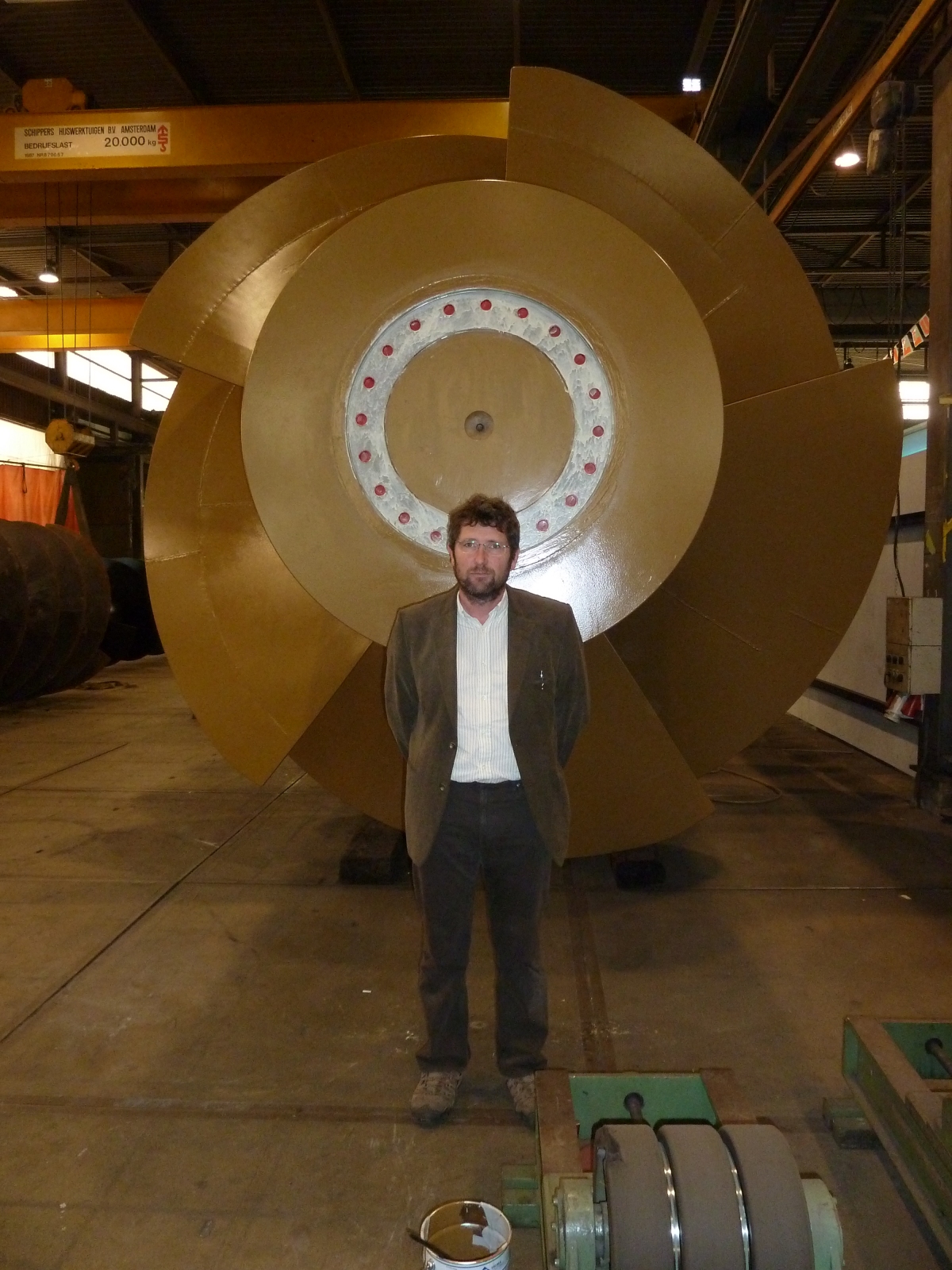
The two 150kW turbines at the Landustrie factory
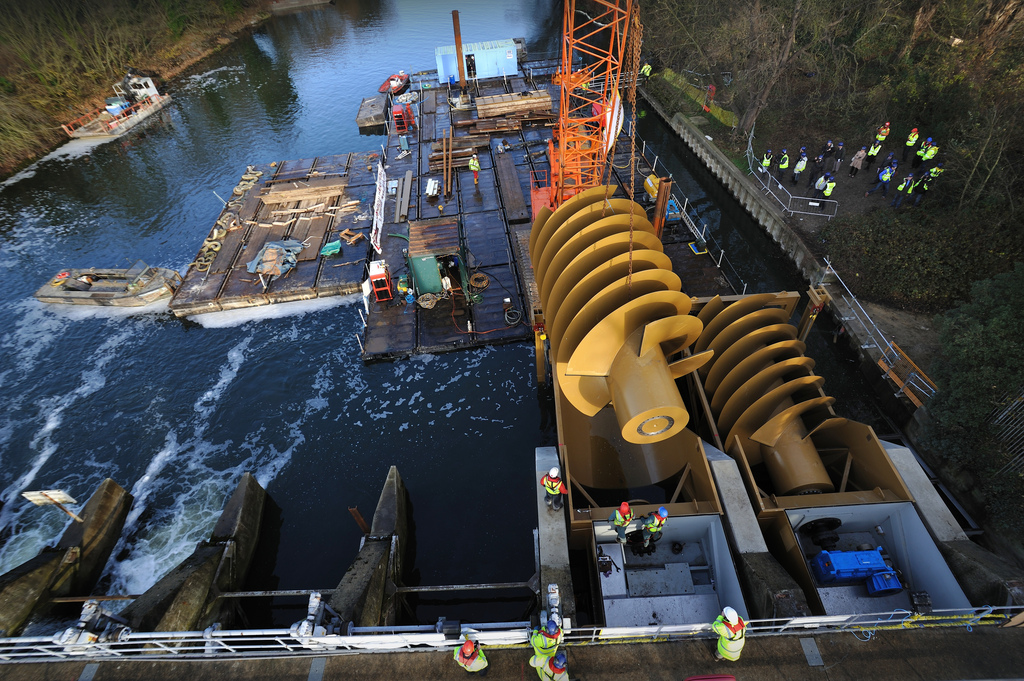
Mann Power Consulting Ltd., the UK based Archimedean Screw specialists designed the equipment for the Romney Weir project. After various consultations it was decided that the most suitable turbine for the site was an Archimedean Screw Hydro Turbine which was manufactured by Landustrie based in Holland. The Landy screws are four meters in diameter, 6 meters long and each has the capacity of 150 kW. A unique feature of each screw is the number of blades or helices; here being 5 instead of usually 2 or 3. This is the first five bladed Archimedes Screw Hydro Turbine to be installed in the world to date.
Dave Mann visiting Landustrie in Holland
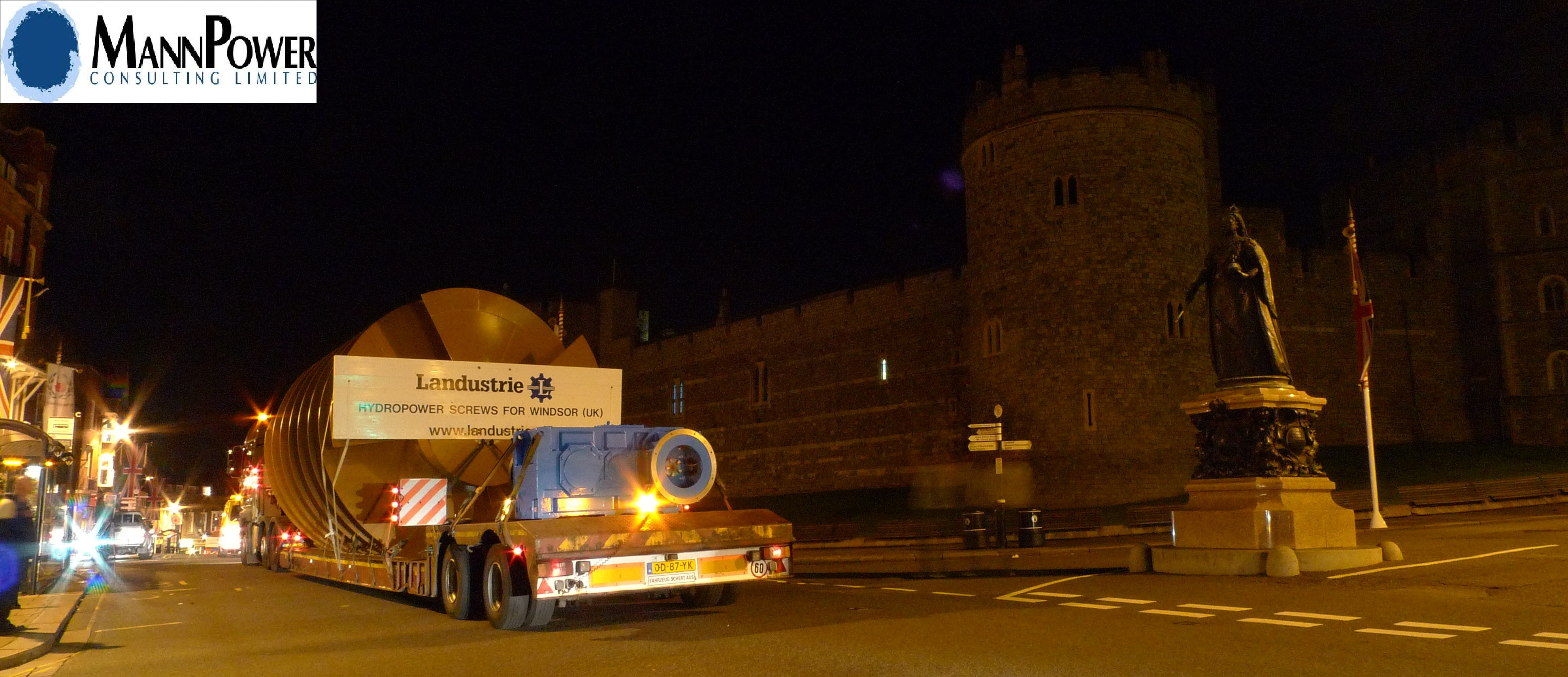
The turbines on route to Romney
The two 150kW Archimedean Screw turbines arrived on site in the early hours of Wednesday morning 7th September 2011.
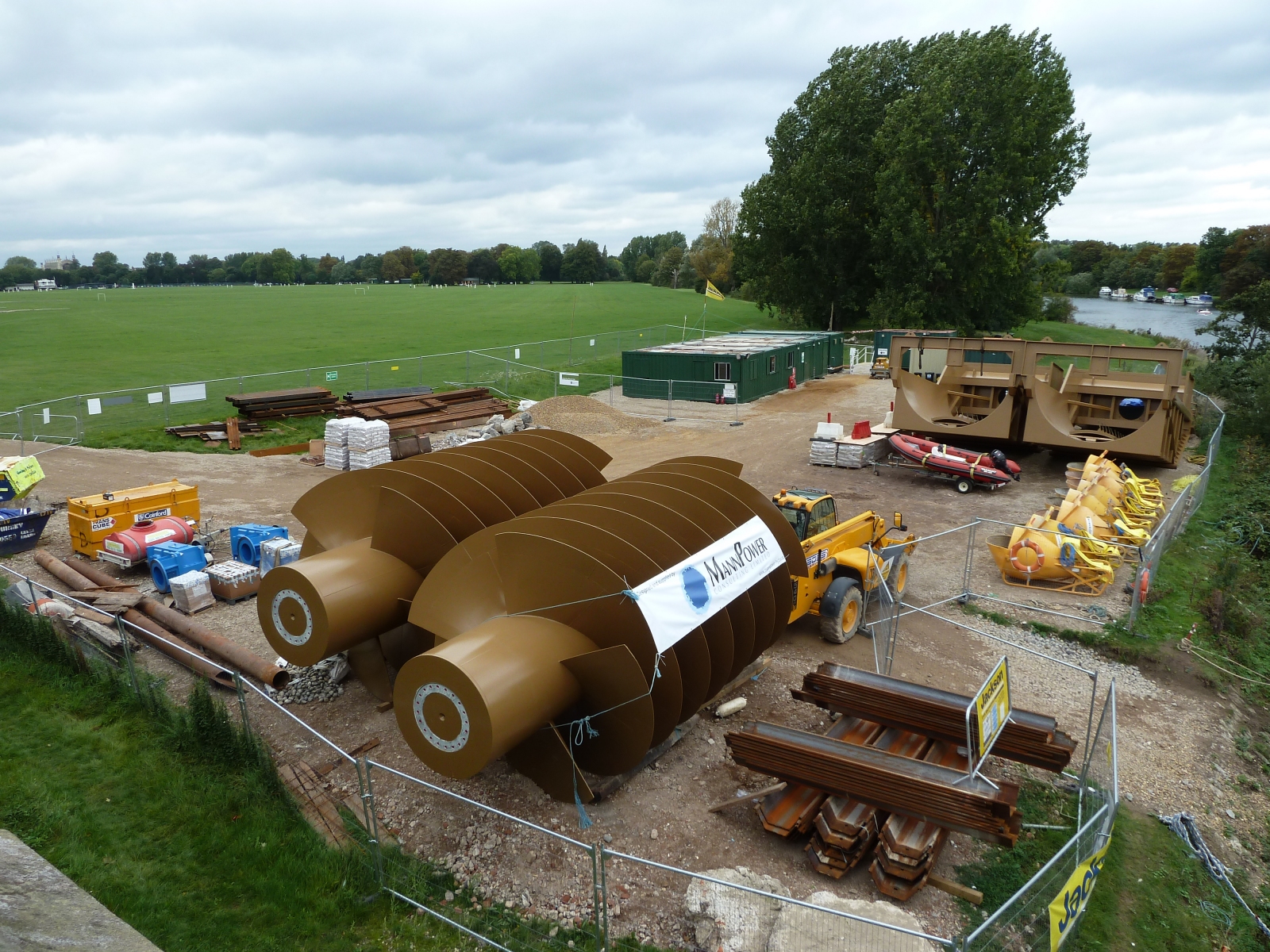
The two turbines in the compound awaiting installation
Turbine floating to the weir on a pontoonInstalling the Archimedean ScrewsThe two Archimedean Screws installed on Romney Weir
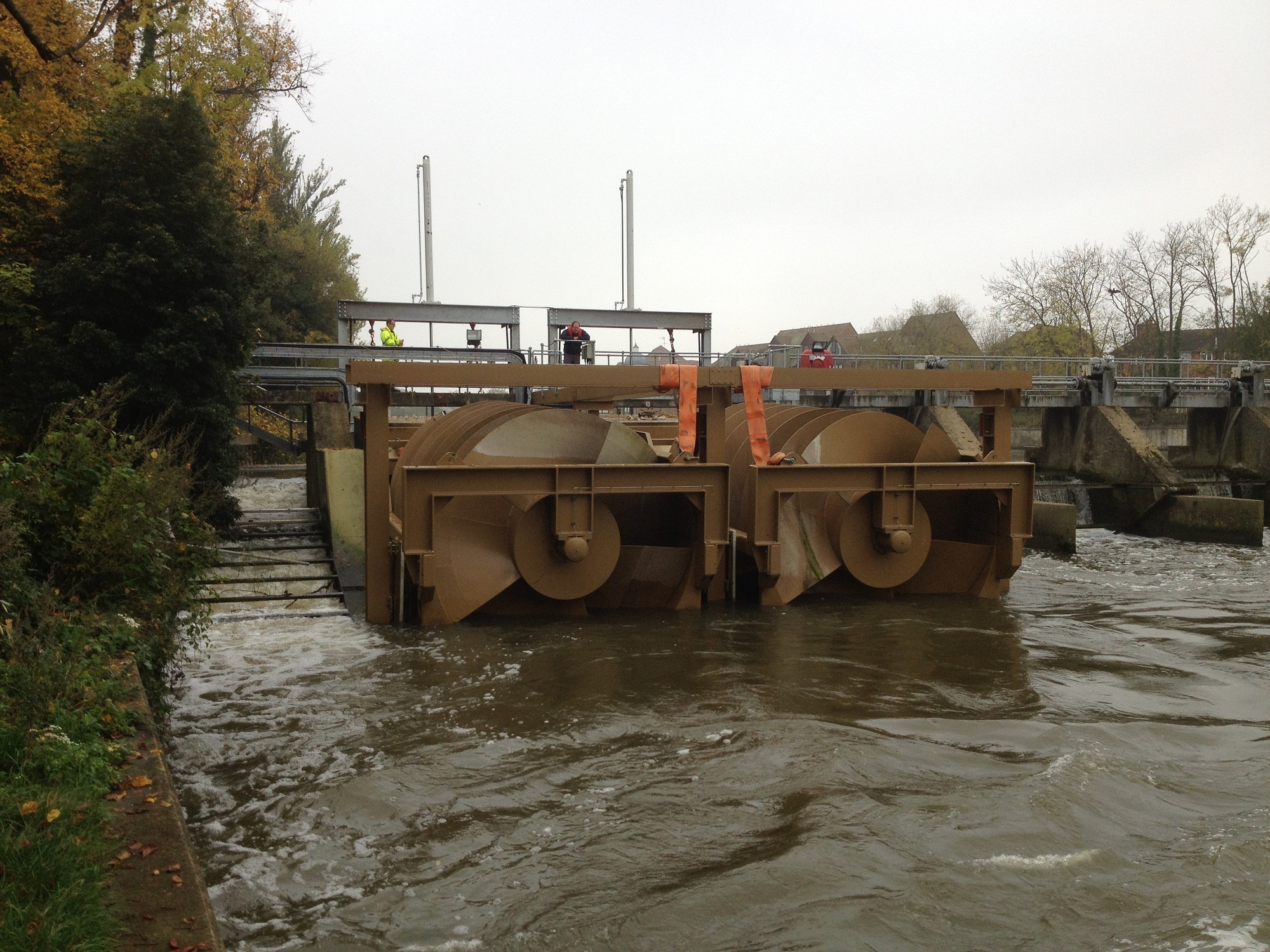
The golden brown colour of the turbines and their housings were chosen by the residents of Eton, who look out onto the weir.
The turbines in-situ at Romney WeirSluice gates and Larinier Fish Pass
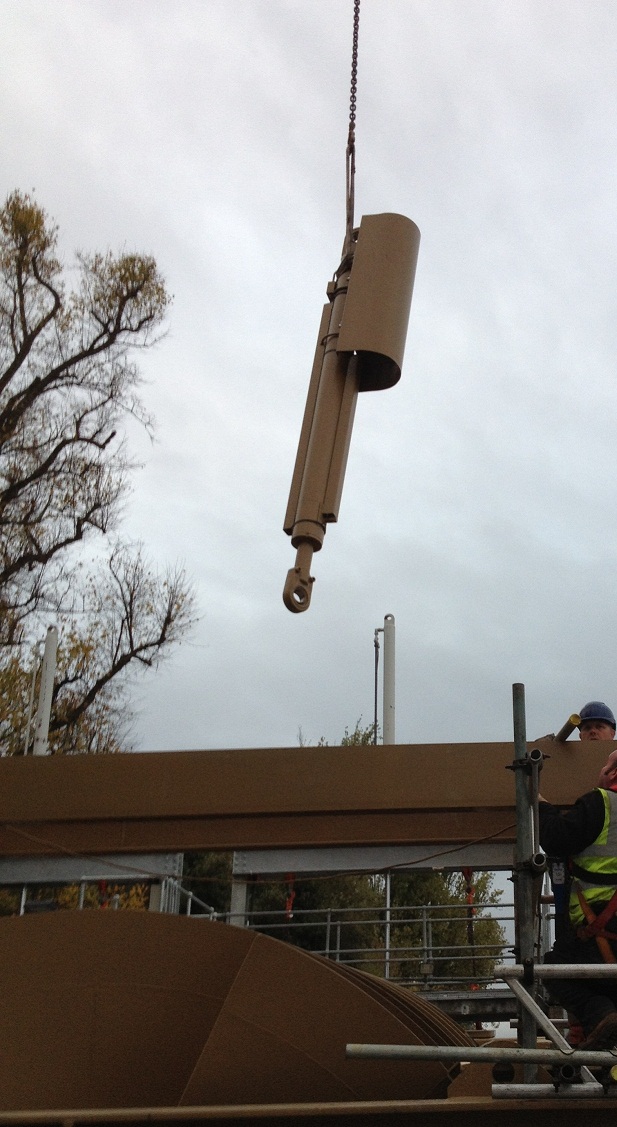
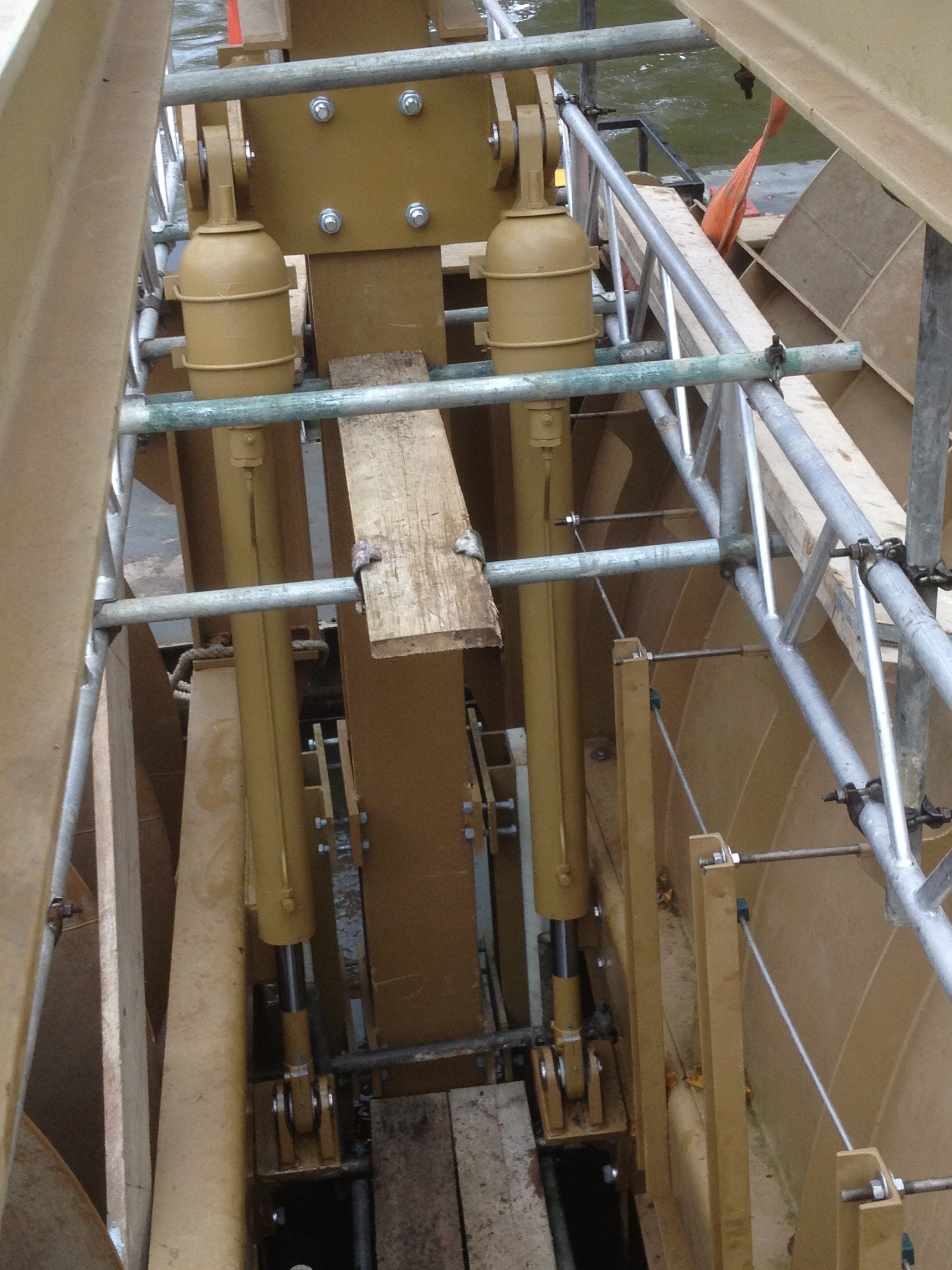
Four Hydraulic Rams have been installed to automatically move and adjust the two 94 tonne turbines as the river level changes.
Hydraulic ram being craned into place
The two hydraulic rams in-situ
Commissioning of the scheme is expected to take place in the coming weeks.
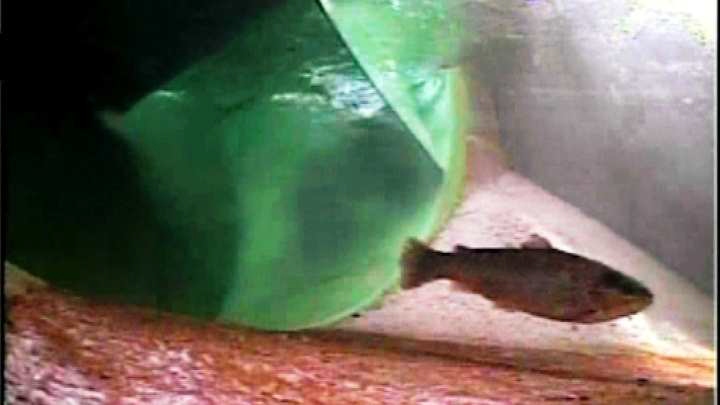
The fish-friendly Archimedean Screw hydro turbine.
The Archimedean Screw turbine provides a fish-friendly alternative to conventional turbines, ideally suited to low-head (1m-10m) sites, and sites with fish protection issues. Extensive fish passage tests have conclusively demonstrated that the large water chambers and slow rotation of the Archimedean Screw allow fish of all sizes, and debris, safe passage through the turbine. As a result, the Environment Agency has agreed that no screening is required. Literally thousands of fish passages have been monitored and recorded using underwater cameras at the intake, inside the chamber of the Screw itself and at the outflow to assess the effect of the Screw on salmonids (including smolts and kelts), brown trout and eels. The trials looked at fish passage across a broad spectrum of sizes and turbine speeds, possibly the most impressive of which was the safe passage of a kelt measuring 98cm in length and weighing 7.6kg. In addition, behavioural and migrational patterns across the species have been shown to be entirely unaffected by the turbine.
Dave Mann commissioned the fish passage studies instrumental in persuading the Environment Agency to accept the technology. Mann Power have a proven track record of successful installation throughout the UK and Ireland. One of the first challenges presented to Mann Power when Dave Mann set up the consultancy firm in 2003 was to find a hydropower solution for a community project in North Yorkshire, situated in a low head site within a Site of Special Scientific Interest with particular stipulations for the protection of an endangered fish species. The result of extensive research into possible solutions culminated in the introduction of the Archimedean Screw turbine – already widely used in continental Europe – for the first time into the UK, and Mann Power have been at the forefront of supplying this equipment for hydro generation projects since 2004. Mann Power now supplies this equipment throughout the UK and Ireland, as well as providing expert consultancy services.
Dave Mann, a member of the British Hydropower Association Council, has been instrumental in the design, installation and commissioning of all but a few of all Archimedean screw power generation sites in the UK and Ireland to date with over twenty schemes fully operational and a further forty or so at various stages of development. Mann Power have commissioned several independent studies to verify the Archimedean Screw’s fish-friendly credentials and also its efficiency. Mann Power is established within the national hydropower industry as a leader in the field of designing bespoke hydro-generation installations, specialising in low head and ‘difficult’ sites which previously may have been considered unsuitable for such applications.
Eco Evolution work in colaboration with Mann Power Consulting on hydro sites throughout the island of Ireland and the UK.
We also design modern water wheels for electricity generation.
All photographs copyright of Mann Power Consulting and Eco Evolution.
From 1st September 2011, shops won’t be able to buy in new stocks of clear 60 watt traditional light bulbs under EU rules. They are no longer allowed to order new stocks of clear 60W bulbs but can however sell whatever remaining stock they have and manufacturers will have to stop supplying them.
Initially, Ireland’s National Climate Change Strategy wanted the government to issue a levy for low-efficiency bulbs. In December 2007 Ireland went one step further and became the first country in the EU to introduce new legislation to ban the sale of energy-wasting incandescent lightbulbs by 2009.
It was later announced that all member states of the EU agreed to a progressive phase-out of incandescent light bulbs by 2012.
From 1st September 2012 it will be lights out for the incandescent light bulb when the 40W incandescent light bulb will be finally banned. As in 2011 shops can sell their remaining stock and manufacturers will have to stop supplying them. This will be a big change for people as the incandescent light bulb makes up about 60% of the Irish market.
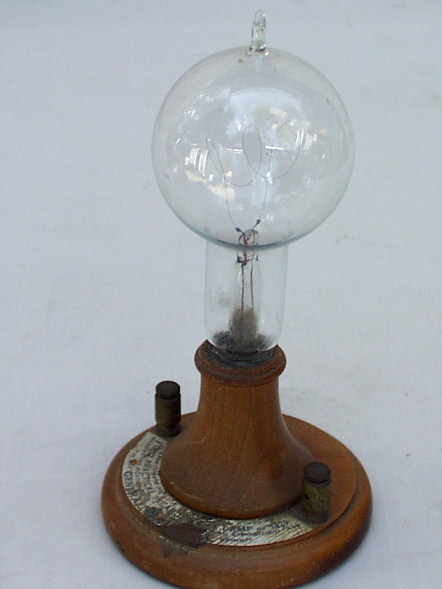
Edison Lightbulb
As part of an EU directive, traditional light bulbs will be replaced by more energy-efficient types — halogen bulbs, which are 30% more energy-efficient, and the CFL long-life bulbs, which are 80% more energy-efficient.
Before the legislation to ban incandescent lightbulbs was drafted, different bulb technologies were assessed in an extensive study, to determine their potential environmental benefits and impact on consumers and the light bulb industry. The EU decided to phase out conventional incandescent bulbs to reduce CO2 emissions by approximately 15 million tonnes a year.
The use of traditional lightbulbs can account for as much as one-fifth of household electricity consumption. The electricity used over the lifetime of a single incandescent bulb costs 5 to 10 times the original purchase price of the bulb itself. Replacing 3 x 100W incandescent lightbulbs with CFLs using 3 hours of electricity per day can save an average household up to €43 per annum.
The EU phase-out started in 2009 when 100W bulbs stopped being sold, while last September saw the phase-out of 75W bulbs. All remaining clear incandescent bulbs on the market, including 40W and 25W varieties, will be phased out in September 2012.
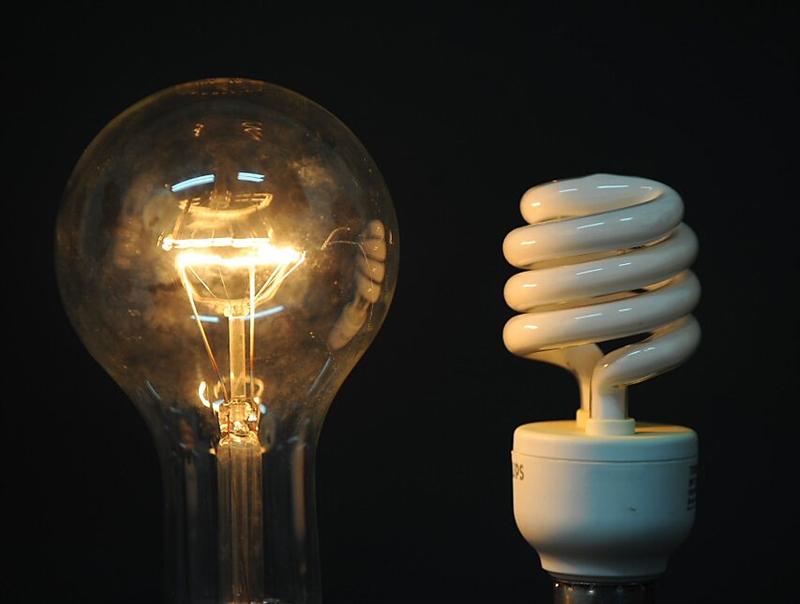
A traditional incandescent lightbulb and a compact fluorescent light (CFL)
CFL bulbs, or compact fluorescent lightbulbs :
CFL bulbs, or compact fluorescent lightbulbs are designed to replace incandescent, halogen and other electric lights around your house, use between 60% and 80% less energy than their incandescent counterparts, making them an increasingly popular way to cut energy use without having to make any radical changes. CFLs can be applied nearly anywhere that incandescent lights are used. Energy-efficient CFLs can be used in recessed fixtures, table lamps, track lighting, ceiling fixtures and porchlights.
While the purchase price of an integrated CFL is typically 3 to 10 times greater than that of an equivalent incandescent lightbulb, the extended lifetime and lower energy use will more than compensate for the higher initial cost.
CFL’s are made of glass tubes filled with gas and a small amount of mercury. The amount is so small that an old-fashioned glass thermometer holds 100 times as much mercury as one CFL bulb. No mercury is released when the bulbs are intact or in use, but CFLs can release mercury vapour when broken. It is important that you are aware of the steps to follow when cleaning up a broken CFL.
Light is emitted when mercury molecules in a CFL bulb become excited by electricity running between two electrodes at its base. The mercury emits an invisible ultraviolet light that becomes visible when it hits the white coating inside the CLF bulb.
It’s important that you know how to dispose of Compact Fluorescent Light Bulbs because, as already stated they contain mercury, a hazardous chemical. In Ireland (possibly the whole EU) as part of the Waste Electrical and Electronic Equipement (WEEE) directive, retailers must take back used CFL bulbs for free when a new bulb is bought. It is important that these are recycled and not just thrown out. The environment and cost benefits of CFL bulbs make them and excellent eco-friendly option for lighting. They can also be brought to Civic Amenity sites and disposed of free of charge.
LEDs – light emitting diodes
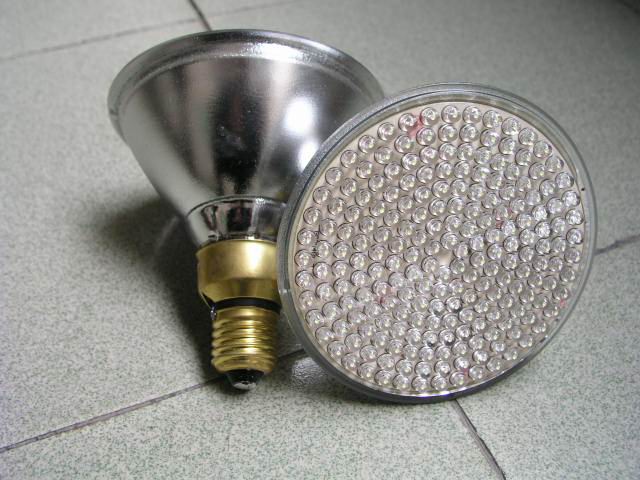
LEDs – light emitting diodes.
The other option to replace incandescent bulbs are LEDs – light emitting diodes. They are becoming increasingly popular in homes and the most common uses of LED lights are in bulbs, shop displays, flashlights, traffic lights, Christmas lights and much more.
LED bulbs last up to 10 times as long as compact fluorescents, and far longer than typical incandescents. They offer the advantages of CFLs — lower power consumption and longer lifetimes — without the downside of toxic mercury.
LEDs do not have a filament, they are not damaged under circumstances when a regular incandescent bulb would be broken. LED light bulbs use only 2-17 watts of electricity (1/3rd to 1/30th of Incandescent or CFL). LED bulbs used in fixtures inside the home save electricity, remain cool and save money on replacement costs since LED bulbs last so long.
Evance, a leader in the manufacture of small wind turbines, is the first company to have completed the Mircogeneration Certification Scheme(MCS) Phase 2 requirements when the MCS Transition Arrangements document was issued on 28th April 2010. The MCS gives consumers the guarantee that certified microgeneration products and the installers of those products have conformed to a rigorous set of standards.
Eco Evolution are pleased to announce that the Evance R9000 5kW wind turbine has completed all tests and has been awarded full Microgeneration Certification Scheme (MCS) accreditation. This accreditation is a formal recognition of the durability, reliability, safety and overall performance of the R9000, which provides customers with confidence in the turbine, as well as entitlement to income from Feed-in Tariffs.
Evance Press Release 20th July 2010:
Evance, a leader in the manufacture of small wind turbines, is pleased to announce that its R9000 5kW wind turbine has completed all tests and awarded full Microgeneration Certification Scheme (MCS) accreditation.
This accreditation is a formal recognition of the durability, reliability, safety and overall performance of the R9000, which provides customers with confidence in the turbine, as well as entitlement to income from Feed-in Tariffs.
For durability, the MCS states that a Class II turbine, such as the R9000, needs to be in operation for at least 6 months and achieve a minimum of 25 hours operating in winds greater that 15.3 m/s (34.2 mph). During this test period the R9000 substantially exceeded this parameters, by operating for over 200 hours in winds >15.3 m/s, proving its resilience. It actually saw sufficient wind to pass the Class I durability criteria within this timeframe.
To prove dependable operation the MCS required a 6 month running test. The R9000 test period began in November 2009 through to June 2010, with the turbine operating consistently throughout this period, so demonstrating its reliability.
“We are very pleased to have our product performance accredited as we have always been proud of the data we publish as our products are developed to BWEA testing standards,” stated Andrew Tasker, Product Director for Evance Wind Turbines Ltd. “We ran two concurrent test sites, in Cornwall and Shetland, which allowed us to rigorously test the turbine and tower in harsh winter conditions, with exceptional results.”
Turbines also have to pass the Safety & Function criteria which reviews and tests how a turbine copes with high wind speeds. For the R9000 this meant that the patented Reactive Pitchmechanism and Electro Brakewere fully tested, with both passing all requirements. Also technical information, such as load calculations and stress analysis, has been independently audited.
“We welcomed the introduction of the MCS as we believe it will improve standards across the industry. The R9000 is an excellent design, and it is good to see a product designed and manufactured in the UK meeting these stringent requirements” commented Kevin Parslow, CEO of Evance Wind Turbines Ltd. “The outstanding performance of the R9000 will give all customers, around the World, confidence to invest in small wind and Evance as a supplier of small wind turbines.”
Video of the EvanceR9000 installed on a farm in Co. Wexford.
Eco Evolution are resellers and installers of the Evance R9000 Wind Turbine in the Leinster region. If you would like to find out more about the benefits of wind energy please contact us here.
Sustainable Energy Authority of Ireland (SEAI) have just completed the following improvements to the Triple E programme. The following technologies have been added to the Triple E product register: Heat Pumps, Solar Thermal and Inverters.
SEAI have also revised the following criteria to allow products to be submitted under the Microgen programme: Wind Turbine Systems, Photovoltaic Systems and Co-generation.
Unfortunately in this recent update they did not include hydro. Hopefully we will see this added in the next update!
Products can now be submitted for consideration under the new technology headings. Equipment suppliers and manufacturers who want to submit eligible equipment to the ACA can do so through the online process. The next submission round will close Friday 19th August 5.00pm
Overview of Accelerated Capital Allowance (ACA):
The ACA is a tax incentive for companies paying corporation tax and aims to encourage investment in energy efficient equipment. The ACA offers an attractive incentive whereby it allows companies to write off 100% of the purchase value of qualifying energy efficient equipment against their profit in the year of purchase.
This incentive relates to the provision of certain energy-efficient equipment for use in a company’s trade and the equipment must be included in the list of energy-efficient equipment approved by the Minister for Communications, Energy and Natural Resources in order to qualify under the scheme.
The energy-efficient equipment must be new. It must meet certain energy-efficient criteria and must fall within one of the 10 different equipment categories and 52 associated technologies.
A company is required to incur a minimum amount of expenditure on providing the equipment and this varies with the particular category to which the product belongs.
There is no requirement to obtain approval for expenditure on the energy-efficient equipment.
The normal self-assessment provisions apply. Once a company meets all of the required conditions, it can claim the allowance for the accounting period in which the equipment was first provided and used for the trade provided that the equipment is included on the published list at some stage during that accounting period. The allowance should be claimed on the company’s return of income (form CT1) and should be included along with any other wear and tear allowances for machinery and plant. A dedicated entry for this allowance is included in the CT1 return under the heading “Trading Results”.
Overview of the ACA equipment categories and eligibility criteria:
Equipment Category
Minimum expenditure (for ACA incentive)*
Technology& associated criteria
Date Criteria last updated
Building Energy Management Systems (BEMS)
€5,000
Building Energy Management Systems (BEMS)
28.09.2009
Lighting
€3,000
Lighting Units
27.09.2010
Lighting Controls
11.10.2010
Motors and Drives
€1,000
AC Induction Motors
27.09.2010
Variable Speed Drives (VSDs)
28.09.2009
Permanent Magnet Motors
23.06.2010
Information and Communications Technology (ICT)
€1,000
Rack Mounted Servers
27.09.2010
Enterprise Storage Equipment
10.05.2010
Precise Cooling
28.09.2009
Centralised Direct Current Power Distribution
28.09.2009
Power Management
28.09.2009
Uninterruptible Power Supply
28.09.2009
Blade Servers
23.06.2010
ICT Communications
23.06.2010
ICT Optimisation Solutions
23.06.2010
Heating and Electricity Provision
€1,000
Co-generation
25.07.2011
Wind Turbines
25.07.2011
Boilers and Hot Water Heaters
27.09.2010
Localised Steam Generators
28.09.2009
Stationary Fuel Cell Power Systems
28.09.2009
Photovoltaic Systems
25.07.2011
Boiler Controls
28.09.2009
Condensate Recovery Systems
17.12.2009
Steam Systems
28.09.2009
Biomass Boilers
27.09.2010
Inverters
25.07.2011
Solar Thermal Collectors
25.07.2011
Process and Heating, Ventilation and Air-conditioning (HVAC) Control Systems
€1,000
HVAC Zone Control
28.09.2009
Heat Exchangers
27.09.2010
Pumps
28.09.2009
Hydraulic Power Recovery Turbine
28.09.2009
Blowers
28.09.2009
Fans
28.09.2009
Electric and Alternative Fuel Vehicles
€1,000
Electric Vehicles and Associated Charging Equipment
28.09.2009
Alternative Energy Vehicle Conversions
28.09.2009
Catering and Hospitality
€1,000
Commercial Dishwashers
18.06.2010
Commercial Laundry Dryer
18.06.2010
Commercial Combination Ovens
18.06.2010
Commercial Laundry Washer
23.06.2010
Water Boilers
04.06.2010
Electromechanical Systems
€1,000
Electrical Actuators
18.06.2010
Extrusion Blow Moulding Machines
18.06.2010
Injection Blow Moulding Machines
18.06.2010
Injection Moulding Machines
18.06.2010
Process Energy Management Systems
23.06.2010
Voltage Stabilisation
23.06.2010
Refigeration and Cooling
€1,000
Compressors and Condensing Units
23.06.2010
Condensers
23.06.2010
Refrigerated Display Cabinets
23.06.2010
Refrigeration System Controls and Monitoring
23.06.2010
Chillers and Fluid Coolers
27.09.2010
Heat Pumps
25.07.2011
* Expenditure within each equipment category must, at the end of the accounting period, be equal to or exceed minimum expenditure amounts relevant for each category. Minimum expenditure can be over a range of projects, procurements etc as it only relates to overall company expenditure on BEMS technologies in the accounting period.
We use cookies on our website to give you the most relevant experience by remembering your preferences and repeat visits. By clicking “Accept All”, you consent to the use of ALL the cookies. However, you may visit "Cookie Settings" to provide a controlled consent.
This website uses cookies to improve your experience while you navigate through the website. Out of these, the cookies that are categorized as necessary are stored on your browser as they are essential for the working of basic functionalities of the website. We also use third-party cookies that help us analyze and understand how you use this website. These cookies will be stored in your browser only with your consent. You also have the option to opt-out of these cookies. But opting out of some of these cookies may affect your browsing experience.
Necessary cookies are absolutely essential for the website to function properly. These cookies ensure basic functionalities and security features of the website, anonymously.
Cookie
Duration
Description
cookielawinfo-checkbox-analytics
11 months
This cookie is set by GDPR Cookie Consent plugin. The cookie is used to store the user consent for the cookies in the category "Analytics".
cookielawinfo-checkbox-functional
11 months
The cookie is set by GDPR cookie consent to record the user consent for the cookies in the category "Functional".
cookielawinfo-checkbox-necessary
11 months
This cookie is set by GDPR Cookie Consent plugin. The cookies is used to store the user consent for the cookies in the category "Necessary".
cookielawinfo-checkbox-others
11 months
This cookie is set by GDPR Cookie Consent plugin. The cookie is used to store the user consent for the cookies in the category "Other.
cookielawinfo-checkbox-performance
11 months
This cookie is set by GDPR Cookie Consent plugin. The cookie is used to store the user consent for the cookies in the category "Performance".
viewed_cookie_policy
11 months
The cookie is set by the GDPR Cookie Consent plugin and is used to store whether or not user has consented to the use of cookies. It does not store any personal data.
Functional cookies help to perform certain functionalities like sharing the content of the website on social media platforms, collect feedbacks, and other third-party features.
Performance cookies are used to understand and analyze the key performance indexes of the website which helps in delivering a better user experience for the visitors.
Analytical cookies are used to understand how visitors interact with the website. These cookies help provide information on metrics the number of visitors, bounce rate, traffic source, etc.
Advertisement cookies are used to provide visitors with relevant ads and marketing campaigns. These cookies track visitors across websites and collect information to provide customized ads.