Water charge details ‘within weeks’

Proposals to reintroduce domestic water charges, with new water meters being installed in every home in the State, are to be brought to Government in about two weeks.

The proposals – which were approved in principle as part of the Budget – will be brought forward by Minister for the Environment John Gormley.

However the Minister admitted today it is unlikely that water metering will be in place by June 2012 – which means domestic water charges will not be reintroduced before the next general election.

Mr Gormley acknowledged taht the insisting the charges would be politically unpopular but insisted they were necessary. “I think everybody who understands the environment … they know that this is an absolute necessity,” he said. “You just can’t go putting your head in the sand on these issues any longer. Water is a precious resource.

“All the evidence shows that when you actually charge for water people conserve it, people use it wisely.”

He would not be drawn on how much each of Ireland’s 1.1 million households would be charged but said a speculated figure of €400 per household was wide of the mark. He pointed to other EU countries as a possible indicator.

Mr Gormley revealed his plans as part of his announcement of a “reprioritising” of the €1.8 billion Water Services Investment Programme for the next three years.

The reprioritised programme will now give priority to projects which target environmental compliance issues, in a bid to avoid the imposition of fines by the European Commission, and achieve sustainable supplies.

The Minister stressed Ireland had not yet been fined by the EU for its confirmed breaches of the Water Framework Directive, a feature he said was as a result of the Government’s openness to take whatever remedial steps were necessary.

The programme will also target repairs to the water networks to eliminate waste and protect water basins. It is estimated that “lost” water ranges from 16 per cent to 58 per cent of supplies across the State. The programme provides €320 million over the three year period for remedial works.

A much greater emphasis on water conservation through the introduction of water metering and inducements for householders to cut down on usage, also forms a significant part of the new programme.

Mr Gormley told a press conference today he did not believe it made sense, from an economic or environmental perspective, “to invest in expanding water treatment capacity if there is a significant loss of treated water in damaged or aging networks”.

Mr Gormley said in January the Government intends to raise as much as €1 billion per annum from water metering charges when they are introduced.

Labour today welcomed the investment programme but said it was overdue. The party’s environment spokeswoman Joanna Tuffy said the Government’s approach to investment in water needs to change. “There needs to be a national water strategy rather than the piecemeal approach of the past,” she said.

“The priority of State investment has to reduce the amount of public treated water that is lost through leaks. The other priority has to be bringing waste water treatment facilities up to standard to ensure safe drinking water.

“It raises the question as to how, when the Government was spending up to €500 million per year on water infrastructure projects, our distribution was allowed to fall into such a state of disrepair,” Ms Tuffy said.

Source: http://www.irishtimes.com/newspaper/breaking/2010/0419/breaking42.html
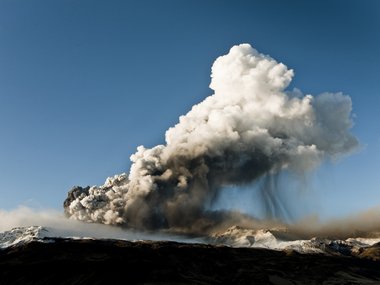
Irish airspace closed due to volcanic ash plume.

Hundreds of thousands of travellers face a fourth day of disruption today as the volcanic ash plume continues to drift south and east of Iceland.

The cloud of volcanic ash that has covered much of Northern Europe still is not clearing and it remains unsafe for planes to take to the skies.

The International Civil Aviation Authority says the disruption to air travel is greater than the shutdown of airspace following the 11 September attacks in the US.

The Irish Aviation Authority has extended the closure of Irish airspace to commercial traffic until 1pm tomorrow.

The IAA said: ‘No commercial passenger flights, including North American traffic, will operate from any Irish airport during this period.

‘Met experts are predicting that the prevailing weather conditions will continue in the coming days. Ongoing restrictions are therefore likely.’

The IAA said it has based its decision on the latest reports from the Volcanic Ash Advisory Centre in London.

Maurice Mullen of the Department of Transport has said restrictions on air travel are likely to remain for most of this week.

Mr Mullen was speaking after this morning’s meeting of the Government’s task force on emergency planning.

He said Irish embassies and consulates are reporting increased inquiries from Irish citizens stranded overseas, some concerning travel and some concerning financial issues.

He said the Department of Foreign Affairs are now dealing with a number of hardship cases.

Photo Credit: RTE News

Aer Lingus cancels Monday flights

Aer Lingus has confirmed that all UK, European and US flights scheduled to depart tomorrow have been cancelled. This includes Aer Lingus regional flights.

Ryanair was to make a further announcement on flights tomorrow and Tuesday at about 3pm today.

All major airports across northern and central Europe were closed overnight and flight restrictions in Britain have been extended until 7am tomorrow morning.

There has been a surge in demand for bus, rail and ferry services as people try to make it home from holidays.

Meanwhile, the cost to the air travel industry is now expected to rise, as around 17,000 flights were cancelled yesterday and thousands of passengers were left stranded.

Dutch airline KLM has said a test flight it carried out yesterday had revealed no engine damage or other problems from volcanic ash and it would run a further nine test flights.

A spokesman said: ‘We have not found anything unusual and no irregularities, which indicates the atmosphere is clean and safe to fly.’

The European Commission is to set up a group to assess the economic impact of the crisis and said any steps taken across the EU needed to be properly coordinated.

Commission President Jose Manuel Barroso said: ‘The volcanic ash cloud has created an unprecedented situation.

‘I have asked (EU Transport Commissioner Siim) Kallas to coordinate the Commission’s response and fully assess the impact of the situation created by the volcanic ash cloud on the economy, and the air travel industry in particular.

‘It is important that all measures to be considered are coordinated at the European level.’

Source: RTE News http://www.rte.ie/news/2010/0418/travel.html

Volcanic ash causes massive disruption to airports

Thousands of passengers at Irish, UK and European airports have been grounded after the eruption of a volcano in Iceland sent a cloud of ash into airspace across northern Europe, halting flights.

UK aviation authorities have closed a number of airports in Scotland and northern England, and both airports in Belfast have also been closed. The ash cloud is forecast to spread southwards towards London during today, causing major disruption.

Flights in Norway and other parts of northern Europe have also been disrupted.

Aer Lingus has issued a statement saying there will be major disruption to its flights from Dublin, Cork, Shannon, Belfast, London Gatwick today.

Ryanair has cancelled all flights to and from the UK, a statement on their website reads: “Ryanair confirms that no further Ryanair flights will operate to or from the UK today (Thursday 15th April ’10) from 09:00.”

British Airways has cancelled all internal UK flights for the whole of today.

The advice to anyone expecting to travel by air today is to check with their airline to see if they are affected.

Forecasters believe the ash could take a number of days to disperse.

Volcanic ash, which consists of the pulverised rock and glass created by the eruptions, can jam aircraft machinery if a plane flies through the plume, shutting down the engines.

Ash can also be can be sucked into the cabin itself, contaminating the passengers’ environment as well as damaging the plane’s electronic systems.

A spokeswoman for easyJet, which has cancelled dozens of flights at Luton and Scottish airports, said: “Following the eruption of a volcano in Iceland yesterday, an ash plume has entered UK and Scandinavian airspace overnight.

“As a result NATS have closed parts of UK airspace and this is causing significant disruption to all airlines due to operate flights to and from the UK today.

“EasyJet passengers are advised to check the website before they leave for the airport for any disruption information.”

Heathrow’s second biggest scheduled airline, bmi, has cancelled all flights between London and Scotland until later today. It said: “We recommend that customers whose journey is not essential book for an alternate date. Customers who have booked and are still intending to travel should consult the flight status page for the latest information.”

Matt Dobson, a forecaster for MeteoGroup, the weather division of the Press Association, said: “The concern is that as well as the eruption, the jet stream passing through Iceland is passing in a south easterly direction, which will bring ash to the north of Scotland and Denmark and Norway. But it is impossible to say how much ash will come down.

“It could be a threat in these areas from now until tomorrow or Friday.”

A spokesman from Nats said: “The Volcanic Ash Advisory Centre has issued a forecast that the ash cloud from the volcanic eruption in Iceland will track over Europe tonight.

“NATS is working with Eurocontrol and our colleagues in Europe’s other air navigation service providers to take the appropriate action to ensure safety in accordance with international aviation policy.”

Weather forecasters said the ash plume could drift over British airspace during the night, causing significant disruption to services.

The movement of the plume, which has been drifting eastwards, is being monitored by both the Met Office and NATS, the air traffic control service.

There have been a number of incidents where aircraft have reported damage from ash, including one involving a British Airways Boeing 747 in June 1982.

The aircraft ran into difficulties after the eruption of a volcano at Galunggung, Indonesia. Ash jammed all four engines briefly, and the aircraft plummeted 24,000 feet before they could be restarted.

Because of the threat to aviation, a global early warning system, known as the International Airways Volcano Watch, has been established. Iceland is considered as particularly vulnerable to volcanic disruption.

Authorities there yesterday evacuated 800 residents from around the Eyjafjallajokull glacier as water gushed down the mountainside and rivers rose by up to 10 feet (3 meters).

The Eyjafjallajökull volcano erupted for the first time in 200 years on March 20, in a dramatic display that sent fountains of lava spewing into the air.

The first eruption did not trigger any major flooding, as was initially feared, because the active vents were in a mainly ice-free part of the volcano.

But Tuesday’s eruption came from a different vent beneath a 650-ft (200m) thick block of ice, unleashing a torrent of glacial meltwater.

Source:http://www.independent.ie/

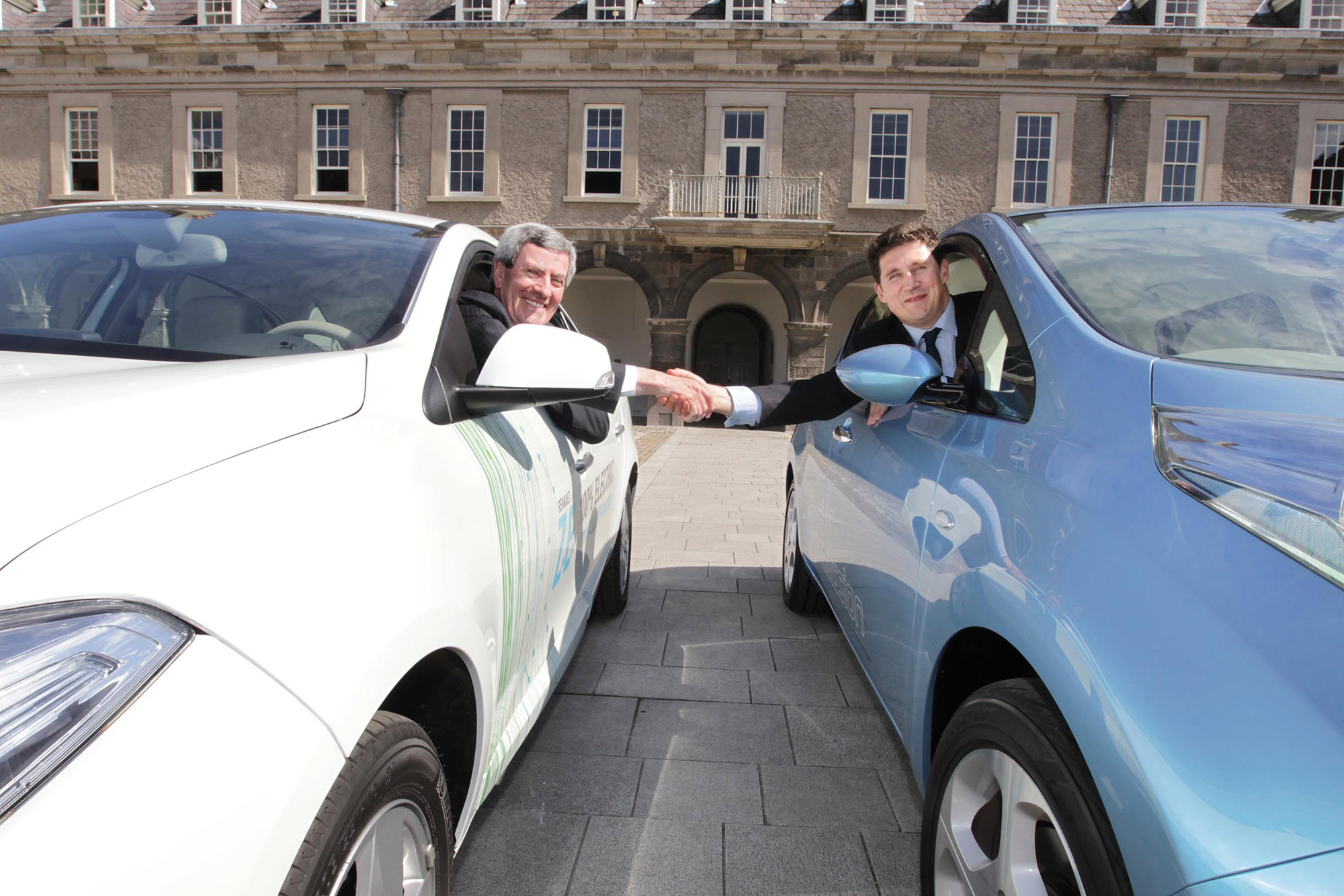
ELECTRIC CARS A REALITY FOR IRELAND

– Government announces €5,000 incentive for electric vehicles

– ESB to roll out 3,500 charge points and 30 fast charge points

– Renault-Nissan Alliance to provide Ireland with supply of electric cars

electric-cars-lg
Electric Cars # Photo Credit – ESB

DUBLIN (April 12, 2010), The Irish Government, the ESB and the Renault-Nissan Alliance today announced a comprehensive partnership to position Ireland as a European leader in electric transport.

Today’s Definitive Agreement includes the development of a nationwide electric car charging infrastructure by ESB, the supply of electric cars by the Renault-Nissan Alliance from 2011, as well as Government policies and incentives that will support the widespread adoption of such vehicles.

Those who purchase electric cars can avail of the €5,000 grant, which the Irish Government announced today. Irish buyers of electric vehicles will be exempt from Vehicle Registration Tax.

Minister for Communications, Energy and Natural Resources Eamon Ryan described today’s announcement as on-the-ground delivery of Government policy. “The Programme for Government announced our intention to transform the Irish energy and transport sectors. We have made great strides in renewable energy, energy efficiency and now we begin the electrification of our transport fleet.

The Irish Government’s target is for 10% of Ireland’s vehicles to be electric by 2020. Today’s Agreement with Nissan-Renault will see 2,000 cars on Irish roads by 2011. This keeps us firmly on track to achieve, if not exceed, our goals.

Those purchasing an electric vehicle will be grant aided by the Government to the tune of €5,000 and exempt from VRT. The ESB will provide the charging infrastructure in the homes of the new owners of electric cars.

Irish motorists can look forward to the cash, cars and charging points that will make the electric car the smart choice for the Irish motorist.”

Under the agreement, ESB will roll out 3,500 charge points nationwide by December 2011. The rollout has already begun in Dublin and charging points will also be installed in Cork, Galway, Waterford and Limerick. ESB also plans to install 30 fast charge points across Ireland by the end of 2011, with nine expected to be set up by the end of this year.

ESB Chief Executive Padraig McManus described today’s announcement “as another important milestone on the road to develop an emissions-free transport system.”

“ESB is currently rolling out a nationwide infrastructure to support the widespread use of electric cars. Ireland will be one of the first countries in the world to have a nationwide electric charging network which will offer opportunities for enterprise and job creation, as well as the obvious environmental benefits of ultimately having a decarbonised transport fleet” he said.

Nissan will supply its all-electric, five-seater LEAF hatchback to Ireland in early 2011 while Renault will launch its light commercial electric vehicle, Kangoo Z.E., later in the year. By the end of 2011, Renault will also supply 100 pre-production Fluence Z.E.s for a pilot project in Ireland. Fluence Z.E., an electric sedan for both private and professional use, will go on sale in Ireland in 2012.

All three vehicles will be fitted with the latest generation of lithium-ion batteries produced by Automotive Energy Supply Corporation (AESC), a joint venture between Nissan, NEC and NEC Tonkin.

Philippe Klein, executive vice president of planning and control at Renault SAS, said: “The Renault-Nissan Alliance’s commitment to the global mass marketing of electric vehicles requires the close cooperation of many partners around the world. . Thanks to Ireland’s determination to be a leader in electric mobility transport, the necessary conditions – including incentives and infrastructure – are being put in place in this country to allow for the successful adoption of electric vehicles in the near future.”

Pierre Loing, vice president of product strategy and planning of Nissan International SA and head of the company’s zero emission business unit in Europe, said: “Renault and Nissan look forward to providing Irish customers with affordable, all-electric vehicles that are built to the same high standards in terms of performance, roominess, comfort and quality that customers expect from both brands.”

ESB is designing an infrastructure that will ensure open access to all car manufacturers and all energy suppliers. Trials and pilots will be conducted by ESB to test the infrastructure and collect the data necessary to examine driving trends, usage patterns as well as the new electric car lifestyle experience.

Today’s Definitive Agreement follows a Memorandum of Understanding signed by the three parties last April to study the promotion of electric vehicles in Ireland.

“Nissan Ireland is delighted to be part of such an historic occasion for the motor industry in Ireland and Europe. We look forward to delivering a new and emission-free driving experience to Irish customers with Nissan’s electric vehicles starting with LEAF in early 2011,” said Gerard O’Toole, chairman of Nissan Ireland.

Eric Basset, managing director of Renault Ireland, said: “Due to its relatively small size, Ireland is ideally suited for the introduction of electric vehicles and as a pilot for the rest of Europe, As the population of Ireland is predominantly centered around the major urban areas of Dublin, Cork, Limerick, Galway and Waterford, and with the average vehicle covering approximately 75 km per day, electric vehicles are ideally suited to address the every day needs of both private and business use.”

Renault and Nissan are among the leaders in development of pure electric vehicles and together have announced global production capacity of 500,000 units per year. To date, the Alliance has entered into more than 50 partnerships worldwide with countries, cities, organisations and other key stakeholders to prepare the markets and infrastructure for the successful adoption of electric vehicles around the world.

Source: http://www.dcenr.gov.ie/Press+Releases/ELECTRIC+CARS+A+REALITY+FOR+IRELAND.htm

Motorists encouraged to buy electric

Financial incentives to encourage motorists to purchase electric cars are expected to be announced today.

Energy Minister Eamon Ryan will announce incentives that will help offset the cost of expensive electric batteries.

The details emerge as some of the electric vehicles that will soon be available to the Irish market are showcased.

The Government wants Ireland to become an effective test site for electric cars, with a goal that 10% of all vehicles run on electricity by 2020.

Last year, the Government signed a strategic deal with Nissan Renault and this morning, Renault will showcase its new electric vehicle, the Fluence.

The ESB has already committed to installing 1,500 charging points across the country before the end of next year.

Source: rte news

Irish Business Urged to Maximise Potential of Low-Carbon Economy

14th March 2010 

Sustainable Energy Authority of Ireland Showcases Latest Innovative Sustainable Solutions at Energy Show

Irish business must maximise the potential of sustainable energy solutions if they are to embrace the opportunities from a low-carbon economy. This is the message from the Sustainable Energy Authority of Ireland (SEAI) at the launch of its 2010 Energy Show.

The Energy Show 2010, which takes place on Wednesday 14th and Thursday 15th April in the RDS, Dublin will play host to almost 200 exhibitors and is expected to attract up to 5,000 visitors. The Show highlights the diversity of energy efficiency and renewable energy solutions in Ireland and will showcase leading suppliers of sustainable energy products and services.

Speaking at the launch of the Show, Mr. Eamon Ryan T.D., Minister for Communications, Energy and Natural Resources, said: “Ireland is well-placed to position itself as a world leader in sustainable energy. Our expertise in knowledge based services is well established and there is now a real opportunity for business to harness the innovation potential of our transition to a low-carbon economy. Ireland needs to exploit and leverage these business opportunities as we move towards a truly sustainable energy future.”

Some of the solutions on display at the Show will include innovative devices such as a phone application to assist businesses with energy audits, sustainable building products, model ocean technology equipment and the latest electric vehicles available on the Irish market.

In addition to the exhibition, seminars at the Show, led by industry experts, will focus on areas such as maximising renewable energy in buildings, the role of electric vehicles in contributing to a low-carbon Ireland and intelligent building energy control systems. Delegates will hear how sustainability can be achieved even during a downturn from adopting energy efficient practices and technologies to installing renewable energy systems.

SEAI’s Chief Operations Officer, Brian Motherway, noted: “The Energy Show has grown from strength to strength in the 15 years since we first hosted this event. Companies are looking to the opportunities presented by sustainable energy solutions and how they can be translated into tangible cost savings for business. Our impressive seminar programme will demonstrate best practice in sustainable solutions for business and encourage knowledge sharing amongst companies of the latest innovative technologies.”

The show will run at the RDS in Dublin on Wednesday, April 14th from 9:30am to 7pm and on Thursday, April 15th from 9am to 5pm. Seminar places must be pre-booked as a limited number of spaces are available. For further details on SEAI’s Energy Show 2010 visit  www.seai.ie/energyshow

Source: SEAI Press Release http://www.seai.ie/News_Events/Press_Releases/energy_show_2010.html

‘Red tape’ threatens renewable energy targets

The Irish Wind Energy Association has said Ireland is at serious risk of missing key EU renewable energy targets due to a frustrating lack of Government coordination.

Ireland has already reached its 2010 target – 15% of electricity comes from renewable energy.

Energy Minister Eamon Ryan has committed himself to reforming the complicated entry system.

However, the IWEA has clearly reached the end of its tether, arguing that the Government’s inability to tackle red tape is presenting critical difficulties that will cost the country dearly in the future.

Specifically, IWEA Chief Executive Dr Michael Walsh contends dealing with 60 State and semi-State agencies is proving impossible.

Dr Walsh said it is common for investors to find that consent from one agency has expired by the time approval from another is granted.

He said the risk was that both Irish and international players will not invest in Ireland and the EU renewable targets for 2020 will be at serious risk.

Minister Ryan will get the chance to give his side of the story today when he opens the Wind Energy Association’s conference in Dublin

Source: RTE News

ALURAD Perfect Radiator

Combining efficiency, style, and choice, ALURAD radiators really are the Perfect Radiator. ALURAD radiators are manufactured from high grade aluminium and offer you the chance to build your own heating system customised to both your heating and interior design needs.

ALURAD radiators are available in a range of different sizes and styles to suit every application and there are a number of towel rail options also. Due to their efficiencies, ALURAD tend to be 40-50% smaller than conventional radiators and therefore you don’t need to give up a lot of wall space to the typical large white radiator. ALURAD radiators are available in a selection of heights, from 160mm to 2250mm, enabling placement in any type of room.

ALURAD is an unrivalled brand with its patented special designs, its diversified colours and models, and its accessories conforming to EU standards.

The HSE recommended surface temperature of radiators in health and social care facilities is 43°Celsius. ALURAD radiators work well at these lower temperatures and are well suited to use with renewable heating systems such as heat pumps as well as more traditional systems such as oil and gas boilers. ALURAD radiators are ideal for hospitals, nursing homes, care centres, schools, public buildings, offices and homes.

10 Superior Features of ALURAD:

  • Unique Aesthetics: Its perfect design occupies minimum space.
  • High Heat Efficiency: Its raw material and design superiority provides high heat efficiency.
  • Flexible dimensions: Can be produced in different sizes in line with different requirements.
  • Variety of colours: Adds harmony and colour to the spaces.
  • Comfortable heating: Its unique design provides rapid and homogeneous heat distribution.
  • Energy Saving: Provides energy saving due to use of less amount of water.
  • Resistance to pressure: It is resistant to high hydrostatic pressure and it is very reliable.
  • Seamless structure: Its seamless structure provides high quality and long service.
  • Lightweight advantage: It is easy to install.
  • Resistance to corrosion: It is resistant to corrosion due to pre-installed special inhibitor.

Contact us today and we will work with you on your heating and design requirements to provide you with a customised ALURAD quote.

First on-street electric car chargers usable this month

THE COUNTRY’S first on-street electric charging points for electric vehicles (EVs) will become operational later this month.

The ESB confirmed this weekend that four kerbside charging points will be available in Dublin from next week, ahead of a nationwide programme that will see 1,500 installed throughout the country within two-and-a-half years.

The four points are located at parking spaces in Dublin city centre: two in Fitzwilliam Street (outside ESB headquarters), one on Molesworth Street and the other on Adelaide Road.

Known as “juicepoints”, the charging stations are tall, narrow columns.

In a system not dissimilar to the dublinbike scheme, users will be required to register and will then be given a personalised electric fob. Recharging an EV at the point could take one to two hours.

Paul Mulvaney, managing director of ESB e-cars, said that this is the first phase of an ambitious project that will see EVs and charging points becoming commonplace during 2011 and 2012.

The semi-State utility company already has agreements with the Renault-Nissan partnership for electric vehicles and is in advanced discussions with other major manufactures including Peugeot-Citroen and Mitsubishi.

“We envisage having 1,500 charging points installed. Our target is to have 2,000 EVs in Ireland by the end of 2011.

“We have really been pushing Ireland as a test bed and have done deals with manufacturers,” said Mr Mulvaney.

“We are a little different from most of Europe in that they are basing their tests in clusters and cities, while we are doing it across the whole country.”

The ESB have not yet settled on a recharging price but Mr Mulvaney said it will be markedly cheaper than petrol.

He said that there will three different types of charging point. The first will be at home where it is estimated that up to 90 per cent of the recharging will be done, using cheap overnight electricity.

A special seven-pin all-weather socket will need to be installed outside homes. The cost of recharging will be circa €2.50 which is about six times cheaper than petrol or diesel.

The second will be the kerbside juicepoint, which will cost more, but still less than petrol. The third will be a high-speed DC charger that will recharge batteries in 20-25 minutes.

Source: http://www.irishtimes.com/newspaper/frontpage/2010/0315/1224266296611.html

Sustainable Energy Authority of Ireland unveils ambitious 5 year strategic plan

Media Release
10th March 2010

~ The five-year lifetime of this strategy will see savings worth a total of €6 billion delivered, and support 5,000 – 10,000 jobs each year ~

~ Authority will play a leading role in Ireland’s sustainable energy drive ~

The Sustainable Energy Authority of Ireland (SEAI) has today (Wednesday, 10 March, 2010) unveiled a five-year strategic plan with a mission of transforming Ireland into a society based on sustainable energy structures, technologies and practices, and a vision of making Ireland a recognised global leader in sustainable energy. Sustainable energy practices are already delivering significant savings to the Irish economy, with lowered business costs and household energy bills resulting from efficiency measures, and reduced fossil fuel imports from our increased use of renewable energy. Over the course of SEAI’s five-year strategy, new savings worth €6 billion over its lifetime will be generated by sustainable energy actions, at the same time supporting 5,000 – 10,000 jobs every year.

The strategic plan builds on the strong foundations already established by the Authority over the past eight years, and sets out the opportunities and actions for Ireland to become a global leader in both the use of sustainable energy and in the clean technology space where Ireland already has a considerable competitive advantage. The goals and actions for SEAI are detailed under the key heading areas of: electricity supply, heat supply, energy in buildings, energy efficient products and behaviour, energy in transport, research and innovation, and policy development and analysis.

Commenting on the strategy, Energy Minister Eamon Ryan TD, said: “Government has set a path for Ireland’s new economy. It’s green, innovative, knowledge-based and has the potential to set Ireland apart as a leading low carbon economy in the world. Above all it is sustainable. The new economy will bring savings – the EUR6 billion we can save over the lifetime of this strategy is the equivalent of our annual fossil fuel bill. It will bring investment and most importantly jobs for our people.

SEAI’s mission for the future is truly transformational. In the past 8 years, SEAI has grown as an organisation and shown it can deliver real change. Today’s strategy combines vision with evidence-based policy and tested initiatives. I wish SEAI well in the fulfilment of this vision and its delivery on the ground.”

SEAI Chief Executive, Professor Owen Lewis said: “In the lifetime of this strategy, I envisage that Ireland will have made substantial further gains – in renewable electricity, in upgrading the efficiency of buildings, in improving energy efficiency in business. We also want to see the start of strong export-led growth in sustainable energy products and services. While the strategy is focused on the future, the delivery of it is very much based in action now. Sustainable energy actions over the course of the next five years will deliver total savings worth €6 bn over their lifetime and at the same time support five to ten thousand jobs every year.” 

Continuing he said: “And this is only the tip of the iceberg – ultimately we see that within the next 15 years, Ireland will develop a global reputation for research and development and clean technology services and products.  Within 25 years, we envisage a national energy system totally rooted in local, green electricity, including a thriving marine renewable energy sector, and Ireland will actually be exporting electricity to Europe. These are the real opportunities for Ireland that will reduce our import dependence and our emissions, while at the same time creating jobs and enhancing competitiveness. What is required is a commitment from all levels of society to make this vision a reality for Ireland.”

Concluding Professor Lewis said:”SEAI is already contributing real benefits to Ireland now with action centred on energy savings, emissions reductions, and importantly, jobs. We look forward to working with all parts of society to deliver on the goals and actions set out in this strategy.”

Today also sees a name change for the Authority. Formerly known as Sustainable Energy Ireland (SEI), the Authority has reverted to its formal legal name, the Sustainable Energy Authority of Ireland (SEAI), given to it in its establishing legislation in 2002.

Ends

About SEAI:

The Sustainable Energy Authority of Ireland (SEAI) has a mission to play a leading role in transforming Ireland into a society based on sustainable energy structures, technologies and practices. The Authority is financed by Ireland’s EU Structural Funds Programme co-funded by the Irish Government and the European Union.

Please click here to download a copy of this press release in PDF format.

Please click here to download a copy of the SEAI Strategic Plan 2010 – 2015 in PDF format.